🔍 Read the full analysis: Agnolotti Del Plin: Piedmont's Pinched Pasta, Step By Step on Mad Tasting

Get kitchen staples and gadgets delivered free with Prime
- Fast, free delivery on millions of items
- Prime Video, Amazon Music and more included
- Member-only deals all year
TL;DR
Agnolotti del plin are small filled pasta associated with Piedmont’s Langhe, Roero and Monferrato. Their name means “pinch” in Piedmontese, describing how cooks seal each parcel; a common home method uses cooked meat, thin egg dough and a brief boil, with recipes varying by household.
Mad Tasting’s guide explains how to make agnolotti del plin, the small, hand-pinched filled pasta associated with Piedmont’s Langhe, Roero and Monferrato. It walks home cooks through using a cool, firm filling, rolling rested egg dough, pinching the parcels closed and serving the freshly boiled pasta with a light dressing.
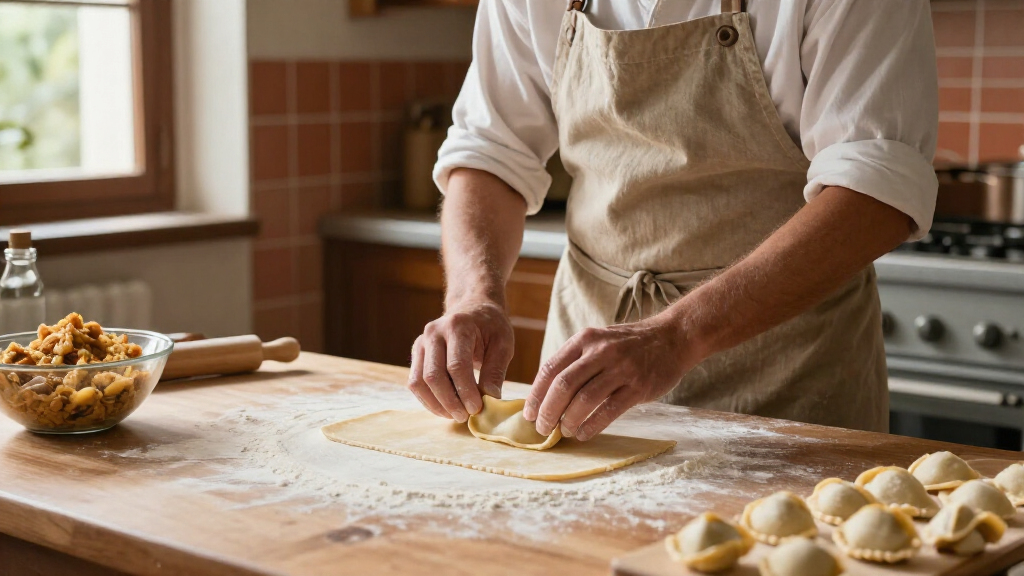
The defining step is the seal: place small mounds of filling along a thin sheet of dough, fold the dough over them, press out trapped air, then pinch between the mounds to form separate parcels. The guide says the Piedmontese word plin means “pinch”, referring to that hand motion. Cutting the parcels apart after pinching completes the characteristic shape.
For a meat filling, the guide recommends finely chopping cooked meat such as beef, pork or rabbit, then adding cooled cooking juices a little at a time. The mixture should clump and stay moist without becoming wet. It should be fully cool before shaping; warm filling can soften the dough and make sealing harder. The guide presents leftover braised meat as a practical home option, while noting that ingredients and seasoning vary across families and places.
The dough is made from flour and eggs, kneaded until smooth and elastic, then wrapped and rested before rolling. Work in manageable portions and keep unused dough covered so it does not dry and crack. Roll each portion thin enough for the filling’s outline to show, but not so thin that it tears when folded. Fresh plin need only a short boil, according to the guide, and can be served with roast juices, butter and sage, or broth.
Agnolotti Del Plin Pinched Pasta, Step by Step
This regional filled pasta is shaped by a simple hand motion. The guide gives home cooks a flexible method, while noting that family recipes vary.
The defining pinch
Plin means “pinch” in Piedmontese, describing how each parcel is sealed.
Finely chop cooked meat and add cooled cooking juices until moist but firm. Cool completely before shaping.
Knead flour and eggs until smooth and elastic. Wrap and rest the dough, keeping unused portions covered.
Roll the dough thin, set small filling mounds along it, fold over, press out air, then pinch between mounds and cut apart.
Boil the fresh parcels briefly. Finish with roast juices, butter and sage, or broth.
A regional tradition
The guide associates agnolotti del plin with Piedmont’s Langhe, Roero and Monferrato.
Small parcels
Pinched seals give this style its distinctive form.
Cooked meat
Beef, pork or rabbit are suggested; leftover braised meat is a practical option.
Household recipes
Ingredients and seasoning differ across families and places.
Keep the parcels intact
A firm filling and workable dough make sealing easier.
- Use filling that is cool, moist and firm enough to mound.
- Press out trapped air before pinching the seams.
- Keep unused dough covered so it does not dry and crack.
- Check each parcel is sealed before boiling.
Choose a light finish
Keep the pasta and filling at the center of the dish.
- Roast juices
- Butter and sage
- Broth
- A restrained dressing
A Pinch Defines the Pasta
The guide turns a regional preparation into a sequence that home cooks can follow, while keeping the method’s signature gesture at its center. The pinched seam is not only a way to close the dough: it is the feature behind the name agnolotti del plin and the small parcels that distinguish this style.
The approach also offers a use for leftover cooked meat. Rather than treating one recipe as universal, the guide frames its instructions as a practical regional framework, acknowledging that households differ. That distinction matters for readers trying the dish: technique can be shared without claiming every Piedmontese cook uses the same filling or proportions.
Its serving advice follows the same practical logic. A modest dressing lets the pasta and filling remain central, while broth offers another option. The article is a cooking guide, not a report of a new culinary ruling or a claim that one recipe is definitive.
Popular right now

De'Longhi Magnifica Duo Fully Automatic Espresso Machine with Milk Frother, Silver

KitchenAid Artisan Mini Tilt-Head Stand Mixer, 3.5 Quart, Aqua Sky Blue

De'Longhi Rivelia Automatic Espresso Machine with Milk Frother
As an affiliate, we earn on qualifying purchases.
Piedmont’s Regional Pasta Tradition
Agnolotti is a broader name for filled pasta from Piedmont, in northwestern Italy; “del plin” points to the small form made with pinched seals. The guide associates the pasta especially with the Langhe, Roero and Monferrato, areas where handmade pasta is served alongside roasts, braises and seasonal produce.
One account links plin to the practical reuse of cooked meat left from a roast. The guide describes that as a common origin account, not a firmly established date or single origin story. Its suggested filling of cooked meat, sometimes combined with vegetables and cooking juices, reflects a broad pattern rather than a fixed formula. The source does not give exact ingredient quantities, so cooks should adapt the texture as they work.
““plin” means “pinch” in Piedmontese”
— Mad Tasting
Recipes and Origins Vary
The source does not establish a single origin date or definitive origin story for agnolotti del plin. It describes the use of leftover cooked meat as one common account and says family recipes vary. Nor does it provide a single authoritative filling, exact dough ratio or precise cooking time; those details depend on ingredients and household practice. The article’s instructions are therefore a home method, not a claim that every regional version follows identical steps.
From Dough to Serving
For cooks following the guide, the next steps are to prepare and cool the filling, knead and rest the dough, then roll and shape the parcels in small batches. Keep the remaining dough covered as you work, and check that each parcel is sealed before boiling. Cook the fresh pasta briefly and serve it with roast juices, butter and sage, or broth. The source sets out no separate event or later milestone; the practical outcome is a method readers can try and adapt at home.
Key Questions
What does “plin” mean?
Plin means “pinch” in Piedmontese. It refers to pinching the dough between filling mounds to seal individual parcels.
What filling is used in agnolotti del plin?
The guide describes cooked meats such as beef, pork or rabbit, sometimes combined with vegetables and cooking juices. Recipes vary by household and location; a leftover braise is one suggested home starting point.
How can I keep the parcels from opening?
Use a filling that is cool and moist but not wet. Fold the dough over small mounds, press out trapped air, and pinch firmly between each mound. Keep the dough covered while working so it does not dry and crack.
How should agnolotti del plin be served?
The guide suggests a light finish such as roast juices, butter and sage, or broth. It recommends a restrained dressing so the filling remains prominent.
Can I make the filling ahead?
Yes. The guide advises cooling cooked filling and refrigerating it promptly in a covered container. Do not leave cooked meat at room temperature for more than two hours; keep it chilled until needed.
Source: Mad Tasting