TL;DR

Get kitchen staples and gadgets delivered free with Prime
- Fast, free delivery on millions of items
- Prime Video, Amazon Music and more included
- Member-only deals all year
Noah Pinsonnault, a reviews analyst at the Good Housekeeping Institute, recommends washing wooden spoons by hand. Repeated dishwasher exposure to water, heat and detergent can dry and damage wood over time, though one cycle is unlikely to ruin a spoon immediately.
Wooden spoons are best washed by hand, according to Noah Pinsonnault, a reviews analyst in the Good Housekeeping Institute’s Home Care & Cleaning Lab, who says repeated dishwasher cycles can dry out and damage the wood. The advice matters for people trying to keep everyday kitchen utensils in good condition: heat, prolonged moisture and detergent may cause wood to warp, crack or split over time.
Pinsonnault says a dishwasher exposes wooden utensils to three conditions that can wear them down: extended contact with water, high temperatures and harsh dishwasher detergents. Those factors can gradually strip protective finishes and dry the wood. The resulting damage may include warping, cracks or splits, rather than immediate failure after a single wash.
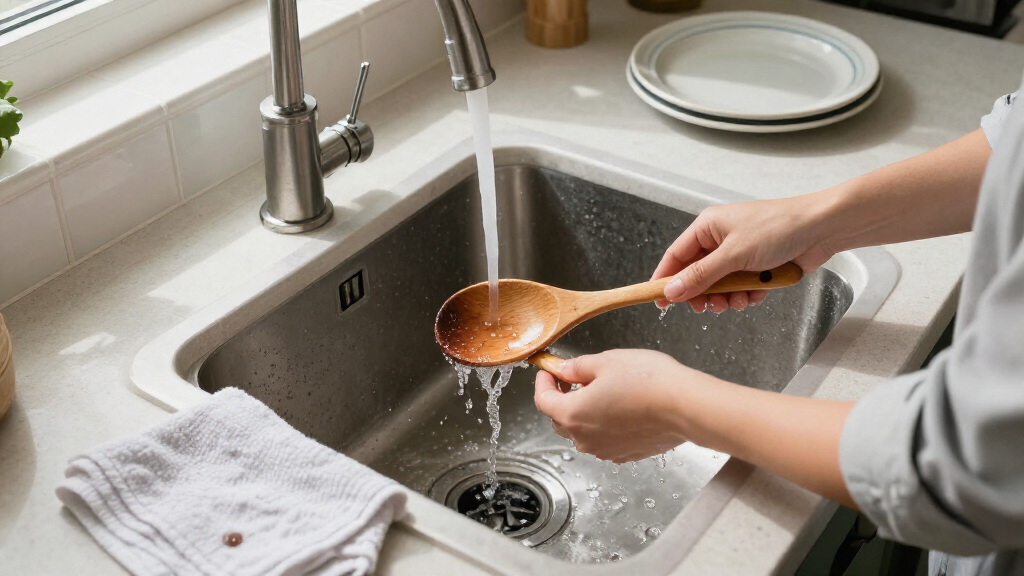
Cracks can also create a cleaning concern. Pinsonnault says food residue may become trapped in them, making the utensil harder to clean thoroughly. He recommends washing wooden spoons with warm water, a little dish soap and a soft sponge, then drying them promptly with a towel. Abrasive scrubbers are not needed, and utensils should not be left soaking in the sink.
A dishwasher cycle in a pinch is not expected to ruin a wooden spoon at once, the report says, because the damage builds gradually. Still, the recommendation is to avoid repeated cycles. Some wooden utensils may be labeled dishwasher-safe; for those, follow the manufacturer’s care instructions. If the label is missing or the care guidance is uncertain, hand-washing is the safer default given the advice in the report.
How Dishwasher Use Wears Wood
The advice is relevant to both utensil durability and cleanliness. A spoon that warps or splits may be less useful, while cracks can retain food residue and make thorough cleaning more difficult, according to Pinsonnault. That gives the recommendation a practical purpose beyond appearance: reducing repeated exposure may help keep wooden tools intact and easier to wash.
The steps involved are modest: wash, rinse and dry promptly rather than adding the utensil to the dishwasher. The report does not quantify how long a wooden spoon might last under different care routines, so the precise lifespan benefit is not established. Its central point is that damage can accumulate over repeated cycles, while hand-washing limits those exposures.
As an affiliate, we earn on qualifying purchases.
Care Advice for Wooden Tools
Wooden spoons are commonly used for stirring and serving, and the Good Housekeeping report describes them as gentle on nonstick cookware and less likely to become too hot while stirring a simmering sauce. The article’s advice applies beyond spoons: it says the same hand-washing approach is relevant to wooden spatulas, salad servers and cutting boards.
The report does not say that every wooden utensil has identical care requirements. It advises checking the product’s label or packaging, since some items are designated dishwasher-safe. When the manufacturer provides instructions, those should guide care; when no instructions are available, the analyst recommends hand-washing.
Limits of the Care Guidance
The source does not provide testing data, a projected lifespan, or a threshold for how many dishwasher cycles might damage a particular spoon. Outcomes may depend on the utensil’s wood, finish and manufacturer instructions, but the report does not compare those factors. It also does not identify specific products that are dishwasher-safe.
The guidance distinguishes repeated dishwasher use from a one-time wash, saying damage builds gradually and a single cycle is unlikely to ruin the utensil immediately. It does not quantify the risk from an occasional cycle. For that reason, the practical advice is to check the care label and hand-wash when the product’s dishwasher status is unknown.
Check Labels and Wash by Hand
Owners can start by checking the utensil’s packaging or manufacturer care instructions. If it is labeled dishwasher-safe, follow those directions; if the label is absent or unclear, wash it by hand with warm water and dish soap, avoid soaking and dry it promptly. The source provides no scheduled follow-up or new testing announcement, so its recommendation remains straightforward care guidance rather than a developing product-safety alert.
Key Questions
Will one dishwasher cycle ruin a wooden spoon?
Not necessarily. The report says damage builds gradually, so one cycle is unlikely to ruin a spoon immediately. It recommends avoiding repeated dishwasher cycles.
How should I wash a wooden spoon?
Use warm water, a little dish soap and a soft sponge. Do not leave the spoon soaking, and wipe it dry with a towel promptly after washing.
Are any wooden spoons dishwasher-safe?
Some wooden utensils are labeled dishwasher-safe. Check the product packaging or care instructions and follow the manufacturer’s directions. If you cannot confirm that it is safe for the dishwasher, hand-wash it.
Why are cracks in a wooden spoon a concern?
Pinsonnault says cracks can trap food residue and make utensils more difficult to clean thoroughly. Dishwasher exposure can contribute to cracks over time.
Does the same advice apply to other wooden kitchen tools?
Yes. The report applies its hand-washing advice to wooden spatulas, salad servers and cutting boards as well as spoons.
Source: rss
NFL season / tailgating Picks
team gear
As an affiliate, we earn on qualifying purchases.