
TL;DR

Get kitchen staples and gadgets delivered free — and shop member deals
- Fast, free delivery on millions of items
- Access to Prime Big Deal Days deals on October 6–7
- Prime Video, Amazon Music and more included
The FDA says its Coordinated Outbreak Response, Evaluation, and Emergency Preparedness teams evaluated 69 incidents in 2025, initiated 26 responses and issued 11 public health advisories. The incidents included outbreaks linked to cucumbers, prepared meals and powdered infant formula; the report does not explain why the annual count was far below the 137 incidents recorded in 2013.
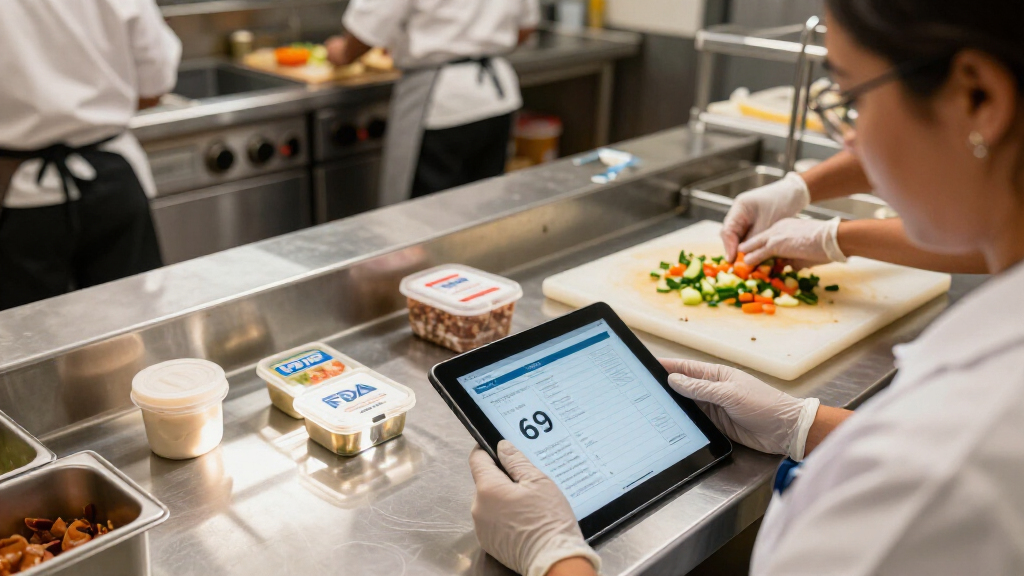
The U.S. Food and Drug Administration’s outbreak and emergency preparedness teams evaluated 69 incidents in 2025, initiated 26 responses and issued 11 public health advisories, according to the agency’s newly published annual report. The figures describe different stages of the agency’s work on potential foodborne illness outbreaks and certain adverse events, and do not mean that all 69 incidents became formal investigations or resulted in public warnings.
The report covers the FDA’s Coordinated Outbreak Response, Evaluation, and Emergency Preparedness teams, known as CORE+EP. Incidents evaluated include potential or confirmed outbreaks and certain adverse events analyzed by the CORE Signals and Surveillance team. The agency says some evaluated incidents are not transferred to one of its four response teams for follow-up.
A response begins when evidence indicates an outbreak may be associated with a food regulated by the FDA. Information is then transferred to a response team to coordinate the agency’s work. Advisories are a separate public-facing step, intended to give consumers actionable advice when an FDA-regulated food has been linked to an outbreak, the report says.
Among the investigations highlighted for 2025 were Salmonella infections linked to cucumbers, a Listeria outbreak associated with prepared meals and infant botulism linked to powdered infant formula. The report’s table also lists investigations involving products such as mini pastries, frozen shakes, eggs, pistachio cream, sprouted beans and moringa powder. Some entries include recalls, warning letters or import alerts; the table says it is not a complete account of FDA activity, and some investigations began in 2024.
How FDA Responses Can Protect Consumers
The totals show the range between screening possible incidents and taking more direct public health action. Evaluation does not automatically lead to a response, and a response does not necessarily result in an advisory. That distinction matters to consumers: the report’s 69 evaluated incidents should not be read as 69 confirmed outbreaks or 69 products found to be unsafe.
When investigators identify a food source, the FDA may issue an advisory or recommend that a company voluntarily recall affected products. The report also describes possible enforcement steps by the agency’s Office of Compliance and Enforcement, including warning letters, seizure, injunctions and import alerts. These actions can prompt consumers and businesses to act, while helping limit exposure to implicated products.
The report’s examples show that investigations can involve more than one intervention. Its entries include recall announcements and, in some cases, additional measures such as warning letters or import alerts. The report says work during and after investigations can lead to actions intended to prevent further illnesses and future outbreaks; it does not claim every action or investigation had the same outcome.
foodborne illness outbreak detection kit
As an affiliate, we earn on qualifying purchases.
As an affiliate, we earn on qualifying purchases.
CORE+EP Expanded in 2024
The FDA established the CORE Network in 2011 to coordinate responses to foodborne illness outbreaks. In October 2024, the agency expanded it to include an emergency preparedness team focused on food defense, traceability and supply-chain monitoring. The 2025 report therefore describes activity by the expanded CORE+EP structure.
The report says the teams work through disease surveillance, outbreak response and post-response activities, in collaboration with the U.S. Centers for Disease Control and Prevention, state and local public health agencies, and international public health partners. It also notes that the number of incidents evaluated reached 137 in 2013, compared with 69 in 2025. The report does not discuss the reasons for that difference, so the counts alone do not establish a trend in foodborne illness or in the agency’s effectiveness.
FDA lists several responses in which a product was linked to illnesses but no public advisory was issued, including mangoes, cilantro, parsley, spring mix and sprouts. The agency says this can happen when investigators lack enough information about the cause of illnesses while a public health risk is ongoing. Confirmed food vehicles, it says, are reported on its CORE Investigation Table.
“The work conducted by CORE during and following investigations of foodborne illness outbreaks and certain adverse events culminate in actions that can drive the prevention of additional illnesses and future outbreaks.”
— FDA 2025 CORE+EP report
What the Annual Totals Leave Open
The report does not explain why the 2025 count of 69 is lower than the 2013 figure of 137, or whether changes in reporting, surveillance, outbreak patterns or team operations account for any of the difference. Without that information, the two numbers cannot show by themselves whether food safety improved or investigative activity declined.
The report also does not provide a full outcome-by-outcome account for all 69 evaluated incidents. Because some incidents were not referred to response teams, and because the agency says its investigation table is not exhaustive, the published figures do not establish how many incidents produced confirmed sources, illnesses prevented or enforcement actions. Some follow-up activity may still be ongoing.
For several responses where products were linked to illnesses but no advisory was issued, the FDA cites insufficient information about the cause at the time of an ongoing risk. The available material does not specify whether later evidence resolved each of those cases or whether additional public actions followed.
Further Investigation Updates to Watch
The FDA’s report says confirmed food vehicles are listed on the agency’s CORE Investigation Table, which readers can consult for updates to specific investigations. The agency notes that additional activity may continue beyond what appears in the annual report, and that some listed investigations started in 2024 even though advisories were issued in 2025.
For ongoing or later-resolved cases, the next relevant developments would be new FDA or partner-agency findings, consumer advisories, recall announcements or compliance actions. The report does not set out a schedule for further updates or identify a single upcoming milestone for all of the investigations.
Key Questions
What did the FDA report about its 2025 activity?
The FDA reported that CORE+EP evaluated 69 incidents, initiated 26 responses and issued 11 public health advisories in 2025.
Does evaluating an incident mean the FDA confirmed an outbreak?
No. Evaluations can include potential outbreaks, confirmed outbreaks and certain adverse events. The report says not every incident evaluated by the Signals team is transferred to a response team.
Which outbreaks did the report highlight?
Examples included Salmonella infections linked to cucumbers, Listeria infections linked to prepared meals and infant botulism linked to powdered infant formula.
Why were some linked products not covered by an advisory?
The FDA says advisories may not be issued when there is insufficient information about what is causing illnesses during an ongoing public health risk. It lists mangoes, cilantro, parsley, spring mix and sprouts among responses without an advisory.
Why was the 2025 count lower than the 2013 figure?
The report notes 137 incidents in 2013 and 69 in 2025 but does not explain the difference. The figures alone do not establish why the counts changed.
Source: rss
NFL season / tailgating Picks
team gear
As an affiliate, we earn on qualifying purchases.