TL;DR
A November 26 Food Safety News report relayed USDA guidance for storing and reheating Thanksgiving leftovers. Refrigerate perishable food within two hours—or one hour in temperatures above 90°F—eat refrigerated leftovers within three to four days, and reheat them to 165°F.
Food Safety News published U.S. Department of Agriculture guidance on November 26 for handling Thanksgiving leftovers, advising people to refrigerate perishable food within two hours and reheat it to an internal temperature of 165°F (74°C). The advice matters because food kept too long at temperatures that support bacterial growth can become unsafe, even if it looks or smells normal.

Get kitchen staples and gadgets delivered free with Prime
- Fast, free delivery on millions of items
- Prime Video, Amazon Music and more included
- Member-only deals all year
The USDA’s basic storage rule is to put cooked leftovers away within two hours. If the surrounding temperature is above 90°F, such as in a hot kitchen or car, perishable food should be refrigerated within one hour. The reported guidance describes the “danger zone” as temperatures from 40°F to 140°F, where bacteria can multiply rapidly.
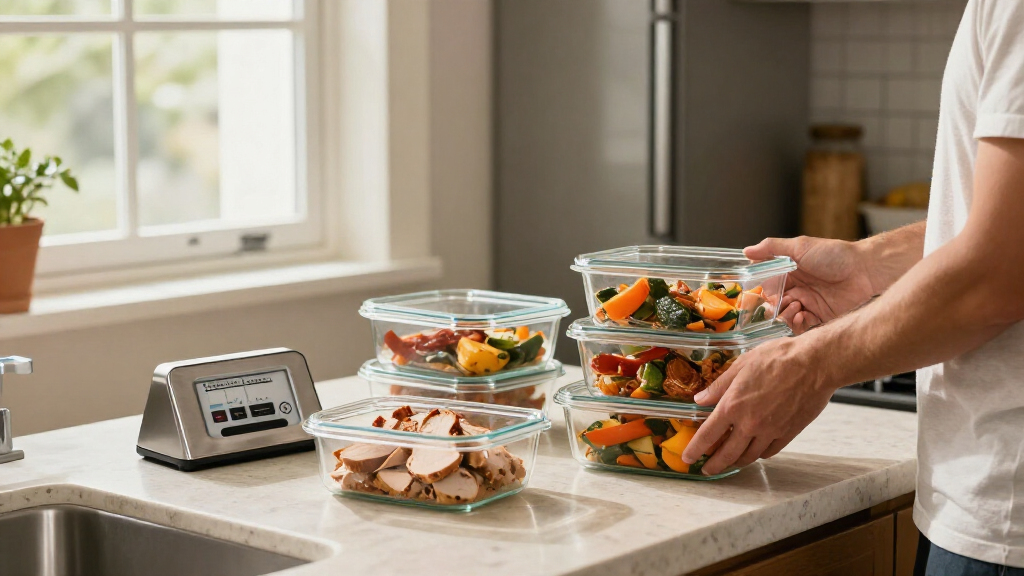
To help food cool quickly, divide it into small, shallow containers before refrigerating or freezing. This matters especially for a large item such as turkey: a whole bird or deep container may cool too slowly. Food Safety News says leftovers may go into the refrigerator or freezer while still warm; they do not need to cool to room temperature first.
Refrigerated leftovers should be eaten within three to four days. For Thanksgiving food, that means using or freezing it by the following Monday, according to the report. Frozen leftovers are best consumed within two to six months. The USDA’s FoodKeeper app offers storage guidance for more than 600 items and can provide reminders, the report says.
For reheating, use a food thermometer to check that leftovers reach 165°F (74°C), including in dense dishes such as casseroles and meats. Cover food while heating to retain moisture and support even warming. In a microwave, spread food evenly in a microwave-safe dish, add a little liquid if needed, cover with a vented lid or microwave-safe wrap, rotate the food and check several spots for cold areas. Reheat sauces, soups and gravies to a rolling boil; the guidance advises against using a slow cooker to reheat leftovers.
Safe Storage Limits the Risk
Holiday meals often leave large amounts of cooked food to be stored and served again over several days. The reported USDA advice gives households practical time and temperature limits to reduce the chance that bacteria will grow while food sits out, cools or reheats. Following those limits is especially relevant for large dishes, which may take longer to cool evenly.
The guidance also distinguishes between refrigeration and freezing: a few days in the refrigerator is the recommended window for eating leftovers, while freezing is the option for keeping them longer. Reheating to 165°F and checking more than one spot in microwaved food address uneven heating, which can leave cold areas. These steps cannot establish that food is safe if it was mishandled before storage, so prompt refrigeration remains central to the advice.
Popular right now

Shark Pet Cordless Stick Vacuum IX141

Hisense E6 Cinema Series 55-Inch 4K UHD QLED Smart Fire TV

De'Longhi Rivelia Fully Automatic Espresso Machine with Milk Frother, Black
As an affiliate, we earn on qualifying purchases.
Thanksgiving Food After the Meal
The November 26 article comes just after Thanksgiving and focuses on what to do once the meal is over. Its recommendations are presented as USDA food-safety guidance, rather than as a report of a new recall, outbreak or change in federal rules. The practical issue is the period between serving the meal and eating, refrigerating or freezing what remains.
Food Safety News reports that a USDA study found 76 percent of participants mistakenly believed leftovers should cool to room temperature before refrigeration. The report does not identify the study’s date, sample size or methodology, so the figure should be read as the reported finding, not as a current estimate of all consumers’ behavior. The USDA advice described in the article is to refrigerate or freeze leftovers while warm, using shallow containers to speed cooling.
The article also points readers to the USDA Meat and Poultry Hotline at 888-674-6854, email at MPHotline@usda.gov and live chat at ask.usda.gov. It says the hotline’s online chat is available Monday through Friday from 10 a.m. to 6 p.m. Eastern time.
“Leftovers should be stored within two hours of cooking, or within one hour when the temperature is above 90°F.”
— U.S. Department of Agriculture guidance, as reported by Food Safety News
Study Details and Food History
The Food Safety News report does not give the date, sample size or methods behind the cited 76 percent finding. It also does not identify particular Thanksgiving dishes or households at elevated risk; the advice is general guidance for leftovers. The report does not describe a specific outbreak or a new USDA rule.
Storage timelines are not a substitute for knowing how food was handled before it was put away. The article provides time and temperature recommendations but does not assess any individual meal or leftover. Readers with questions about a specific situation can contact the USDA through the hotline, email or chat details listed in the report.
Use, Freeze or Discard Leftovers
Households can apply the reported guidance by portioning food into shallow containers, refrigerating it promptly, and labeling or tracking when it was stored. Eat refrigerated leftovers within three to four days; freeze food intended to be kept longer, with the report giving two to six months as the period frozen leftovers are best consumed within. Before serving, reheat leftovers to 165°F and check multiple places in microwaved dishes.
The report names no further announcement or regulatory milestone. For questions, the USDA Meat and Poultry Hotline is listed at 888-MPHotline (888-674-6854), with email at MPHotline@usda.gov and live chat at ask.usda.gov Monday through Friday, 10 a.m. to 6 p.m. Eastern time.
Key Questions
How soon should Thanksgiving leftovers be refrigerated?
According to the USDA guidance reported by Food Safety News, refrigerate perishable leftovers within two hours of cooking. If the temperature is above 90°F, refrigerate them within one hour.
Do leftovers need to cool to room temperature first?
No. The report says leftovers can go into the refrigerator or freezer while still warm. Divide large amounts into small, shallow containers to help them cool faster.
How long can leftovers stay in the refrigerator?
The reported USDA guidance says refrigerated leftovers should be eaten within three to four days. Freeze them if you plan to keep them beyond that period.
What temperature should reheated leftovers reach?
Reheat leftovers to an internal temperature of 165°F (74°C) and check with a food thermometer. For microwaved food, rotate it and check in multiple places because heating can be uneven.
Can a slow cooker be used to reheat leftovers?
The guidance in the report advises against using a slow cooker for reheating leftovers because it may not heat food quickly enough to eliminate bacteria. For sauces, soups and gravies, bring them to a rolling boil.
Source: foodsafetynews.com