🔍 Read the full analysis: Sfursat And Valtellina: Lombardy's Alpine Nebbiolo Secret on Mad Tasting

Get kitchen staples and gadgets delivered free with Prime
- Fast, free delivery on millions of items
- Prime Video, Amazon Music and more included
- Member-only deals all year
TL;DR
Valtellina in northern Lombardy grows Nebbiolo, locally known as Chiavennasca, on steep Alpine terraces above the Adda River. Its Sfursat, formally Sforzato di Valtellina DOCG, is made from partially dried grapes and is generally dry, fuller and more concentrated than the valley’s other reds. The source material is a wine guide, not a report of a new announcement or event.
Valtellina’s Sfursat offers a more concentrated expression of the valley’s Nebbiolo, made by partially drying selected grapes after harvest before fermentation. A guide from Mad Tasting describes the wine’s place among Lombardy’s reds and explains how the region’s steep Alpine terraces shape the work of growing its locally named Chiavennasca.
The formal appellation name is Sforzato di Valtellina DOCG; Sfursat is its local form. As grapes dry, they lose water, concentrating sugars and flavor compounds. Fermentation converts grape sugars into alcohol, so the method can produce a wine with more weight and typically higher alcohol than a conventional Valtellina red. The outcome varies with the fruit and producer.
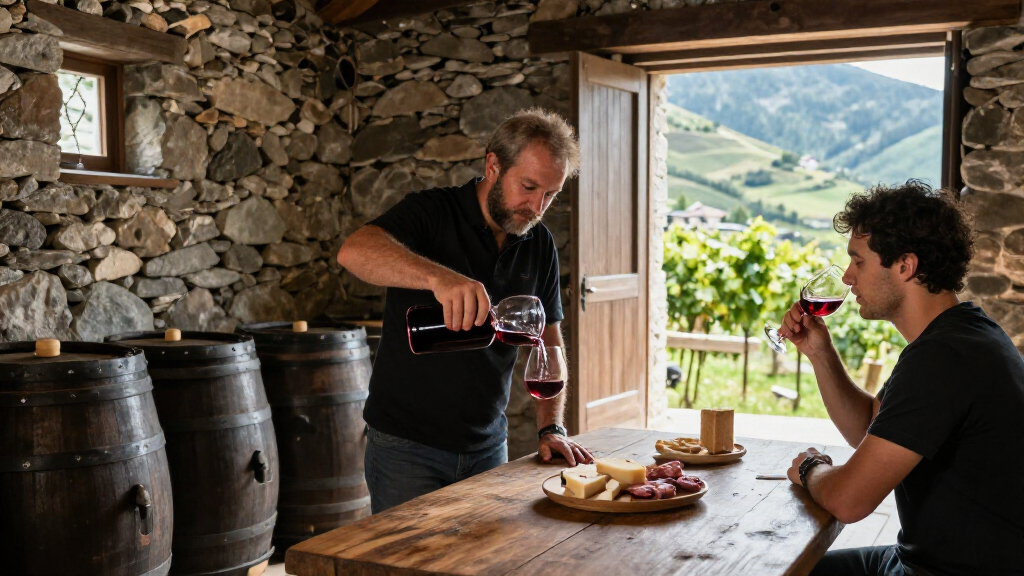
The source describes Sfursat as generally dry, not a sweet wine. Ripe fruit and alcohol warmth may give a sweet impression, while Nebbiolo’s acidity and tannin can provide freshness and structure. The guide recommends matching its intensity with braised meat, mushrooms or aged cheese, rather than a delicate dish that could be overshadowed.
Valtellina also makes other wines from Chiavennasca. The guide characterizes Rosso di Valtellina DOC as a potentially more approachable entry point and Valtellina Superiore DOCG as a dry Nebbiolo red; Sfursat has its own DOCG appellation and grape-drying method. These are broad descriptions, not guarantees of how every bottle will taste.
Wine Guide · Northern Lombardy
Sfursat & Valtellina: Lombardy’s Alpine Nebbiolo Secret
On steep stone terraces above the Adda River, Nebbiolo—known locally as Chiavennasca—takes a concentrated turn. Sfursat is the valley’s distinctive red made from partially dried grapes.
01 · Place shapes the work
Nebbiolo on stone terraces
Valtellina is a narrow Alpine valley in northern Lombardy, close to the Swiss border. Its steep slopes and dry-stone walls turn difficult terrain into narrow vineyard terraces, where access and upkeep make much vineyard work a hands-on task.
Steep rows, narrow ground
Terraces climb above the Adda River. Stone walls preserve cultivable strips on slopes where machinery access can be limited.
Chiavennasca in the valley
The principal grape described in the guide is Nebbiolo, traditionally known in Valtellina as Chiavennasca.
A family of aromas
Red cherry, rose, herbs and earthy notes are broad guide descriptions. Site, vintage, ripeness and cellar choices shape each bottle.
02 · How the style develops
From harvest to Sfursat
Partially drying selected grapes after harvest removes water and concentrates sugars and flavor compounds. Fermentation turns grape sugars into alcohol; the final wine is generally dry, with the result varying by fruit and producer.
Select
Choose grapes for the drying method.
Dry
Grapes lose water, concentrating their contents.
Ferment
Yeast converts grape sugars into alcohol.
Pour
A fuller, more concentrated expression of the valley’s Nebbiolo.
03 · A guide to the glass
Concentration with structure
Compared with other Valtellina reds, Sfursat is generally fuller and more concentrated. Nebbiolo’s acidity and tannin can help balance ripe fruit and alcohol warmth. These are tendencies, not promises about every bottle.
04 · Read the label
Three paths through Valtellina
Appellation names help identify broad styles. They do not guarantee that every bottle will share the same aromas, body or level of approachability.
| Wine | What the guide says | What distinguishes it |
|---|---|---|
| Rosso di Valtellina DOC | Potentially a more approachable entry point | Valtellina red from the valley’s Nebbiolo tradition |
| Valtellina Superiore DOCG | A dry Nebbiolo red | Its own appellation and regional expression |
| Sforzato di Valtellina DOCG | Generally dry, fuller and concentrated | Selected grapes are partially dried before fermentation |
“Concentration does not mean the wine is sweet.”
Mad Tasting guide05 · Keep the context in view
What a label cannot predict
“Alpine” describes the setting and the conditions of production; it does not predict exactly what every bottle will taste like. Some bottlings may seem paler or more aromatic than familiar Piedmont examples, but that is a general impression, not a rule.
The guide names no specific producer, vintage or tasting, and provides no production figures. It does not give precise drying periods or detailed appellation requirements; check current appellation documentation for exact rules.
06 · Quick questions
Know before you pour
What is Sfursat?
The local name for Sforzato di Valtellina DOCG, a red made by partially drying selected grapes after harvest before fermentation.
Is it sweet?
The guide describes it as generally dry. Concentrated fruit and alcohol warmth may seem sweet, but that does not mean the wine is necessarily sweet.
What grape is used?
Nebbiolo, traditionally called Chiavennasca in Valtellina.
What food pairs well?
Braised meat, mushrooms and aged cheese are suggested. Pairing intensity matters, since delicate dishes may be overshadowed.
Is it the same as Amarone?
Both use partially dried grapes, but Sfursat belongs to Valtellina’s Chiavennasca tradition. The shared method does not make the wines interchangeable.
What should I check when buying?
Look for Sforzato di Valtellina DOCG or Sfursat. Producer and vintage help explain differences; consult current appellation information for rule details.
How Sfursat Differs at the Table
The distinction matters for people choosing a bottle because the label signals a different production method and likely a different level of intensity. Partially dried grapes give Sfursat its concentrated style, while the grape’s acidity and tannin can keep that richness structured. The guide’s pairing suggestions reflect that balance: the wine’s weight is better suited to savory, substantial food than to light dishes.
The method is sometimes compared with Amarone, which also uses partially dried grapes. That shared technique does not make the wines interchangeable. Sfursat comes from Valtellina’s Nebbiolo tradition, and the source cautions that grape, place and producer all affect the result. For readers exploring Italian reds, the appellation provides a way to identify this particular style without assuming every bottle will have identical aromas or weight.
Popular right now

LG C2 Series 65-Inch OLED evo 4K Smart TV (OLED65C2PUA, 2022)

Samsung 42-Inch Class OLED S90F 4K Smart TV (2025)

Bose QuietComfort True Wireless Earbuds with Active Noise Cancellation, Black
As an affiliate, we earn on qualifying purchases.
Nebbiolo on Valtellina’s Stone Terraces
Valtellina is a narrow Alpine valley in northern Lombardy, close to the Swiss border, where vineyards occupy steep slopes above the Adda River. The grape known elsewhere as Nebbiolo is traditionally called Chiavennasca in the valley. The guide associates its wines with red cherry, rose, herbs and earthy notes, while stressing that site, vintage, ripeness and cellar choices influence what appears in a glass.
Dry-stone walls turn difficult slopes into narrow cultivable terraces, but they also limit machinery access. Much vineyard work must be done by hand, according to the source, adding labor and upkeep to production. Those conditions help explain why the terraces are not just scenery: maintaining the walls and working the rows are part of keeping vineyards in production.
Some Valtellina bottlings may seem paler or more aromatic than familiar Piedmont examples, the guide says, but this is a general impression rather than a rule. The term “Alpine” describes the setting; it does not by itself predict a wine’s flavor or quality.
“The standard appellation spelling is Sforzato di Valtellina DOCG; Sfursat is its local form.”
— Mad Tasting guide
What Labels Cannot Predict
The source is an explanatory wine guide, not a report of a dated announcement, new regulation or recent market development. It does not identify a specific producer, vintage, bottle or tasting, and it supplies no production figures or market data. Its descriptions of aroma, body and relative approachability are generalizations; individual wines can differ.
The guide does not give precise grape-drying periods or other detailed production requirements. It says those details are governed by appellation rules and advises checking current regulations rather than relying on an outdated figure. The supplied material does not provide those rules, so exact requirements cannot be confirmed here.
Checking the Appellation and Vintage
For a purchase, readers can look for Sforzato di Valtellina DOCG or the local term Sfursat to identify the concentrated, partially dried-grape style. The producer and vintage can help explain differences between bottles; a retailer or current appellation documentation can provide details not included in the guide. Pairing advice is a starting point, since the wine’s intensity and the dish’s preparation will vary.
The source gives no date for a next event or update. Any specific claims about current production rules, individual wines or changes in the region’s industry would need confirmation from up-to-date producer or appellation sources.
Key Questions
What is Sfursat?
Sfursat is the local name for Sforzato di Valtellina DOCG, a Valtellina red made by partially drying selected grapes after harvest before fermentation.
Is Sfursat sweet?
The guide describes it as generally dry. Concentrated fruit and alcohol warmth may create a sweet impression, but that does not mean the wine is necessarily sweet.
What grape is used in Valtellina wines?
The principal grape described in the source is Nebbiolo, traditionally called Chiavennasca in Valtellina.
What food goes well with Sfursat?
The guide suggests braised meat, mushrooms and aged cheese. Its concentrated style may overwhelm delicate dishes, so pairing intensity matters.
How is Sfursat different from Amarone?
Both wines use partially dried grapes, but the shared method does not make them the same. Sfursat is rooted in Valtellina’s Chiavennasca tradition; the source does not provide a detailed technical comparison with Amarone.
Source: Mad Tasting