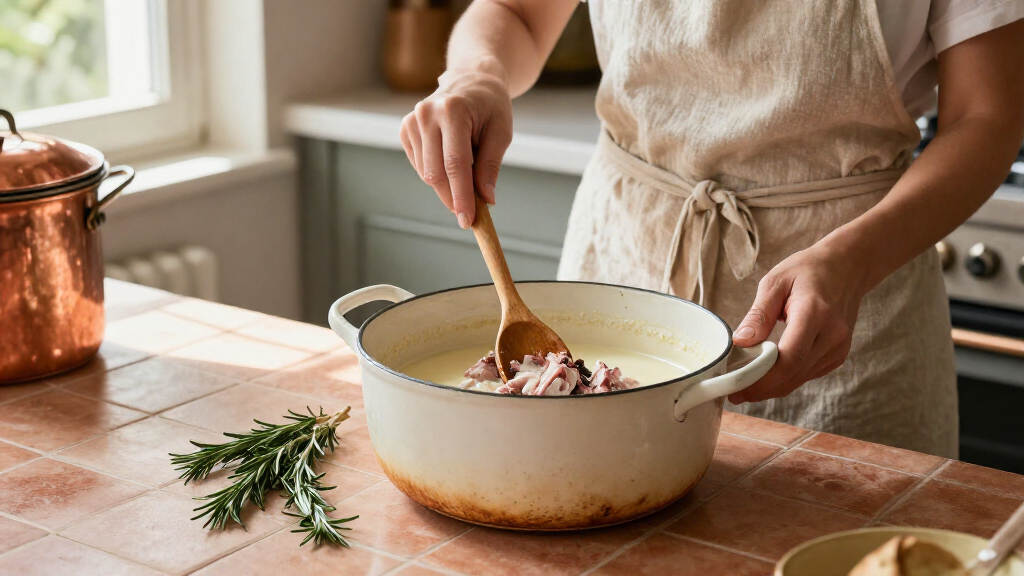

🔍 Read the full analysis: Sunday Arrosto: Pork Loin In Milk, The Emilian Way on Mad Tasting

Get kitchen staples and gadgets delivered free with Prime
- Fast, free delivery on millions of items
- Prime Video, Amazon Music and more included
- Member-only deals all year
TL;DR
Pork loin braised in milk, known as arista di maiale al latte, is an Emilian-style roast associated especially with the area around Bologna. The cooking guide explains how to brown and gently braise the pork, handle the sauce if the milk separates, and check the roast reaches 145°F (63°C) before a three-minute rest.
Mad Tasting has published a guide to arista di maiale al latte, an Emilian-style pork loin roast braised in milk and associated especially with the area around Bologna. The guide sets out how to brown and cook the roast gently, explains that the milk sauce may separate into soft curds, and advises checking that whole-cut pork reaches 145°F (63°C) before resting it for three minutes.
The method begins by seasoning a dried pork loin and browning it on several sides in warmed butter or oil. Garlic and rosemary are suggested as simple aromatics. Milk is then added to the pot, and the roast cooks at a gentle simmer. The guide describes milk as the defining braising liquid; wine or broth may appear in some versions, but the recipe does not depend on wine.
Pork loin is lean, so the guide cautions against relying on a fixed cooking time or leaving the roast over heat too long. Roast shape, starting temperature and the cooking vessel can all affect timing. It recommends using a meat thermometer in the thickest part, away from bone or the pot, and allowing the meat to rest for three minutes after it reaches 145°F (63°C).
The milk may split as it cooks with the meat juices, producing soft curds and thinner liquid. Mad Tasting describes this as a normal rustic result rather than evidence that the milk has spoiled. The sauce can be served in that texture or blended smooth. The roast is intended to be sliced and served with the sauce, with potatoes or seasonal greens offered as straightforward accompaniments.
Sunday centerpiece · Emilia-Romagna
Sunday Arrosto:
Pork Loin In Milk
A practical guide to arista di maiale al latte: brown the loin, braise it gently, and let the thermometer—not the clock—tell you when it is ready.
A Sunday roast built on milk
The guide centers on three choices that shape the result: brown the meat first, keep the braise gentle, and check doneness at the thickest point.
01Season & brown
Pat the pork loin dry, season it, then brown several sides in warmed butter or oil. Garlic and rosemary are simple aromatic options.
02Add milk & simmer
Add milk to the pot and cook at a gentle simmer. Milk is the defining liquid; wine is not required, though versions can vary.
03Check, rest, slice
Use a thermometer in the thickest part, away from bone or the pot. At 145°F (63°C), rest the roast for three minutes before slicing.
Season the dried loin
Brown on several sides
Add milk & aromatics
Simmer gently; check center
Rest, slice & serve
Trust the thermometer, expect the curds
Pork loin is lean, so a fixed time can mislead. Shape, starting temperature, and cooking vessel all affect how quickly the center heats.
Measure the thickest part
For whole-cut pork, the guide cites 145°F (63°C), followed by a three-minute rest. Keep the thermometer away from bone and the pot; avoid leaving the lean loin over heat longer than needed.
Meat juices and milk may form soft curds with thinner liquid. The guide describes this as a normal rustic result, not a sign the milk has spoiled.
Spoon the curds and liquid over the slices, or blend the sauce smooth. Both serve the same braise in different styles.
Loin for slices, shoulder for softness
The source presents shoulder as an alternative cut, with a different texture and eating experience from the neat slices of loin.
Pork loin
Relatively lean, with a shape suited to carving into tidy slices for a platter. Gentle cooking and a careful temperature check help avoid dryness.
Pork shoulder
Contains more fat and connective tissue, tending toward a softer, richer texture. It is an option, but it does not produce the same result as loin.
+ sauce
Rustic texture,
your choice.
A sauce with two good finishes
As milk cooks with the browned exterior and meat juices, it takes on flavor and reduces. Serve the soft curds and thinner liquid together, or blend until smooth. Pair the sliced roast and sauce with potatoes or seasonal greens.
Useful boundaries, clear variations
The cooking guide is practical rather than historical: it explains a regional-style method while leaving some recipe specifics open.
Emilia-Romagna
Arista di maiale al latte is associated especially with the area around Bologna.
Milk stays central
Some versions may include wine, broth, or extra herbs. The guide does not quantify how common these variations are.
Timing & quantities
No publication date, fixed cooking time, complete ingredient quantities, or specific historical origin is provided.
At the table, at a glance
A concise guide to the questions cooks are most likely to ask before serving this milk-braised roast.
What is arista di maiale al latte?
An Emilian-style pork loin roast braised in milk, associated especially with the area around Bologna. The pork is browned before milk and aromatics go into the pot.
Is it normal for the sauce to curdle?
Yes. It may separate into soft curds and thinner liquid as it cooks with the meat juices. Serve it rustic or blend it smooth.
What temperature should pork reach?
For whole-cut pork, check for 145°F (63°C) in the thickest part, then rest for three minutes.
Does the recipe require wine?
No. Wine may appear in some versions, but milk is the defining braising liquid and the dish can be made without wine.
A Sunday Roast Built on Milk
The guide gives home cooks a practical way to prepare a regional-style Sunday centerpiece using a short list of ingredients. Its main contribution is not a new announcement about the dish, but a clear account of details that can affect the result: browning the pork first, keeping the milk at a quiet simmer and checking the meat’s internal temperature.
Those details matter because loin is relatively lean and can become dry if cooked for too long. The explanation of the separated sauce also sets expectations: a pot that looks curdled near the end may still be producing the rustic sauce associated with this preparation. Cooks can leave it textured or blend it, rather than treating separation as a reason to discard it.
Popular right now

Vitamix 5200 Professional-Grade Blender, 64 oz. Container, Black

Vitamix Propel Series 510 Professional-Grade Blender, 3 Programs, Black

Dyson V8 Cyclone Cordless Vacuum
As an affiliate, we earn on qualifying purchases.
The Emilian Milk-Braising Method
The source identifies the dish by its Italian name, arista di maiale al latte, and associates it with Emilia-Romagna, particularly the area around Bologna. Its defining approach is to brown the pork before braising it in milk. As the liquid cooks with the browned exterior and meat juices, it takes on flavor and reduces.
The guide distinguishes loin from pork shoulder. Loin gives the roast the neat slices suited to a platter, while shoulder has more fat and connective tissue and may yield a softer, richer texture. The source presents shoulder as an alternative cut, not an identical result. It also notes that recipes can vary in their use of wine, broth or extra herbs, while milk remains central to the dish described.
“The milk can break into small, soft curds.”
— Mad Tasting
Timing and Recipe Variations
The supplied material does not give a publication date, a single fixed cooking time, or a complete ingredient list with quantities. It also does not identify a specific historical origin for the dish or establish that every version follows the same regional recipe. Cooking time will vary with the roast’s shape and size, its starting temperature and the pot used, so the guide’s temperature check is more dependable than a clock alone.
The source notes that other versions may use wine, broth or additional herbs, but it does not quantify how common those variations are. Its food-safety instructions cover the internal temperature and rest for whole-cut pork; readers should follow appropriate food-safety practices for handling and storing the raw meat and leftovers as well.
Check the Roast Before Serving
For cooks following the guide, the next step is to brown the loin, add milk and aromatics, and maintain a gentle simmer while checking the center with a thermometer. Once the thickest part reaches 145°F (63°C), allow the roast to rest for three minutes before slicing. The sauce can then be served as curds and liquid or blended smooth.
Serve the slices with the milk sauce and a simple side such as potatoes or seasonal greens. The source says leftovers should be stored safely but does not specify a storage time or reheating method; readers should use current food-safety guidance for those steps.
Key Questions
What is arista di maiale al latte?
It is pork loin braised in milk, an Emilian-style roast associated especially with the area around Bologna. The pork is browned before milk and aromatics are added for a gentle braise.
Is it normal for the milk sauce to curdle?
Yes. The guide says the milk may separate into soft curds and thinner liquid as it cooks with the meat juices. It can be served in that rustic form or blended smooth.
What temperature should the pork reach?
For whole-cut pork, the guide cites 145°F (63°C), followed by a three-minute rest. Use a thermometer in the thickest part of the roast.
Can pork shoulder replace the loin?
Shoulder is an option, but the result differs. The source says loin makes neat slices, while shoulder has more fat and connective tissue and tends toward a softer, richer texture.
Does the recipe require wine?
No. The guide says wine may appear in some versions, but milk is the defining braising liquid and the dish can be made without wine.
Source: Mad Tasting