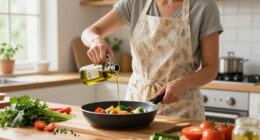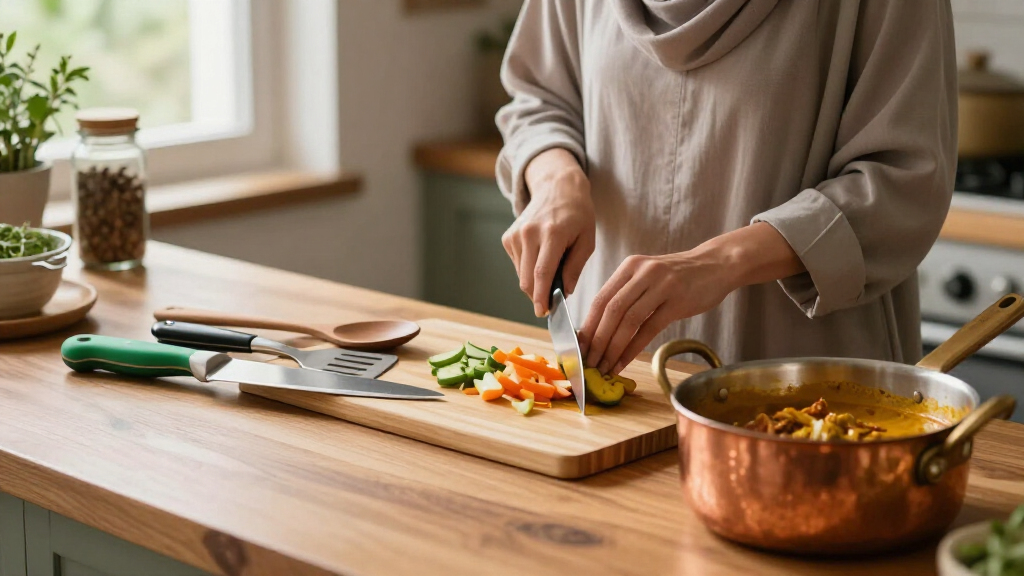

This guide shows you how to build and maintain a dedicated halal cooking utensils set for your kitchen. You will end up with a clearly labeled, physically separated collection of pots, pans, knives, cutting boards, and everyday utensils that are used only for halal ingredients and meals, eliminating cross-contamination with non-halal foods such as pork or alcohol-based ingredients.

Get kitchen staples and gadgets delivered free — and shop member deals
- Fast, free delivery on millions of items
- Access to Prime Big Deal Days deals on October 6–7
- Prime Video, Amazon Music and more included
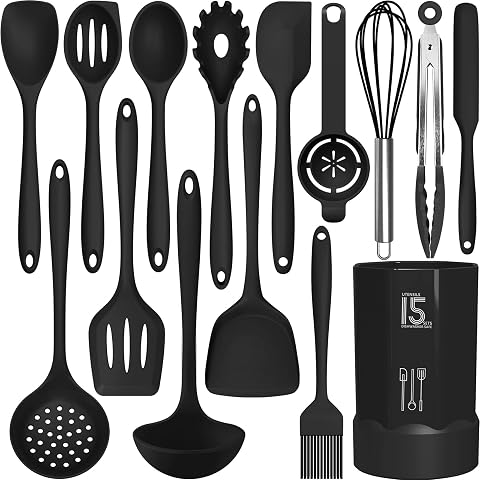
AOTHOD Silicone Cooking Utensil Set, 15 Pieces
- ✔ Brand: AOTHOD
- ✔ Material: Food-grade, BPA-free silicone with stainless steel reinforcement
- ✔ Heat Resistance: Up to 446°F
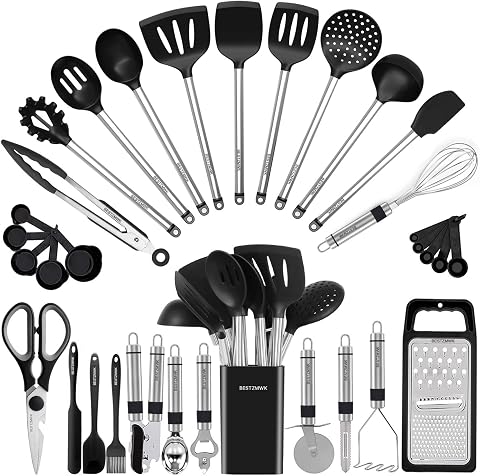
33-Piece Silicone Kitchen Utensil Set with Stainless Steel Handles
- ✔ Brand: BESTZMWK
- ✔ Model: EP216
- ✔ Piece Count: 33

Silicone Cooking Utensils Set – 10 Piece, 600°F Heat Resistant, BPA Free, Dishwasher Safe, Black
- ✔ Material: Food-grade silicone with stainless steel core
- ✔ Heat Resistance: Up to 600°F
- ✔ Pieces Included: 10
This guide is written for beginners. It suits three common situations: Muslim households setting up a fully halal kitchen, families sharing a kitchen where one member keeps halal, and people living in shared accommodation such as student housing. No special cooking skill is required — only careful shopping, labeling, and consistent habits.
Difficulty: Beginner. Total active time: roughly 1-2 hours of organization plus one shopping trip for any equipment you do not already own.
Difficulty: Beginner | Time: 1-2 hours for setup, plus one shopping trip
What You’ll Need
Tools & Materials:
- A set of new utensils: spatulas (slotted and solid), wooden spoon, ladle, tongs, whisk, serving spoons
- At least two dedicated cutting boards (one for raw meat, one for produce)
- At least one dedicated chef’s knife and one paring knife
- One or more dedicated pots and a frying pan
- Permanent markers or a label maker
- Colored masking tape or colored dots/stickers for color-coding
- A dedicated storage drawer, cabinet shelf, or countertop utensil crock
- Dish soap, sponges, and a separate drying rack or drying mat (recommended)
- A roll of plastic wrap or foil for shared-kitchen scenarios (optional)
Knowledge:
- Basic understanding of halal dietary rules: no pork products, no alcohol-based ingredients, meat must be halal-certified or hand-slaughtered per Islamic requirements
- Familiarity with your own kitchen layout — where you can dedicate storage space
- If following a specific madhhab or school of thought, awareness of its rules on shared cookware (some permit washing shared items, others require full separation)
Buy items new where possible. Second-hand or previously used utensils may have contacted non-halal food. Scholars differ on whether thorough washing makes such items permissible, so new equipment removes all doubt. If cost is a concern, prioritize dedicated cutting boards and knives first — these contact raw meat directly and are the highest cross-contamination risk.
AOTHOD Silicone Cooking Utensil Set, 15 Pieces
This is the set we would point most buyers toward first, and the reason comes down to seamless, one-piece construction. Where the 33-piece BESTZMWK set attaches silicone heads to separate steel handles — creating a junction point that needs regular attention — the AOTHOD set molds each tool as a single piece over stainless steel reinforcement. For a halal kitchen, that matters: there are no seams or rivets where food residue can hide, and the whole set goes straight into the dishwasher without fuss.The 446°F heat rating covers nearly every everyday task, from stir-frying to baking, though it falls short of the 600°F ceiling on our compact pick if you regularly sear at very high temperatures. The 15-piece lineup is thoughtfully curated rather than exhaustive: you get the core cooking tools plus a basting brush, egg separator, pasta server, and a utensil holder. Compared with the 33-piece set, you sacrifice measuring cups, a peeler, and a pizza cutter — but you gain a tighter, more coherent collection that fits a standard drawer or countertop crock without crowding. This pick makes the most sense for cooks who want dependable coverage without overbuying.
Pros:
- Seamless one-piece design leaves no gaps where food residue can collect
- Heat-resistant to 446°F for reliable everyday cooking and baking
- Silicone heads protect nonstick cookware from scratches
- Includes a utensil holder and useful extras like an egg separator and basting brush
Cons:
- Fifteen pieces still demand meaningful drawer or countertop storage space
- Heat rating trails the 600°F compact pick for extreme high-heat cooking
- No prep or measuring tools included
Best for: Home cooks who want a complete, hygienic everyday set that covers cooking, baking, and serving without excess
Not ideal for: Buyers outfitting a kitchen from scratch who also need prep tools like measuring cups and a peeler
Bottom line: The most balanced pick in this lineup: hygienic seamless construction, solid heat tolerance, and just enough tools for daily halal cooking.
“The most balanced pick in this lineup: hygienic seamless construction, solid heat tolerance, and just enough tools for daily halal cooking.”
33-Piece Silicone Kitchen Utensil Set with Stainless Steel Handles
If you are starting a halal kitchen from zero — new home, first apartment, or a post-renovation reset — this is the set that solves the most problems at once. Beyond the usual spatulas, spoons, and tongs, the 33-piece lineup adds measuring cups and spoons, a peeler, and a pizza cutter, effectively replacing a separate prep-tool purchase. Neither the AOTHOD nor the 10-piece set comes close on breadth, and that is this model’s entire reason for existing.The construction philosophy differs from our top pick in a way buyers should understand. 304 stainless steel handles give these tools a rigid, substantial feel that pure-silicone sets like our compact pick cannot match — they resist bending when stirring thick doughs or heavy curries. The tradeoff is that the head-to-handle junction creates a seam the AOTHOD set avoids, so cleaning requires slightly more attention to keep everything hygienic. The silicone heads are still nonstick-safe and BPA-free, and hanging holes help offset the storage challenge inherent to 33 pieces. One genuine weak point: the included utensil holder is flimsier than the tools themselves, so plan on a sturdier crock or drawer organizer if you go this route.
Pros:
- Covers cooking, serving, measuring, and prep tasks in a single purchase
- Rigid 304 stainless steel handles resist bending, breaking, and rusting
- Non-scratch silicone heads protect nonstick cookware
- Hanging holes allow compact vertical storage
Cons:
- Included utensil holder feels flimsy compared to the utensils
- Head-to-handle seams require more careful cleaning than one-piece designs
- Thirty-three pieces demand significant storage space
Best for: Anyone outfitting a full kitchen in one purchase, or large families who need a tool for every task
Not ideal for: Minimalists and small-kitchen cooks who would rather own ten great tools than thirty-three adequate ones
Bottom line: The most complete kitchen-in-a-box option here — ideal if breadth matters more than a seamless build.
“The most complete kitchen-in-a-box option here — ideal if breadth matters more than a seamless build.”
Silicone Cooking Utensils Set – 10 Piece, 600°F Heat Resistant, BPA Free, Dishwasher Safe, Black
This is the specialist of the group. With a 600°F heat rating — comfortably ahead of the AOTHOD’s 446°F — this 10-piece set is the one to choose if your cooking regularly involves high-heat searing, deep frying, or wok work common in South Asian and Middle Eastern halal recipes. The stainless-steel core keeps the tools from deforming under that heat, and the seamless construction matches our top pick’s hygienic advantage: no seams, no trapped food.Compared with the other two, this set is deliberately trimmed to essentials — ladle, pasta fork, spoonula, tongs, whisk, brush, and a few spoons and turners. That focus is a feature for apartment dwellers and anyone who resists countertop clutter, but it means no utensil holder and no prep tools. The realistic drawback is feel: full silicone tools are more flexible than steel-handled options, so cooks accustomed to the rigid BESTZMWK handles may find these slightly less authoritative when breaking up dense ingredients. Color choice is limited to black, which is sleek but rules out matching a lighter kitchen palette.
Pros:
- Highest heat resistance in this comparison at 600°F
- Seamless one-piece design prevents food traps and simplifies cleaning
- Stainless-steel core resists deformation and bending
- Compact 10-piece footprint suits small kitchens
Cons:
- All-silicone build feels less rigid than steel-handled alternatives
- Available in black only
- No utensil holder or prep tools included
Best for: Small kitchens and high-heat cooks who want a lean, essentials-only set with top-tier heat tolerance
Not ideal for: Buyers who want rigid metal handles, color options, or a full arsenal of prep tools
Bottom line: A focused, heat-proof essentials kit for compact kitchens — the best pick here if temperature tolerance is your top concern.
“A focused, heat-proof essentials kit for compact kitchens — the best pick here if temperature tolerance is your top concern.”
As an Amazon Associate we earn from qualifying purchases.
Before You Start
Before buying anything, inventory your current kitchen. List every utensil, board, knife, and pot, and mark which ones have touched pork, non-halal meat, or alcohol-based ingredients (vanilla extract, cooking wine, mirin, some vinegars). This tells you exactly what you must replace and what you can designate as halal-only going forward.
Next, decide your separation standard. There are two common approaches:
- Full separation: halal items are never used for anything non-halal, and are stored apart. This is the approach most families and practicing households follow.
- Wash-and-share: one set of utensils is used for everything but washed thoroughly between uses. Some schools of Islamic law permit this; others do not. This guide follows the full-separation approach because it works for everyone, but confirm the standard with your family or your own religious guidance before you begin.
Finally, plan your color system before shopping. A single color decision (for example, green = halal) makes every later step faster and prevents mix-ups.
Step-by-Step Instructions
Step 1: Choose a color or label system for halal items
Pick one identifying marker for all halal-only equipment — for example, a single color of tape or sticker (green is a common and easily recognized choice), or the word ‘HALAL’ written in permanent marker. Write the system down: specify the color, the word, and where the label goes on each item (for example, handle end). Apply the same marker in the same visible spot on every item; consistency matters more than the specific choice.
Tip: Pick a color that no other kitchen items already use. If your existing cutting boards are already green, choose another color such as blue or yellow to avoid confusion.
Check: You have a written rule, such as ‘green tape on every halal item, placed on the handle’ — and everyone in the household knows it.
Step 2: Buy or designate your core utensil set
Purchase new versions of the items that contact food most directly: two cutting boards, a chef’s knife, a paring knife, a slotted spatula, a solid spatula, a wooden spoon, a ladle, tongs, a whisk, and two serving spoons. Add at least one pot and one frying pan if your cookware previously handled non-halal food. Choose stainless steel and silicone where possible because they are non-porous and easy to sanitize. Avoid buying wooden items second-hand, since wood absorbs residues and is difficult to certify as clean.
Tip: If you cook multiple dishes at once, buy duplicates of spatulas and tongs now — it prevents borrowing from the wrong set later.
Check: You have every item on your list, new and unused, ready to label.
Step 3: Label every item immediately
Apply your color tape or marker label to each item before anything gets used. Wrap tape around utensil handles, knife handles, and pot lids. Write ‘HALAL’ directly on the corner or edge of cutting boards with permanent marker. Label everything before the first wash so the habit starts clean — an unlabeled item in a drawer is the most common source of accidental mixing.
Tip: For cutting boards that go in the dishwasher, tape can peel. Engrave or deeply scratch the word into a corner, or use a hole-punched metal tag tied with wire.
Check: Every item in your new set carries the same visible label, and you can identify any halal item at a glance from across the kitchen.
Step 4: Set up dedicated storage space
Assign one drawer, one cabinet shelf, or one utensil crock exclusively to the halal set. Clear it completely, wipe it down, and place only labeled items inside. Position the halal storage physically apart from any non-halal equipment — a different drawer, a higher shelf, or the opposite side of the kitchen. If you share a kitchen with non-halal cooks, install a lockable drawer, use a labeled storage bin with a lid, or claim a high shelf out of reach.
Tip: In shared housing, a plastic storage bin with a snap lid labeled ‘HALAL — PLEASE DO NOT USE’ is inexpensive and clearly communicates the boundary to housemates.
Check: The halal set occupies its own space, nothing unlabeled is mixed in, and household members or housemates can see the boundary.
Step 5: Establish separate washing and drying routines
Define how the halal set gets washed, and make it different from the general routine if others in the home cook non-halal food. Follow this best practice: wash halal items with a dedicated sponge and dish soap immediately after use, and dry them on a separate drying mat or rack before returning them to their drawer. Never leave halal utensils soaking in a shared sink alongside dishes that carried pork or non-halal meat.
Tip: Keep a dedicated sponge in the halal drawer or crock itself so it never gets swapped with the general sponge.
Check: Halal items never sit in shared dishwater, and they return to labeled storage dry and clean.
Step 6: Cook your first fully halal meal with the set
Prepare a simple meal — for example, rice cooked in the dedicated pot with halal-certified chicken cut on the labeled board using the labeled knife. Cook, serve, wash, and store everything using the new routines from start to finish. Treat this first full cycle as a training run that reveals any gaps, such as a missing utensil or a storage spot that is awkward to reach mid-cooking.
Tip: Note any moment during cooking when you reached for a non-halal item by reflex — that item is a candidate to duplicate for the halal set.
Check: You complete one full cook-serve-wash-store cycle using only labeled items, without reaching for anything from the general kitchen supply.
Step 7: Brief everyone who uses the kitchen
Explain the system to family members, housemates, or guests who may cook: tell them which items are halal-only, where they live, and what to do if an item is accidentally used for non-halal food. Agree on the recovery rule in advance — typically, the item is washed thoroughly with hot water and soap, and depending on your school of thought, either returned to service or reassigned to general use. A short conversation now prevents most future conflicts.
Tip: Stick a small printed card inside the halal drawer or bin listing the rules. New housemates and guests will read it without you having to explain each time.
Check: Everyone who cooks in the kitchen can state the rule and point to the halal storage location.
Common Mistakes to Avoid
- Using halal-labeled cutting boards or knives for non-halal food ‘just once’ while cooking for guests. — Keep at least one general-purpose board and knife outside the halal set. If everything in the kitchen is halal-only, there is no backup, and pressure to bend the rule increases.
- Storing halal utensils loose in a shared drawer with unlabeled items. — Never mix labeled and unlabeled items in one drawer. Even a brief overlap leads to grab-by-feel mistakes during busy cooking. Use a bin or dedicated drawer exclusively.
- Buying porous second-hand wooden utensils or boards and assuming washing makes them halal. — Buy wood new, or replace porous wooden items with silicone, stainless steel, or plastic versions that can be fully sanitized.
- Labeling only some items and finishing the rest later. — Label the entire set in one sitting before first use. Partial labeling is the single most common cause of system breakdown within the first month.
Troubleshooting
Problem: A halal-labeled utensil was accidentally used for pork or non-halal meat.
Solution: Wash the item immediately with hot water and dish soap, scrubbing all surfaces. For metal and silicone items, boiling water or a dishwasher cycle adds assurance. Whether the item returns to the halal set or is reassigned to general use depends on your school of thought — many hold that thorough washing of non-porous materials is sufficient, but if you follow a stricter position, move the item out of the halal set and label a replacement.
Problem: Labels peel off in the dishwasher or during washing.
Solution: Switch to etched or scratched markings on boards, tie-on metal tags for utensils, or replace tape each time it lifts. Check labels during every drying session — if a label is gone, re-label before the item goes back in storage.
Problem: A housemate or family member keeps using the halal set by mistake.
Solution: Move the halal set to a less convenient location (a higher shelf or lockable bin), increase the label size, and place the printed rules card on the outside of the storage container. If mistakes continue in shared housing, store the set in your own room.
Problem: You cannot afford to replace cookware right away.
Solution: Prioritize in this order: cutting boards and knives first (direct raw-meat contact), then utensils, then cookware. Existing stainless steel pots can be washed thoroughly and, per many scholars’ rulings, used for halal cooking afterward — but confirm this against your own religious guidance if unsure.
What Success Looks Like
Your halal utensil set is complete when all of the following are true:
- Every item in the set — boards, knives, utensils, pots, pans — carries the same visible label.
- All labeled items are stored together in one location, physically separate from general kitchen equipment.
- Nothing from the set has been used for pork, non-halal meat, or alcohol-containing ingredients.
- The set has its own washing routine, ideally with a dedicated sponge and drying spot.
- Everyone who uses the kitchen knows the system and where the halal items live.
- You have completed at least one full cooking cycle using only the halal set.
If you can hand any item to a guest and explain in one sentence which set it belongs to and why, the system is working.
Next Steps
Once the set is running, expand and maintain it:
- Add a second baking sheet, grill pan, or wok to the halal set if your cooking style demands it.
- Re-check labels monthly and replace any that have worn off.
- Set up a matching system for the refrigerator — a labeled shelf or container bin for halal-only ingredients.
- Keep a small travel kit (labeled folding knife, mini board, and spatula) for cooking in other people’s kitchens or on trips.
- If household disagreement about shared cookware arises, consult a trusted imam or scholar for guidance specific to your situation rather than relying on general online advice.
Frequently Asked Questions
It depends on your school of thought. Many scholars hold that washing non-porous materials like stainless steel, glass, and silicone with soap and water makes them usable for halal cooking. Others, and many households as a practical matter, prefer full separation to remove all doubt. Full separation also avoids friction in shared kitchens. This guide uses full separation because it satisfies every standard.
What about alcohol-based ingredients like vanilla extract or cooking wine?
Ingredients containing alcohol — cooking wine, mirin, some extracts and flavorings — should be treated as non-halal in this system. Do not use the halal set with them. Look for alcohol-free vanilla and certified halal substitutes when cooking within the halal set.
Can I use the same halal set for vegetarian or fish dishes?
Yes. Vegetarian dishes and fish from water sources are generally permissible, so the halal set handles them without issue. Many households still keep one labeled board for raw meat and one for produce within the halal set, purely as a food-safety measure against bacteria, not a halal requirement.
Use a labeled, ideally lockable storage bin that lives in your room or a designated shelf. Wash halal items immediately after use in a clean sink, or wash them in your own basin. Keep a printed card on the bin explaining the system. This setup is standard practice and works well in shared accommodation.
Do wooden utensils and boards need special treatment?
Yes — treat wood as high-risk. Wood absorbs liquids and food residues and cannot be fully sanitized the way metal or silicone can. Buy wooden halal items new only, never second-hand, and if a wooden item contacts non-halal food, many stricter positions require replacing it rather than washing it. When in doubt, choose silicone or stainless steel alternatives.
NFL season / tailgating Picks
team gear
As an affiliate, we earn on qualifying purchases.