🔍 Read the full analysis: Pallotte Cacio E Ova: Abruzzo's Cheese-and-Egg Balls In Tomato Sauce on Mad Tasting

Get kitchen staples and gadgets delivered free with Prime
- Fast, free delivery on millions of items
- Prime Video, Amazon Music and more included
- Member-only deals all year
TL;DR
A Mad Tasting recipe guide describes pallotte cacio e ova, Abruzzo’s meatless cheese-and-egg balls, and explains how cooks can prepare them in tomato sauce. It recommends balancing aged and mild cheese, adding breadcrumbs gradually and choosing whether to brown the balls first or simmer them directly in sauce.
Mad Tasting’s guide to pallotte cacio e ova presents the Abruzzese dish as a meatless alternative to meatballs, made chiefly from grated cheese, eggs and stale bread and served in tomato sauce. The article focuses on how to balance the mixture and cook the balls, while describing the dish as a longstanding regional home-style food rather than a recipe with one fixed formula.
The name translates roughly as “cheese and egg balls”: “cacio” refers to cheese and “ova” to eggs in local dialect. Cheese supplies the main savory flavor, egg binds the ingredients, and bread gives the mixture structure. Herbs such as parsley or garlic may also be used. The guide recommends a combination of aged pecorino and a milder cheese, with the balance adjusted to account for each cheese’s saltiness and moisture.
For a tender texture, the article advises grating the cheese finely and adding breadcrumbs or crumbled stale bread a little at a time. The mixture can change as the bread absorbs moisture, so a short rest may help show whether more crumbs are needed. The guide suggests cooking a small test ball and tasting it before shaping the full batch, allowing cooks to adjust seasoning and consistency rather than relying on a universal ratio.
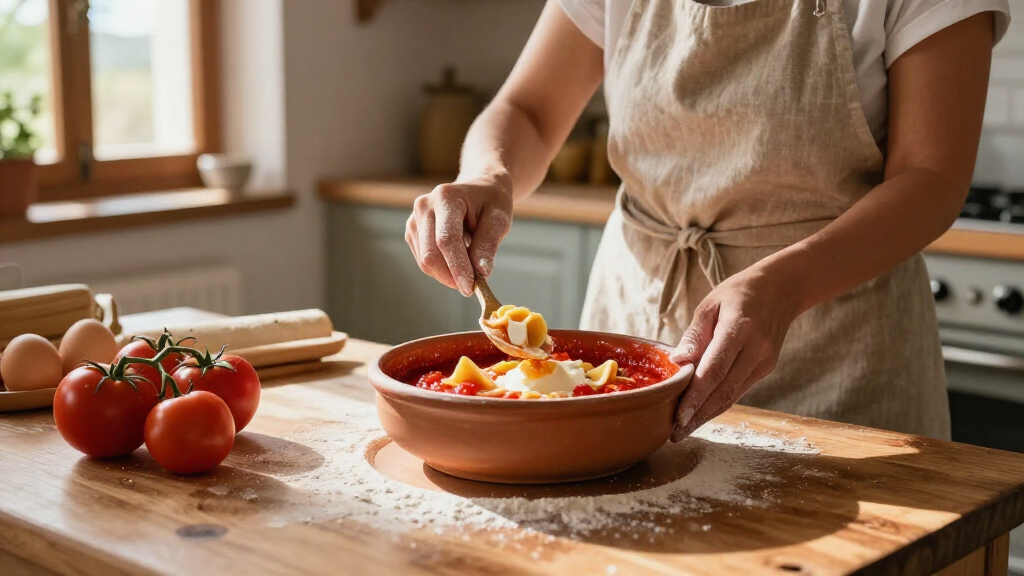
Many versions are browned or fried before finishing in tomato sauce; some cooks instead put the balls directly into the sauce. The source says both approaches appear in household cooking but does not provide a single standard method or detailed cooking times. Pallotte may be served as a starter, a main course with bread and greens, or alongside pasta. Their meatless description concerns the principal ingredients; the source cautions that some cheeses use animal rennet, which may matter to vegetarians.
Pallotte Cacio E Ova Cheese and Egg Balls in Tomato Sauce
This meatless Abruzzese dish turns cheese, eggs and bread into a hearty meal. The guide’s advice: adjust the mixture to the ingredients you have.
A few ingredients, a filling dish
Cheese brings savory flavor, eggs bind the mixture, and bread gives it structure.
Balance the cheese
Pair aged pecorino with a milder cheese, adjusting for saltiness and moisture.
Add bread gradually
Use breadcrumbs or stale bread a little at a time; a short rest shows how the mixture holds.
More than one course
Serve the balls as a starter, with bread and greens, or alongside pasta.
Choose a cooking route
Household versions use either approach; the guide does not prescribe one standard method.
- Brown or fry the balls.
- Finish cooking them in tomato sauce.
- Put the balls straight into the sauce.
- This is another household approach.
Make the mixture work
Cheese and bread vary, so use the mixture’s texture to guide adjustments.
Finely grate the cheese and mix with egg, herbs and some bread.
Let the mixture rest briefly so the bread can absorb moisture.
Taste it and adjust seasoning or consistency before shaping the rest.
A taste of Abruzzo
Pallotte reflect “cucina povera”: resourceful home cooking that makes a generous meal from modest ingredients. Household recipes vary, with no single fixed formula.
A Meatless Dish Built on Cheese
The dish offers readers a clear example of how a few everyday ingredients can form a substantial meal without meat. Cheese provides much of the dish’s savory character, while eggs and bread create a filling texture and tomato sauce turns the balls into a meal that can be served in several ways. That makes the preparation relevant to cooks looking for a meatless dish, as well as to people interested in regional Italian food.
The guide also puts practical limits on what a recipe can promise: cheese saltiness and bread dryness vary, so cooks may need to adjust the mixture. That advice is useful beyond this particular dish because it explains why a fixed amount of breadcrumbs may not work identically in every kitchen. The source does not provide nutritional figures or claim that the dish meets every vegetarian diet; the rennet in some cheeses is a specific caveat.
Popular right now

KitchenAid 5.5-Quart Bowl-Lift Stand Mixer, Porcelain White

Bose QuietComfort Wireless Bluetooth Noise-Cancelling Headphones, Ice Blue

Dyson Cyclone V10 Origin Cordless Vacuum
As an affiliate, we earn on qualifying purchases.
Abruzzo’s Resourceful Home Cooking
Pallotte cacio e ova are associated with Abruzzo, in central Italy, between the Apennines and the Adriatic coast. The source links the dish particularly to rural and pastoral cooking, where bread, cheese and eggs could make a filling meal when meat was scarce or expensive. It describes this approach as “cucina povera,” or resourceful home cooking: making generous food from modest ingredients rather than following one strict recipe.
The guide does not assign the dish a precise origin, inventor or date. Instead, it calls pallotte a longstanding regional home-style preparation and notes that household versions vary according to available ingredients. Pecorino di Farindola PDO is mentioned as one regional cheese, but the article says it is not required; cooks can use a cheese they enjoy and adjust seasoning to its salt level.
““cucina povera,” or resourceful home cooking”
— Mad Tasting
Recipes Vary by Household
The source does not identify a single authoritative recipe, exact ingredient ratios, or one definitive cooking method. Household versions differ, and the guide offers adaptable technique rather than a complete standardized formula with quantities, temperatures or timings. It also does not establish a precise historical origin for the dish.
Whether a particular serving is suitable for a vegetarian depends in part on the cheese used: some cheeses are made with animal rennet. The source advises checking the label when that matters, but does not name the rennet used in any specific cheese or product.
Adjust the Mixture as You Cook
The guide’s practical next step for home cooks is to make a small test ball before shaping the rest. After finely grating the cheese and combining it with egg, herbs and some bread, cooks can let the mixture rest briefly, then check whether it holds together. Add breadcrumbs gradually rather than all at once; if the first test needs a change, adjust the remaining mixture before forming the batch.
Choose whether to brown the balls first or simmer them directly in tomato sauce, recognizing that the source presents both as household approaches rather than prescribing one as the only method. The article provides no food-safety temperatures or storage instructions. Its reported development is the publication of a recipe guide; no future announcement or publication milestone is specified in the source material.
Key Questions
What are pallotte cacio e ova?
They are Abruzzese cheese-and-egg balls, usually made with grated cheese, eggs and stale bread or breadcrumbs, then served in tomato sauce.
Are pallotte cacio e ova vegetarian?
The balls are described as meatless, but some cheeses use animal rennet. Check the cheese label if that affects whether the dish suits your diet.
What cheese does the guide recommend?
It suggests combining aged pecorino with a milder cheese. The pecorino adds a sharper, saltier flavor, while the milder cheese rounds it out. Pecorino di Farindola PDO is an option, not a requirement.
Should the balls be fried before going into the sauce?
The guide says pallotte are commonly browned or fried before they finish cooking in tomato sauce, while some household versions go straight into the sauce. It does not identify one method as mandatory.
How can cooks keep the balls from becoming dense?
Add bread gradually, allow the mixture a short rest, and cook a small test ball before shaping the full batch. The source notes that bread and cheese vary in dryness and moisture, so the mixture may need adjustment.
Source: Mad Tasting