TL;DR
The Kitchn published a recipe review of sweet potatoes topped with pastry cream and caramelized sugar, adapting crème brûlée’s crackly top to a roasted vegetable. Reviewer Ashia Aubourg said the broiler worked as an alternative to a kitchen torch, though the sugar needs close attention because it can darken quickly.
The Kitchn has published a recipe review of sweet potatoes topped with pastry cream and caramelized sugar, a dish that borrows crème brûlée’s crisp topping for a roasted vegetable. Reviewer Ashia Aubourg reported that an oven broiler worked in place of a kitchen torch, while warning that the sugar can darken quickly under the heat.

Get kitchen staples and gadgets delivered free with Prime
- Fast, free delivery on millions of items
- Prime Video, Amazon Music and more included
- Member-only deals all year
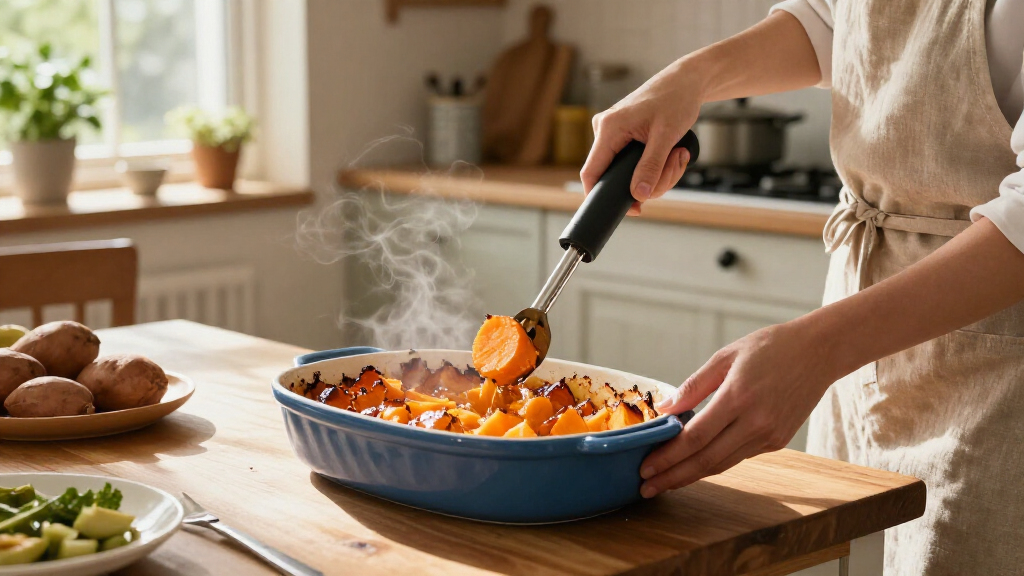
The method begins by roasting fork-pricked sweet potatoes at 450°F for about 45 minutes, until tender. The source says microwaving is another option if time is limited, though it does not provide detailed microwave instructions. After cooking, the potato is split and its flesh gently mashed; a layer of pastry cream and granulated sugar goes on top.
A kitchen torch can caramelize the sugar, but Aubourg used the oven’s broiler instead. The article recommends broiling for about two to four minutes, watching closely because the topping can turn dark caramel rapidly. It advises letting the finished potato rest for at least two minutes so the sugar hardens before serving.
Aubourg described the result as a contrast of tender, mildly sweet potato, creamy vanilla custard and a crisp sugar shell. That is the reviewer’s assessment, not a measured comparison or independently tested finding. The article also suggests trying turbinado or demerara sugar, adding citrus zest or Earl Grey to the pastry cream, or using roasted delicata squash or pumpkin as a base.
A Broiler Makes the Sugar Crust Accessible
The recipe’s practical appeal is that a kitchen torch is not required: the broiler can produce the caramelized top using a common oven setting. That makes the technique more approachable for home cooks who want the crack of crème brûlée without buying specialized equipment.
It also recasts a familiar sweet potato preparation as a dish with custard and a brittle sugar layer. The source presents it as a flexible recipe idea, rather than establishing that it is a traditional side dish or suitable for every meal. Because pastry cream and a generous sugar topping make the preparation notably dessert-like, whether it fits a particular menu is a matter of serving preference.
Popular right now

Dyson V8 Cordless Vacuum

Vitamix 5200 Blender with 64 oz. Container, Black

Dyson Car+Boat Cordless Handheld Vacuum
As an affiliate, we earn on qualifying purchases.
Aubourg said she was inspired by an Instagram video from @eatsbyrachel, which showed a sweet potato finished in a crème brûlée style. The creator’s clip, according to Aubourg, did not give specific pastry-cream instructions, so the reviewer followed a separate Kitchn pastry cream recipe.
The wider technique applies the defining feature of crème brûlée—custard beneath caramelized sugar—to a different base. The Kitchn article proposes roasted delicata squash and pumpkin as alternatives, and mentions flavor additions such as vanilla, citrus zest and Earl Grey tea. These are suggestions in the source, not reported results from Aubourg’s test.
““The broiler worked well!””
— Ashia Aubourg, The Kitchn reviewer
Recipe Details Still Depend on the Cook
The source is a single reviewer’s account; it does not report a formal comparison of torch and broiler results or provide nutritional information. The Instagram creator’s original clip, as described by Aubourg, did not specify how to make the pastry cream, and the review relies on a separate recipe for that component.
Broiler intensity and the time needed to brown sugar can vary by oven, so the article’s two-to-four-minute range should not be read as a guarantee. The source also gives no detailed microwave method for cooking the sweet potato. It does not establish whether the dish was tested as part of a full meal or how it performs when made ahead.
Home Cooks Can Test Suggested Variations
The article does not announce a follow-up test or a scheduled next development. Its next step for readers is to try the described method, checking the topping closely while it broils and allowing it to rest before serving. Cooks can also experiment with different sugars, custard flavors or roasted squash, though those variations are presented as ideas rather than tested recommendations.
For a more complete cooking guide, readers would need to consult the linked pastry-cream recipe and use their judgment with their own oven. The source does not provide food-safety storage guidance or a make-ahead timeline for the finished dish.
Key Questions
How do you make crème brûlée sweet potatoes?
Roast fork-pricked sweet potatoes at 450°F for about 45 minutes, until tender. Split and gently mash each potato, add pastry cream and granulated sugar, then caramelize the sugar with a torch or under the broiler.
Can you make the topping without a kitchen torch?
Yes. The Kitchn reviewer used the oven’s broiler and reported that it worked. The article suggests broiling for about two to four minutes, while watching closely because the sugar can darken quickly.
Why should the sweet potato rest before serving?
The article recommends waiting at least two minutes so the caramelized sugar can harden into a crackly shell. The short rest also gives the hot dish time to cool slightly.
What variations does the article suggest?
Suggestions include using turbinado or demerara sugar, adding citrus zest or Earl Grey tea to the pastry cream, and trying roasted delicata squash or pumpkin instead of sweet potato. The source presents these as ideas, not as variations tested in the review.
Source: thekitchn.com