TL;DR

Get kitchen staples and gadgets delivered free with Prime
- Fast, free delivery on millions of items
- Prime Video, Amazon Music and more included
- Member-only deals all year
Good Housekeeping reports that food-safety expert Darin Detwiler advises discarding an entire loaf when any bread is moldy. Mold can send microscopic threads through soft bread beyond the visible patch, and cutting away the affected area cannot guarantee the rest is uncontaminated.
When mold appears on one slice of bread, food-safety expert Darin Detwiler recommends discarding the entire loaf, rather than cutting off the visible patch and eating the rest. The advice, reported by Good Housekeeping, reflects the risk that mold may have spread through soft, porous bread in microscopic threads that cannot be seen.
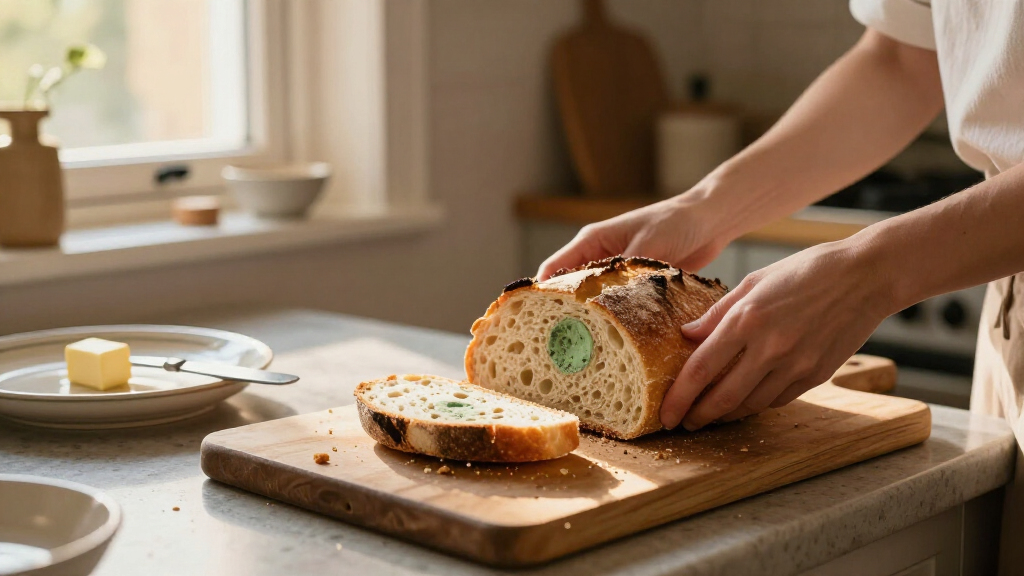
The green, gray or black fuzz visible on bread may show only part of the growth. Detwiler, a food-safety expert and professor emeritus of food regulatory affairs, told Good Housekeeping that mold sends out microscopic threads that can travel below the surface. In bread, those threads may extend beyond the visibly affected area.
That makes trimming the spot an unreliable way to salvage the loaf. Removing the mold you can see does not guarantee removal of contamination, Detwiler said. The guidance applies to sliced bread as well: if one slice is moldy, the rest of the loaf may also have been exposed, even if no growth is visible.
Good Housekeeping reports that some molds can produce mycotoxins, and that consuming or inhaling mold may cause health problems such as nausea, vomiting or breathing difficulties. The report advises people, particularly those who are immunocompromised, not to take the chance. Detwiler’s recommendation is to put the whole loaf in the trash or compost; the report does not offer a way to make moldy bread safe by cooking or toasting it.
Why Cutting Away Mold Falls Short
The advice matters because mold is not necessarily confined to the patch a person can see. Bread’s soft, porous structure can allow fungal threads to move into areas that look normal, making a visual check an unreliable test of whether the remaining slices are safe.
Discarding the loaf avoids guessing about hidden growth. That can mean throwing away food that appears mostly unaffected, but the report’s safety guidance puts avoiding potential exposure ahead of salvaging the loaf. People with weakened immune systems may face added concern, according to the report.
As an affiliate, we earn on qualifying purchases.
How Bread Storage Affects Mold
The report also offers steps to reduce moisture around bread, since Detwiler identifies keeping it dry as the key to longer storage. A breadbox or paper bag allows air to circulate and can help limit moisture buildup. These are storage suggestions, not a guarantee that bread will remain mold-free.
For longer-term storage, the report says the freezer is suitable, particularly for bread intended for toasting. It advises against the refrigerator, which can make bread go stale more quickly than storing it at room temperature. The source does not specify exact storage durations or temperatures.
“If we see [mold], it’s like the tip-of-the-iceberg sort of thing.”
— Darin Detwiler, food-safety expert and professor emeritus of food regulatory affairs, quoted by Good Housekeeping
What the Visible Patch Cannot Show
The extent of any hidden mold cannot be determined by looking at the loaf, according to the explanation in the report. It does not provide a way for consumers to identify how far microscopic threads have spread, or a test for establishing that unaffected-looking slices are safe.
The source also does not quantify the likelihood or severity of illness from a particular moldy loaf, identify the mold species involved, or give storage time limits. Its advice is precautionary: because the visible patch may not mark the edge of growth, discard the loaf rather than trying to assess it slice by slice.
Discard This Loaf, Store the Next Dry
For a loaf with any visible mold, the next step in the report’s guidance is to discard or compost the entire loaf, including slices that appear unaffected. Do not rely on trimming the moldy part as proof that the remainder is safe.
For future loaves, use a breadbox or paper bag to allow airflow and limit moisture, or freeze bread for longer storage. The report does not give a specific shelf-life estimate; check bread before eating and follow the discard advice if mold appears.
Key Questions
Should I throw away the whole loaf if just one slice is moldy?
Yes, according to the report’s food-safety advice. Detwiler says microscopic mold threads can travel through soft bread, so unaffected-looking slices may not be free of growth.
Can I cut off the moldy part and eat the rest?
The report advises against it. Cutting away visible mold does not guarantee that contamination has been removed, because hidden threads may extend beyond the spot.
Can I toast moldy bread to make it safe?
The source does not say that toasting makes moldy bread safe. Its recommendation is to discard the whole loaf once mold is visible rather than trying to cook or toast it.
How should I store bread to help prevent mold?
Detwiler recommends keeping bread as dry as possible. The report suggests a breadbox or paper bag for airflow and says the freezer is suitable for longer storage. It cautions that a refrigerator can make bread stale more quickly than room-temperature storage.
Source: rss
Fall Picks
fall essentials
As an affiliate, we earn on qualifying purchases.