TL;DR
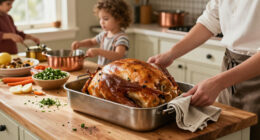
For Thanksgiving, choose a roasting pan that fits your turkey with room around it and leaves space for air to circulate in your oven. Check the pan’s material, sturdy handles, rack, cooktop compatibility, and cleaning instructions before buying. A roasting pan that is unwieldy when full can turn the trip from oven to counter into the riskiest part of dinner.
The turkey can fit in the pan and still be too big for your oven. That mismatch can leave the pan jammed against an oven wall, block airflow, or make it hard to pull out safely when the bird is hot and heavy.

Get kitchen staples and gadgets delivered free with Prime
- Fast, free delivery on millions of items
- Prime Video, Amazon Music and more included
- Member-only deals all year
The right roasting pan for Thanksgiving matches your turkey and oven, with sturdy handles you can grip through oven mitts. You’ll learn how to compare size, material, racks, stovetop use, and cleanup so your pan earns its cupboard space beyond one holiday meal.
One thing to keep in mind: a roasting pan holds more than a turkey. It may also carry hot fat and drippings, so your route from oven to counter and your landing spot matter just as much as the pan’s dimensions.
Measure your oven rack, turkey, and pan interior; capacity labels alone do not guarantee a fit.
Choose stainless steel for durability and possible stovetop gravy use, after checking cooktop compatibility.
A rack lifts the turkey above its juices, but sturdy vegetables can work as an alternative.
Support a disposable aluminum pan inside a sturdy rimmed baking sheet before filling it.
Read manufacturer care limits before using a pan on the stove, at high heat, or in the dishwasher.
Measure your oven and turkey before you choose a pan
For Thanksgiving, choose a roasting pan that fits your turkey without touching the oven walls and leaves room for air to circulate. Check the pan’s interior dimensions, your turkey’s length and width, and your oven’s usable space; a capacity label alone cannot tell you whether the bird will fit.
Measure the oven rack where the pan will sit, including the space between the rack and the door or back wall. A pan that fits on the rack may still be awkward to slide in if its handles catch. For example, if your turkey is long and the handles add several inches, take those into account before buying.
Think about the load, too. A pan is designed to hold a large cut of meat and collect drippings during oven cooking, so its usable depth and footprint need to suit both the bird and the juices. A pan that is too small can spill; an oversized one can be difficult to carry and may crowd your oven.
Before the holiday, test the empty pan in the oven and check that it sits level on the rack. This quick check can save you from discovering, with guests waiting, that the door will not close cleanly. Your turkey should have a little breathing room, like a suitcase packed with care rather than squeezed shut.
Popular right now

Hisense 43-Inch R6 Series 4K UHD Smart Roku TV (43R6G)

KitchenAid 5.5-Quart Bowl-Lift Stand Mixer, Porcelain White

De'Longhi La Specialista Touch Semi-Automatic Espresso Machine with Grinder
As an affiliate, we earn on qualifying purchases.
Pick a pan material that matches how you cook
Stainless steel suits cooks who want a durable pan that can often move from oven to stovetop for gravy. Aluminum is lighter and heats quickly, while nonstick and enamel surfaces can make food release or cleanup easier; the right choice depends on your recipes and the manufacturer’s care limits.
Stainless steel can handle years of holiday use, and many pans work well for browning drippings into gravy. Still, check cooktop compatibility before placing yours over a burner. A broad pan may not sit safely across two burners, and not every stainless pan works with induction.
Aluminum keeps the load lighter, which can help when you’re carrying a large turkey, but some aluminum pans can react with acidic ingredients. Nonstick surfaces release food easily, yet metal utensils and high heat may damage their coating. Enameled steel cleans readily but can be less forgiving if dropped.
Imagine lifting a full pan after hours of cooking: a few pounds of pan weight make a real difference alongside the turkey and hot drippings. Compare materials and care instructions before buying, and don’t assume two pans with similar appearances have the same temperature or dishwasher limits. If gravy matters to you, confirm the pan can safely go on your stove.
Use a rack to lift the bird and catch the drippings
A roasting rack lifts the turkey above the pan juices, giving air more room to move around the bird and letting drippings collect below. You don’t need a rack to roast successfully, though: sturdy vegetables can provide an oven-safe bed if they support the turkey without letting it tip.
A rack can make it easier to lift the bird out of the pan and separate it from the drippings you’ll use for gravy. It also reduces the chance of the turkey sitting directly in accumulated juices. But a rack adds another piece to clean and store, and some designs can be fiddly to handle.
If your pan has no rack, try a bed of sturdy vegetables such as carrots, onions, or celery, provided your recipe suits them. They act like a little platform and flavor the drippings. For example, a cook making gravy may welcome those browned vegetable bits, while someone who wants simple cleanup may prefer a removable rack.
Do not lift a heavy turkey by the rack. Use appropriate utensils or a tested lifting method, keep the pan level, and set it on a heatproof surface. If the bird sticks, follow your recipe and loosen it gently rather than pulling hard and sending hot juices sloshing.
Follow these five checks before roasting day
Prepare your roasting pan before Thanksgiving by checking the fit, stability, handles, surface, and landing spot. A few minutes of setup can turn the busiest part of dinner into a calm move from oven to counter.
- Measure the fit. Confirm the turkey fits inside the pan and the pan fits your oven with clearance around it.
- Check the structure. Look for a stable base, firm handles, and no visible warping or damage.
- Plan the route. Clear clutter between oven and counter, and pick a heatproof surface for the hot pan.
- Read the limits. Confirm the oven temperature range and, if you plan to make gravy in the pan, cooktop compatibility.
- Test the setup. Slide the empty pan into the oven and make sure it sits securely and the door closes.
These checks matter because a large turkey and hot drippings can make the pan heavy and difficult to control. A sturdy pan with comfortable handles helps, but it does not replace a clear path or stable landing place. If you cook with a disposable aluminum pan, put it inside a sturdy rimmed baking sheet before filling it; thin foil can flex under the weight.
Once the pan is ready, use a food thermometer and follow a reliable recipe for cooking and handling the turkey. Pan selection affects the roasting setup, but it cannot tell you whether the meat has reached a safe temperature.
Choose between stainless, nonstick, and disposable pans
Stainless steel is the most versatile option for cooks who want a reusable pan for roasting and gravy, while nonstick can simplify release and disposable aluminum can save cleanup time. Each choice comes with a tradeoff in weight, durability, stovetop use, and handling.
| Pan type | Good fit when | Check before using |
|---|---|---|
| Stainless steel | You want durability and may make gravy in the pan | Cooktop and induction compatibility; pan weight |
| Nonstick | You value easy release and simpler cleanup | Temperature limit; utensil and cleaning guidance |
| Disposable aluminum | You want a one-time option or lighter cleanup | Support it with a sturdy rimmed sheet before filling |
Picture two Thanksgiving kitchens: one cook scrapes browned bits into gravy, while another wants to roast the turkey and recycle the pan afterward. Stainless steel often suits the first routine; disposable aluminum may suit the second, but only with solid support because a full thin pan can buckle.
There isn’t one best pan for every household. If you roast chicken and vegetables throughout the year, a reusable pan may justify its storage space. If you cook turkey once every few years, borrowing a sturdy pan or using a supported disposable one may be more sensible. Check product instructions for temperature, cooktop, and dishwasher claims before you rely on them.
Clean the pan without damaging its finish
Clean a roasting pan according to its material and the manufacturer’s instructions, especially if it has a nonstick coating or enamel finish. For stuck drippings, a warm-water soak with dish soap and a suitable nonabrasive scrubber often loosens residue without scratching the surface.
After dinner, let the pan cool enough to handle safely, then soak it for about 15 minutes in warm water with a drop of dish soap. Loosen softened bits gently. Harsh abrasives can damage coated or enameled pans, while an aggressive scrub can turn an easy-clean surface into a rough one.
A removable rack can make scrubbing easier because you can clean the rack and pan separately. Tall sides may be useful for catching juices, but they can make it harder to reach the corners. For example, if your sink is small, a wide roasting pan may need a few rounds of soaking rather than fitting flat under the tap.
Check the care instructions before putting the pan in a dishwasher. Dishwasher safety varies by material, coating, handles, and construction, and a pan that fits the machine may still be unsuitable for it. Dry the pan fully and store it where the handles won’t get bent or scratched.
Frequently Asked Questions
What size roasting pan do I need for my turkey?
Start with your turkey’s dimensions, then check the pan’s interior size and your oven clearance. Capacity labels alone do not guarantee that a particular bird will fit comfortably or leave room for airflow.
Do I need a roasting rack?
No. A rack raises the turkey above the juices and helps collect drippings, but sturdy vegetables can provide an oven-safe alternative if they support the bird evenly. Follow your recipe and keep the turkey stable.
Can I roast a turkey in a disposable aluminum pan?
Yes, but a thin disposable pan can flex under a heavy turkey. Set it inside a sturdy rimmed baking sheet or another suitable support before filling it, and carry it carefully.
Can I use a roasting pan on the stovetop to make gravy?
Only if the manufacturer says the pan is cooktop-safe and it sits securely on your burner. Check induction compatibility if you have an induction stove, and avoid balancing a broad pan unsafely across burners.
Is stainless steel or nonstick better for Thanksgiving?
Stainless steel is durable and often suits browning and gravy, while nonstick can make food release and cleanup easier. Nonstick needs careful use within its temperature limits and with suitable utensils, so follow the product instructions.
Can I use a roasting pan for foods besides turkey?
Yes. Many roasting pans work for chicken, beef, pork, vegetables, and large casseroles, as long as the material and care instructions suit the recipe. A reusable pan can earn its cupboard space through year-round meals.
How do I stop turkey from sticking to the pan?
Use a rack if you have one, or follow your recipe’s guidance for oiling the rack or preparing the pan. Avoid forcing the turkey loose; gently loosen stuck areas to reduce tearing and splashing hot juices.
Conclusion
Choose the pan that fits your turkey and oven, feels manageable when empty, and has handles you can grip with oven mitts. If you plan to make gravy in it, check that it works on your cooktop; if you choose disposable aluminum, support it before filling.
Then clear the route from oven to counter and make room for a heatproof landing spot. Thanksgiving runs more smoothly when the turkey has a safe place to rest—and your hands can stay steady from oven to table.