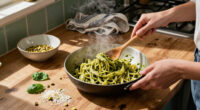
🔍 Read the full analysis: Pasta Con I Peperoni Cruschi: Basilicata's Crunchy Dried Sweet Peppers on Mad Tasting

Get kitchen staples and gadgets delivered free with Prime
- Fast, free delivery on millions of items
- Prime Video, Amazon Music and more included
- Member-only deals all year
TL;DR
Pasta con i peperoni cruschi is a regional Basilicata dish featuring dried sweet peppers associated with Senise, fried briefly in olive oil and added to pasta at the end. Mad Tasting describes how the IGP-protected pepper is dried and used, while noting that recipes vary and that a substitute may not match its texture or flavor.
Mad Tasting has published a guide to pasta con i peperoni cruschi, a Basilicata dish built around dried sweet peppers associated with Senise. The guide explains that cooks briefly fry the peppers in olive oil and add them to pasta just before serving, a method intended to preserve the ingredient’s characteristic crisp texture.
The dish’s defining ingredient is Peperone di Senise IGP, a sweet pepper tied to Senise and the surrounding area in southern Italy. According to Mad Tasting, the protected product may be sold fresh, dried or processed under rules linked to its geographical origin and production. The source describes the peppers as having thin flesh and relatively low moisture, qualities that make them suitable for drying and quick frying. It does not provide the specific production rules or details of how compliance is verified.
Traditionally, ripe peppers are hung to air-dry in long braided or strung garlands known as serte. Drying extends the harvest beyond the fresh-pepper season and concentrates the peppers’ sweet, fragrant flavor. Mad Tasting says the dried pods puff slightly and become crisp when placed in hot oil. “Cruschi” means “crunchy” in the local dialect; the peppers are generally sweet, not hot, though a cook can add chili separately.
The cooking method is deliberately brief. The guide recommends frying the dried peppers for only a few seconds, turning them once and removing them as soon as they puff and crisp. If they darken, they may become bitter. Pasta is cooked in salted water, with some starchy water reserved before draining. Garlic is warmed gently in olive oil, then the pasta is tossed with the oil and a splash of cooking water. The peppers go on at the end, rather than being cooked in the moist pasta mixture, because moisture can soften them.
Pasta con i peperoni cruschi A crisp taste of Senise
This regional pasta dish turns air-dried sweet peppers into a crunchy finishing touch. Its defining technique is simple: fry briefly, then add just before serving.
From harvest to crunch
The method preserves peppers associated with Senise for use beyond the fresh-pepper season.
Ripe peppers are hung in braided or strung garlands called serte.
Turn dried peppers once in hot olive oil; remove when puffed and crisp.
Toss pasta with garlic oil and a splash of cooking water, then add peppers just before serving.
What defines the dish
Peperone di Senise IGP
The sweet pepper tied to Senise and nearby communities is the dish’s defining ingredient.
“Cruschi” means crunchy
The peppers are generally sweet, not hot; chili can be added separately.
Recipes vary
Some versions include toasted breadcrumbs, anchovies, cheese or chili.
Keep the peppers crisp
Moisture softens the fried peppers, so treat them as a topping rather than part of the sauce.
- Remove peppers as soon as they puff and crisp.
- Scatter them over finished pasta immediately before eating.
- Prolonged frying, which can make peppers bitter.
- Leaving the topping in the moist pasta mixture.
Why the Pepper’s Crunch Matters
The dish shows how a preserved seasonal ingredient can shape a regional pasta meal. Air-drying carries the pepper harvest beyond summer, while quick frying restores a crisp texture and brings out a toasted aroma. The technique is simple, but it depends on timing: the pepper cooks in seconds, and prolonged frying risks bitterness.
For readers cooking the dish, the main practical point is to treat the pepper as a topping, not as a sauce ingredient. Finish the pasta first, then scatter the peppers over each serving immediately before eating. That approach also makes the meal easier to serve to a group without leaving the peppers sitting in moisture. Mad Tasting presents the recipe as a way to experience a specific regional ingredient, while acknowledging that other dried peppers may be used when Senise peppers are unavailable.
Popular right now

Ninja CREAMi Scoop & Swirl Ice Cream and Soft Serve Maker, 13 Programs, 4 Pints, NC701

Bose QuietComfort Headphones (2nd Gen), Wireless Noise-Cancelling Over-Ear Headphones, Eucalyptus Green

Ninja BL660 Professional Blender with 1100-Watt Motor, 72 oz Pitcher, and Two 16 oz Cups
As an affiliate, we earn on qualifying purchases.
From Senise Harvest to Pasta
Mad Tasting places the dish in Basilicata, in southern Italy, and links its signature ingredient to Senise and nearby communities. The guide’s account describes a preservation process: ripe peppers are strung in garlands and left to dry, then stored for later cooking. It offers no dated history of the recipe or account of when the practice began, so the material supports a description of the method, not a precise historical timeline.
The recipe has no single universal formula in the source. Garlic and olive oil provide the basic savory base, while short pasta is suggested as a convenient shape for catching pieces of pepper and breadcrumbs. Toasted breadcrumbs can add a second crunch and are described as a possible alternative to cheese. Some versions include anchovies, grated cheese or chili, depending on household preference. The dried Senise pepper remains the defining ingredient, while the other additions are presented as variations rather than fixed requirements.
When shopping, the guide advises looking for dried Peperone di Senise and checking for the IGP designation if seeking the protected product. It also cautions that dried peppers sold as cruschi can vary, so a label does not mean every packet will taste exactly alike. The source does not identify particular retailers or provide a named substitute that reproduces the pepper’s flavor and texture.
““Cruschi means ‘crunchy’ in local dialect.””
— Mad Tasting
Recipe Variations and Substitutes
The source does not establish a single standard recipe, and it describes additions such as anchovies, cheese, chili and breadcrumbs as matters of household or local preference. It also does not identify a particular alternative pepper or say how closely one would match Peperone di Senise IGP. The protected label applies to the designated product, but Mad Tasting does not detail the rules behind it or compare products from different producers.
The guide supplies no recipe quantities, exact oil temperature or precise frying time beyond the instruction to cook the peppers for a few seconds. Those details may vary with pepper size, dryness and pan conditions. It also does not report a new official decision, product launch or change to the pepper’s designation; the development described here is the publication of a cooking guide.
Serving the Peppers While Crisp
Mad Tasting recommends adding the peppers immediately before serving, either whole or crumbled over the finished pasta. For a meal served in several bowls, cooks can toss the pasta with garlic oil and cooking water first, portion it out and scatter the peppers on top at the table. Toasted breadcrumbs can be added at the same stage. The source offers this as practical advice, not as a new restaurant or producer announcement.
Leftover pasta should be cooled promptly and refrigerated in a covered container, according to the guide, then reheated until steaming hot. The peppers will lose their crispness in storage, so any remaining dried peppers can be fried fresh for another serving. Cooks should take care around hot oil and avoid leaving it unattended. Wheat pasta and breadcrumbs contain gluten, and cheese contains milk; diners should check packaged ingredient labels and ask about preparation when allergies are a concern.
Key Questions
What are peperoni cruschi?
They are dried sweet peppers associated with Senise in Basilicata. Mad Tasting says they are fried briefly until crisp; “cruschi” means “crunchy” in local dialect.
Is Peperone di Senise IGP spicy?
The guide describes the pepper as generally sweet rather than hot. Chili can be added separately for heat.
How do you keep the peppers crunchy?
Fry dried peppers for only a few seconds, remove them as soon as they puff and crisp, and add them to the pasta just before serving. Contact with moisture can soften them.
What can I use if I cannot find dried Senise peppers?
The source says a substitute can be used but does not name one or claim that another pepper will match the flavor and texture. Look for dried Peperone di Senise and check for the IGP designation when seeking the protected product.
What ingredients may contain common allergens?
Wheat pasta and breadcrumbs contain gluten, while cheese contains milk. Check product labels and ask how the dish was prepared if serving someone with an allergy.
Source: Mad Tasting