TL;DR

Get kitchen staples and gadgets delivered free with Prime
- Fast, free delivery on millions of items
- Prime Video, Amazon Music and more included
- Member-only deals all year
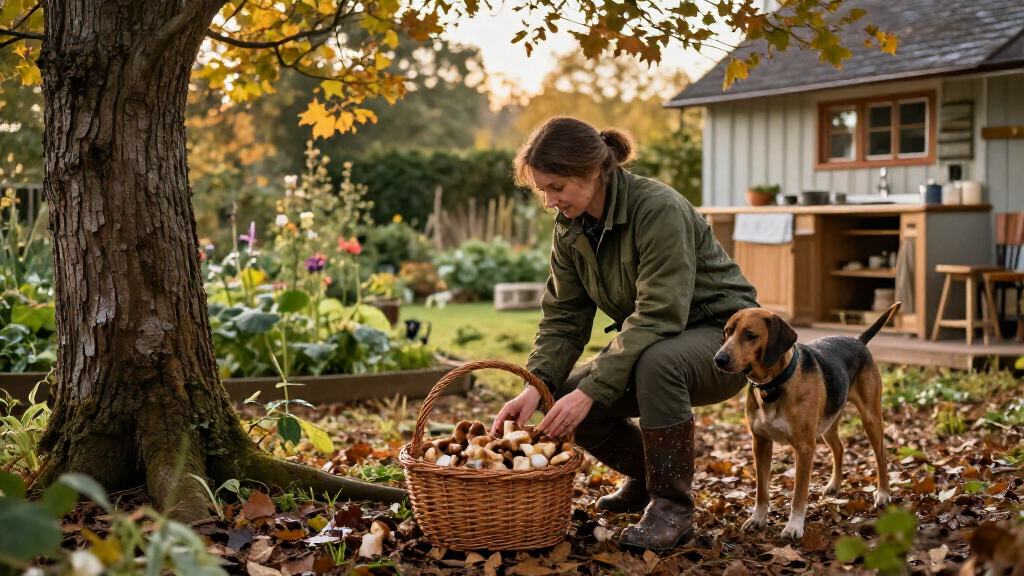
Food Safety News’ Nov. 1, 2026, Sunday edition focuses on hunting season, including the food-safety responsibilities hunters and anglers take on when handling their own catch. The report also rounds up several current food-safety developments, from E. coli investigations at farms to an FDA outbreak notice and a proposed infant-formula rule that was not yet public.
Food Safety News published a Sunday edition on Nov. 1 that puts hunting season at the center of a roundup of food-safety developments, highlighting that hunters and anglers manage the safety of food they harvest themselves. The report also notes changing participation in hunting and fishing and summarizes several investigations and regulatory updates, including E. coli cases linked to visits to farms.
The report describes hunting season as a set of stories about changing demographics, economic effects, food-safety practices and politics, rather than a single event. It says women are helping fuel renewed interest in hunting and fishing, while cautioning that current participation may not reach levels seen about 50 years ago. The article cites approximately 15.2 million state-licensed hunters in the United States and says twice as many people are licensed to fish.
Its central food-safety point is that people who hunt or fish take on responsibility for handling their own food. The report calls that work complicated but does not provide detailed handling instructions, figures on illness associated with wild game, or a specific incident involving hunters. It also points to the commercial presence of retailers such as Scheels and Bass Pro Shops; Bass Pro Shops acquired Cabela’s in 2016 for $4.5 billion, according to the source.
The edition’s quick bites cover separate developments. California officials were investigating 13 Shiga toxin-producing E. coli cases that may be linked to exposure at Brookshire Farms in San Luis Obispo County; the farm had closed during the investigation. In Homer Glen, Illinois, a petting zoo at another pumpkin farm closed after five children were hospitalized with E. coli infections, all after visiting the farm. The report also says the FDA declared an E. coli outbreak associated with chicken wraps over, while its investigation continued. The USDA’s Food Safety and Inspection Service confirmed a Trader Joe’s connection to USA Today, although the FDA had not named the retailer as the source.
Why Wild-Game Handling Matters
Hunting season brings food-safety decisions into homes and outdoor settings, where harvested meat is handled outside the routine oversight and processes associated with many commercially packaged foods. The report’s focus is the individual responsibility of hunters and anglers: food safety does not stop when an animal is harvested or a fish is caught. However, the source does not quantify the risks or describe particular illnesses tied to hunting, so the article’s point is about responsibility and complexity, not a claim that a specific outbreak has occurred.
The seasonal focus also connects to a wider public-health roundup. The farm investigations show how exposure at agricultural attractions can become a concern for families and local health officials. The formula update and the chicken-wrap investigation raise separate questions about the pace and scope of regulatory communication. These stories do not establish a common cause, but together they show the range of settings—from private food handling to public farms and packaged products—in which food-safety oversight and prevention matter.
The participation figures help explain the scale of the audience. With about 15.2 million licensed hunters and roughly twice as many licensed anglers, safe handling of harvested food is relevant to a large number of people. The report does not give the underlying year or source for those figures, so they should be read as the counts presented in the article rather than as a new estimate of current participation.
Popular right now

Dyson Car+Boat Cordless Handheld Vacuum

Shark Clean & Empty Cordless Stick Vacuum with Auto-Empty System, BU3521

De'Longhi Rivelia Automatic Espresso Machine with Milk Frother
As an affiliate, we earn on qualifying purchases.
A Seasonal Food-Safety Roundup
The Sunday edition was published on Nov. 1, 2026, during hunting season. Its lead topic is not a newly announced hunting regulation or a particular hunting-related illness, but a seasonal look at who participates, the outdoor retail market and the food-safety work hunters and anglers perform themselves. The report says women are contributing to a resurgence in fishing and hunting, but provides no detailed participation breakdown by age, gender or region.
The roundup also describes developments outside hunting. Health and Human Services Secretary Robert F. Kennedy Jr. announced what the report called the first update of infant-formula nutrient requirements in 30 years. But the announcement did not identify new standards, according to the report, and the FDA had not yet made a proposed rule available for public review, although it was accepting comments. The report says it did not address dozens of reported cases of Cronobacter and botulism affecting babies since 2021.
In Italy, authorities in Emilia-Romagna directed food-service providers in schools, care facilities, hospitals and nursing homes to avoid serving uncooked cherry tomatoes after Salmonella reports. The report says a second region had imposed such a restriction and that a national task force was investigating multiple outbreaks. It also describes a Cornell University research project: professor Martin Wiedmann is developing a quantitative microbial risk assessment tool intended to standardize food-safety risk assessments in the final stage of the supply chain.
“Hunters and anglers manage their own food safety, and it’s complicated.”
— Food Safety News
Open Questions in the Reports
The hunting-season item does not identify a specific food-safety incident involving hunters or anglers, explain which handling practices prompted its warning, or provide illness data tied to harvested food. The report’s participation counts are not accompanied by a date or a named data source, and its discussion of women’s growing participation does not include a detailed trend series.
Several items in the roundup remained under investigation or incomplete at publication. Public health officials had not identified the source of the 13 possible pumpkin-patch-linked E. coli cases in California. The report gives no farm name for the Homer Glen petting-zoo case, and the status of that investigation is not specified. The FDA’s chicken-wrap investigation continued even though the agency said the outbreak was over; the source report says the FDA had not named Trader Joe’s, while USDA’s inspection service confirmed a connection to USA Today.
The proposed infant-formula rule had not been released publicly, so its contents and any new nutrient standards could not be assessed from the information provided. The report also does not give case counts, locations or timelines for the Salmonella outbreaks in Italy, or a launch date and validation results for the Cornell risk-assessment tool.
Investigations and Rulemaking Continue
Public health officials were continuing to investigate the possible E. coli exposures at the California pumpkin patch, while the Homer Glen petting zoo remained closed after five children became ill. The source does not provide a timetable for either investigation or say when the facilities could reopen. The FDA said its work on the chicken-wrap outbreak continued as it traced ingredients and inspected potentially involved sites, despite declaring the outbreak over.
The FDA’s proposed infant-formula rule was another pending development: the agency was accepting public comments, but the rule had not yet been made available for the public to review, according to Food Safety News. In Italy, a national task force was investigating multiple Salmonella outbreaks following restrictions on uncooked cherry tomatoes in Emilia-Romagna. The report provides no expected date for the findings.
For hunters and anglers, the Sunday edition offers a seasonal reminder rather than a new government directive. It does not announce a change in hunting rules or set out specific safe-handling steps. Further detail on the Cornell model’s development and on participation trends would help clarify how the research and demographic changes affect food-safety practice.
Key Questions
What is the main news in the Sunday edition?
The Nov. 1, 2026, Food Safety News edition focuses on hunting season and the food-safety responsibilities of hunters and anglers, alongside a roundup of other food-safety developments.
Did the report announce a hunting-related outbreak?
No. The source discusses the complexities of food safety for hunters and anglers but does not report a specific illness outbreak linked to hunted or caught food.
What E. coli investigations were reported?
The roundup describes 13 possible cases connected to exposure at a pumpkin patch in San Luis Obispo County, California, and five children hospitalized after visiting a petting zoo at a farm in Homer Glen, Illinois. The California source was still under investigation.
Was the FDA’s chicken-wrap investigation finished?
The FDA had declared the outbreak over, but its investigation was continuing as it traced ingredients and inspected potentially involved sites. The source report says USDA’s Food Safety and Inspection Service confirmed a Trader Joe’s connection to USA Today; the FDA had not named the retailer.
What is known about the infant-formula rule?
HHS Secretary Robert F. Kennedy Jr. announced an update to infant-formula nutrient requirements, but the report says the announcement identified no new standards. The FDA was accepting public comments on a proposed rule that had not yet been made public.
Source: foodsafetynews.com