
TL;DR

Get kitchen staples and gadgets delivered free with Prime
- Fast, free delivery on millions of items
- Prime Video, Amazon Music and more included
- Member-only deals all year
Former President Donald Trump has announced a policy allowing farmers to self-process meat without federal inspection. This change aims to increase local meat production but raises concerns about food safety and regulation enforcement. The policy’s long-term impact remains uncertain.
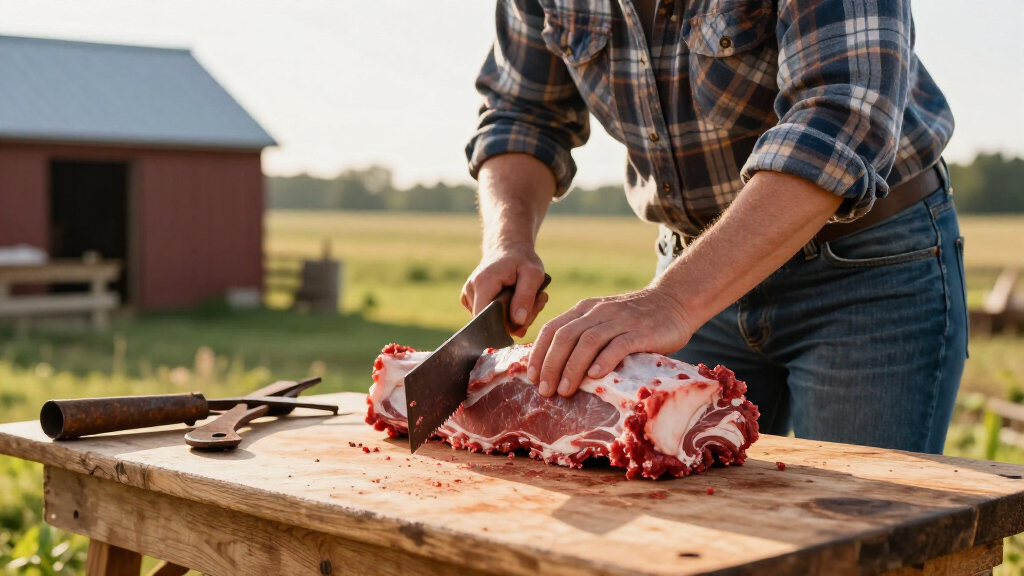
Former President Donald Trump has issued a directive allowing farmers to self-process meat on their farms without federal inspection, a move that could reshape meat production regulations and oversight. This policy change, announced in recent days, is significant because it potentially expands local, small-scale meat processing but also raises questions about food safety and regulatory enforcement.
The new guidance, which is not yet formal legislation but represents a shift in policy interpretation, enables farmers to slaughter and process meat for personal or direct sale use without undergoing the usual federal inspection process. According to sources familiar with the matter, this move is intended to support small farmers and increase local meat availability, especially amid ongoing supply chain concerns. However, critics argue that it could compromise food safety standards, as federal inspection is designed to prevent contaminated or unsafe meat from reaching consumers.
Officials from the Department of Agriculture have not officially confirmed whether this guidance will lead to immediate regulatory changes or how enforcement will be handled. The policy appears to be a reinterpretation of existing regulations, allowing farmers to self-process under certain conditions, but details on scope, oversight, and compliance are still emerging. The move aligns with broader trends of deregulation observed during Trump’s administration but marks a notable shift in meat safety oversight.
Industry groups and consumer safety advocates are already voicing contrasting opinions. Some small farmers and local food advocates welcome the move as a way to bolster small-scale meat processing and reduce costs. Conversely, public health officials warn that this could increase the risk of foodborne illnesses if proper safety protocols are not maintained.
Implications for Food Safety and Local Meat Markets
This policy change could significantly impact the safety standards of meat sold directly from farms, potentially increasing the risk of contamination if not properly regulated. It also signals a shift toward deregulation that may favor small farmers seeking more autonomy but could undermine federal oversight designed to protect consumers. The move may lead to increased local meat availability, but the long-term effects on public health and industry regulation are still uncertain.
As an affiliate, we earn on qualifying purchases.
Recent Trends in Meat Regulation and Political Signals
Over recent years, there has been a growing debate over meat processing regulations, especially concerning small-scale and local producers. Historically, federal inspection requirements have aimed to ensure meat safety but have been criticized for creating barriers for small farmers. During Trump’s presidency, efforts to loosen certain food safety regulations gained momentum, often citing support for small farmers and local food systems. The current move to allow farmers to self-process meat without federal oversight appears to be a continuation of this trend, though it remains a subject of controversy and concern among public health officials.
It is important to note that this development is based on a trend signal observed on social media and news coverage spikes, but it is not yet confirmed whether this will result in formal policy changes or regulatory amendments. The trigger for this increased attention is unconfirmed, and official government statements are still pending.
Unconfirmed Details and Regulatory Future
It remains unclear whether this guidance will lead to formal regulatory changes or how enforcement will be implemented. Details regarding the scope, oversight mechanisms, and safety safeguards are still being developed. The long-term impact on food safety standards and industry regulation is uncertain, pending official confirmation from government authorities.
Next Steps in Policy Clarification and Implementation
Authorities are expected to clarify the scope and enforcement procedures of this policy in the upcoming weeks. Stakeholders such as small farmers, consumer safety organizations, and industry regulators are likely to provide feedback or challenge the guidance through legal or administrative channels. Monitoring official updates and public health assessments will be essential to understand the policy’s future impact.
Key Questions
Will this policy change affect all farmers?
It is currently unclear whether the guidance applies universally or only to specific categories of farmers or processing methods. Further details are expected as authorities clarify the policy.
Could this increase food safety risks?
Yes, public health officials warn that reducing federal oversight could lead to higher risks of contamination if safety protocols are not properly followed.
Has this been officially enacted into law?
No, this is a guidance interpretation rather than a formal legislative change, and official regulations are still pending.
What is the industry’s response?
Supporters see it as aiding small farmers and local food systems, while opponents raise concerns about safety and regulatory gaps.
When will the full impact be known?
The long-term effects will become clearer as new regulations are issued, enforcement begins, and industry responses develop over time.
Source: bluesky
Halloween Picks
halloween
As an affiliate, we earn on qualifying purchases.