
TL;DR

Get kitchen staples and gadgets delivered free with Prime
- Fast, free delivery on millions of items
- Prime Video, Amazon Music and more included
- Member-only deals all year
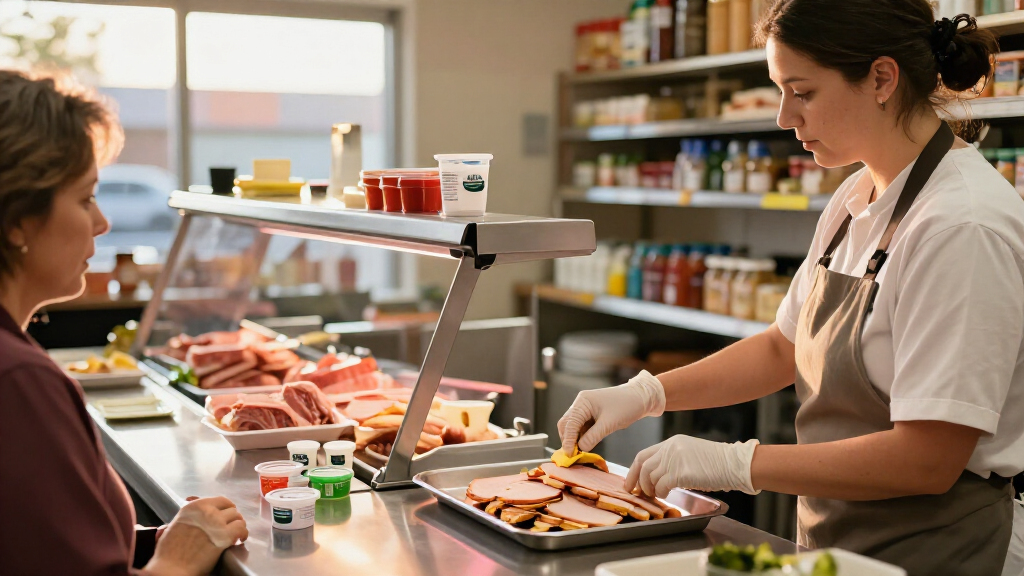
The USDA’s Food Safety and Inspection Service plans to expand Listeria sampling at establishments selling ready-to-eat meats, including grocery stores with deli counters. Starting in January 2027, inspectors will collect four environmental swabs alongside product samples, with the rollout across nine districts scheduled through March.
The U.S. Department of Agriculture’s Food Safety and Inspection Service plans to expand Listeria testing at establishments selling ready-to-eat meat, including grocery stores with deli counters, by adding regular swabs of surfaces to existing product sampling. The nationwide program is scheduled to roll out across nine FSIS districts from January through March 2027, following a pilot in three districts.
Under the program, inspectors will collect four environmental swabs at the same time they collect ready-to-eat product samples under the existing program. Two swabs will come from food-contact surfaces and two from non-food-contact surfaces. Each will be analyzed for Listeria monocytogenes and other Listeria species.
If testing detects Listeria monocytogenes, FSIS says it will use whole genome sequencing and compare the result with reported illnesses and historical testing results. The agency plans to train the inspectors and supervisors responsible for sample collection as the rollout proceeds. The source report does not specify how many establishments will be sampled or how often each site will be tested.
The pilot was conducted in the Alameda, Chicago and Raleigh districts. Its results have not been published, according to Food Safety News. The new program shifts some environmental sampling from specialized activities carried out at irregular intervals to more regular collection by in-plant inspectors.
More Routine Checks for Deli Surfaces
Testing surfaces as well as food may help inspectors and establishments identify places where Listeria persists, including areas that routine cleaning may not adequately address. FSIS says the information is intended to help assess sanitation at individual establishments and identify broader patterns across the industry. That could give companies more information for investigating contamination and evaluating whether corrective actions address its source.
The change affects businesses that produce or sell ready-to-eat products under FSIS jurisdiction, as well as the inspection process used to monitor them. Deli meats are typically eaten without a further cooking step that would kill harmful bacteria, so contamination control during production, storage and handling matters to consumers. The program is a monitoring and oversight change; it does not itself establish that any particular deli or product is contaminated.
food contact surface sanitation spray
As an affiliate, we earn on qualifying purchases.
As an affiliate, we earn on qualifying purchases.
Changes After the 2024 Outbreak
The expanded sampling is part of a series of FSIS oversight changes following the deadly 2024 Listeria outbreak traced to Boar’s Head deli meat. A review of records, as described by Food Safety News, found a history of food-safety failures at the company’s Jarrett, Virginia, production facility, where violations were repeatedly identified but remained unresolved.
Environmental sampling has been used before, but typically through specialized sampling activities conducted at irregular intervals by Enforcement, Investigations, and Analysis Officers. The new approach adds a limited number of swabs to the work of in-plant inspectors on a more regular basis. FSIS has not published the pilot’s findings, so the available source material does not show what that test phase detected or how it informed the final program design.
““Broader sampling and more data ultimately means safer food.””
— Food Safety and Inspection Service
Pilot Findings and Sampling Scope
Several operational details remain unavailable. FSIS has not published the pilot results, and the source report gives no target number of establishments, repeat-testing schedule, or criteria for selecting sites. It also does not describe what enforcement action, if any, would follow a positive environmental result.
The planned sequencing applies when Listeria monocytogenes is detected, but the report does not state how quickly results will be returned or how comparisons with illness reports and historical findings will affect an establishment’s response. The schedule is described as a phased implementation from January through March 2027; further details may clarify district timing and how sampling will operate in practice.
Preparing for the 2027 Rollout
FSIS plans to phase in the program across its nine districts between January and March 2027, with training for inspection personnel and supervisors. The agency has not provided a more detailed public schedule in the source report.
FSIS expects companies producing ready-to-eat products under its jurisdiction to review their environmental monitoring records, corrective-action procedures and root-cause investigations before enhanced sampling begins. Businesses may also update or evaluate their programs and make sure they can interpret whole genome sequencing results. Further agency guidance, published pilot findings or implementation details would clarify how the new sampling is being applied.
Key Questions
What is changing at deli counters?
FSIS plans to add four environmental swabs—two from food-contact surfaces and two from non-food-contact surfaces—when inspectors collect ready-to-eat product samples at covered establishments. The program includes grocery stores that sell deli meats, according to the source report.
When does the expanded sampling begin?
The agency plans a phased rollout across its nine districts from January through March 2027. A more specific schedule was not provided in the source material.
What will the swabs test for?
Each environmental swab will be analyzed for Listeria monocytogenes and other Listeria species. If Listeria monocytogenes is found, FSIS says it will use whole genome sequencing and compare the result with reported illnesses or historical results.
Did the pilot find Listeria problems?
The pilot took place in the Alameda, Chicago and Raleigh districts, but its results have not been published, according to Food Safety News. The available report does not say what the pilot detected.
What should affected businesses do before the rollout?
FSIS expects covered companies to review environmental monitoring, past findings, corrective actions and root-cause investigations. It also recommends considering program updates and checking that staff can understand and assess whole genome sequencing results.
Source: rss
NFL season / tailgating Picks
team gear
As an affiliate, we earn on qualifying purchases.