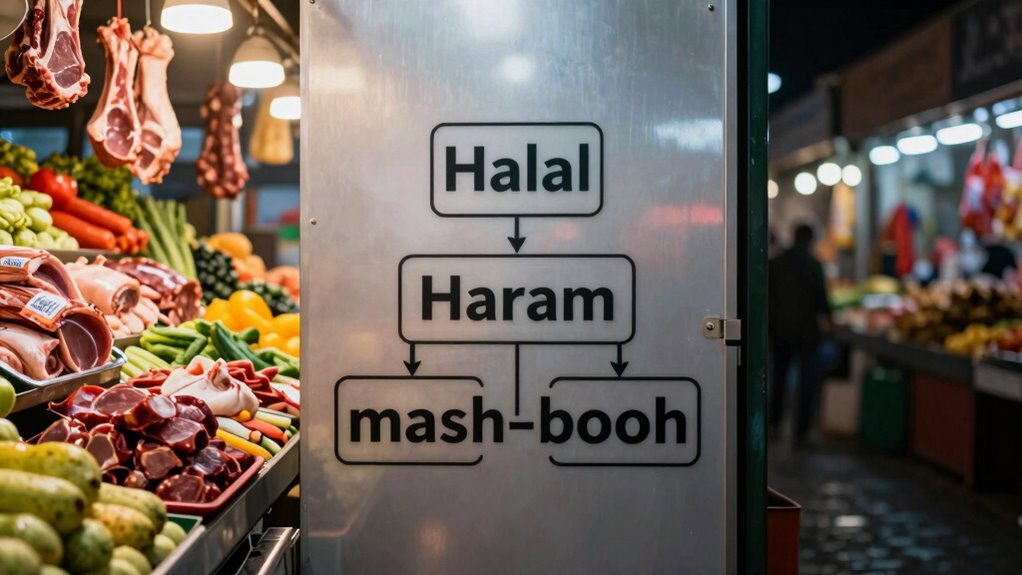

To understand halal, haram, and mashbooh, you start by asking if the food or action is clearly permitted or forbidden. Use a simple decision tree to evaluate ingredients and practices. If in doubt, consult trusted sources or scholars. Recognize that halal foods are certified, haram items are forbidden, and mashbooh ones are questionable, requiring caution. Knowing these distinctions helps you make confident, ethical choices aligned with your faith—stay tuned for more details on how to do this effectively.

Get kitchen staples and gadgets delivered free with Prime
- Fast, free delivery on millions of items
- Prime Video, Amazon Music and more included
- Member-only deals all year
Key Takeaways
- Use the decision tree to classify foods as clearly Halal, Haram, or Mashbooh based on ingredients and sources.
- Confirm the authenticity of Halal certification symbols on food packaging for quick verification.
- Seek guidance from trusted scholars or sources when encountering Mashbooh or ambiguous items.
- Avoid Haram items like pork, alcohol, and their derivatives, ensuring proper slaughter for permissible meats.
- Recognize cultural and contextual influences that may affect the classification of certain foods or actions.
Halal food certification symbols
As an affiliate, we earn on qualifying purchases.
As an affiliate, we earn on qualifying purchases.
What Are Halal, Haram, and Mashbooh? An Overview

Understanding the concepts of halal, haram, and mashbooh is essential for anyone seeking to follow Islamic dietary laws. These principles guide your choices, ensuring your food aligns with Islamic teachings and ethical eating principles. Halal refers to what is permitted, such as specific meats and foods prepared according to Islamic law. Haram, on the other hand, covers forbidden items like pork and alcohol. Mashbooh describes doubtful or questionable foods that require further scrutiny before consumption. By understanding these categories, you respect your faith and promote ethical eating practices. Recognizing the distinctions helps you make informed decisions about what you eat, ensuring your diet remains consistent with Islamic dietary laws and values. This awareness fosters mindful and responsible eating habits. Additionally, many people are becoming increasingly aware of the importance of sustainable energy projects that align with ethical consumption. Embracing ethical eating principles not only enhances your dietary choices but also supports a sustainable lifestyle. Practicing inner strength in your food decisions can lead to a more purposeful and intentional eating experience. Understanding concepts like color accuracy in visual media can similarly enhance your appreciation of the details in your food presentation, paralleling the communal aspects of dining in many cultures.
How to Use the Islamic Dietary Decision Tree

Using the Islamic Dietary Decision Tree can simplify determining whether a food item is permissible or not. Start by asking if the ingredient is clearly Halal, such as meat from a properly slaughtered animal, or Mashbooh, which needs further investigation. If you’re unsure, consult trusted Halal commerce sources or Islamic scholars. Additionally, consider using top creative tools that can help streamline your food preparation processes. Next, consider if the food is associated with Haram entertainment, like certain alcohol-based products or foods prepared with forbidden ingredients. If the answer is yes, avoid it. If you’re still uncertain, seek guidance from authoritative Islamic guidance or local scholars. By following this simple decision tree, you can confidently navigate your choices, ensuring your diet aligns with Islamic principles and avoiding unintentional consumption of Haram items. Furthermore, understanding digital concepts can aid in effectively managing your dietary research. Additionally, understanding etiquette in food preparation can enhance your understanding of Halal food production practices. Incorporating eco-friendly practices in your food selection can further align with sustainable values in Halal food production practices.
Identifying Halal Foods and Practices Daily
You need to check food labels carefully to guarantee the products are truly halal and free from forbidden ingredients. Recognizing halal certification symbols helps you quickly identify trustworthy options. This way, you can make daily choices that align with your faith without confusion or doubt. Additionally, being aware of essential oils for health can enhance your overall well-being in daily practices. Incorporating traditional techniques in your food preparation can also reflect cultural authenticity in your meals. It’s important to consider safety notes regarding food preparation to ensure a hygienic environment while adhering to halal standards.
Reading Food Labels Carefully
Reading food labels carefully is essential to guarantee that the products you choose align with halal standards. You need to scrutinize food packaging for clear ingredient sourcing and avoid hidden additives. Look for labels that specify halal certification or mention that ingredients are free from pork, alcohol, or non-halal slaughtering practices. A quick review of the ingredients list helps identify potential haram elements. Use the table below for guidance:
| Ingredient to Watch | Halal Indicator | Possible Haram Element |
|---|---|---|
| Gelatin | Halal-certified | Pork or non-halal sources |
| Alcohol | No alcohol listed | Fermented beverages |
| Emulsifiers | Halal-certified | Derived from haram sources |
| Flavorings | Natural, Halal | Artificial or alcohol-based |
Understanding food packaging and ingredient sourcing safeguards your halal choices. Additionally, being aware of astrological compatibility can enhance your social interactions when discussing dietary preferences with others.
Recognizing Halal Certification
Ever wondered how to quickly identify if a food product is truly halal? The key is to look for clear halal certification on packaging. Genuine halal certification guarantees the product meets strict standards, maintaining your dietary integrity. Recognized certifying bodies display their logo prominently, so check the label carefully. Be cautious of labels that lack certification or have vague claims, as they may not guarantee halal compliance. Remember, authentic halal certification confirms that the food has been prepared according to Islamic guidelines, including permissible ingredients and ethical slaughter practices. Familiarize yourself with trusted certifying agencies in your region. Additionally, incorporating balance and motivation into your lifestyle can enhance your overall well-being. By paying attention to halal certification, you can confidently make daily choices that respect your faith and uphold your dietary integrity. Engaging in aquatic exercise can also be a refreshing way to maintain physical health while respecting your dietary choices. Furthermore, understanding neural interfaces can offer insights into future innovations that might enhance food production and safety standards. Studies indicate noticeable improvements in skin texture with consistent use of exfoliants like glycolic acid, which can help maintain a healthy lifestyle. Consider the benefits of educational arts which foster creativity and self-expression, aligning with a holistic approach to well-being.
What Items Are Haram? Common Foods and Actions to Avoid
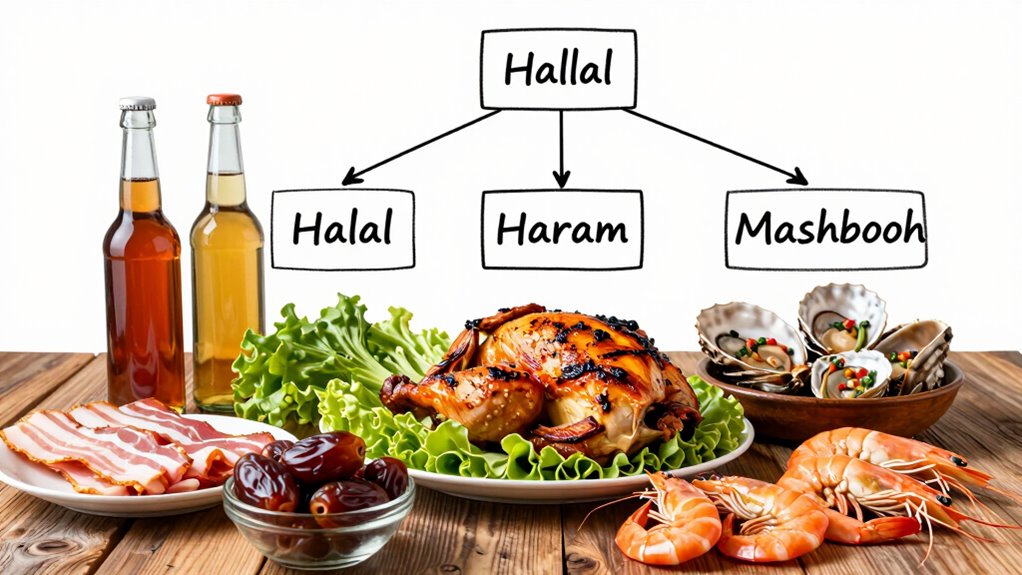
Many foods and actions are considered haram because they violate Islamic dietary restrictions. Forbidden ingredients include pork and its by-products, alcohol, and any food containing haram additives. Meat from animals not properly slaughtered according to Islamic law is also prohibited. Additionally, consuming foods with cross-contamination from haram sources makes them haram. Actions like drinking alcohol, gambling, and engaging in dishonest behavior are also forbidden. It’s important to check ingredient lists and food preparation methods to guarantee unintentional violations. Recognizing these common foods and actions helps you stay within Islamic guidelines and maintain purity in your daily life. Staying aware of forbidden ingredients ensures you adhere to your faith’s dietary and behavioral rules.
Understanding Mashbooh: When Things Are Uncertain

Have you ever faced a situation where you’re unsure whether a particular food or action is halal or haram? This is where understanding mashbooh comes in. It refers to things that are doubtful or uncertain, requiring careful ethical considerations. In such cases, you need to weigh the potential risks and the importance of avoiding ambiguity. Additionally, being mindful of office productivity can help you navigate decisions involving mashbooh items. Cultural differences can influence how mashbooh items are viewed or classified, making it more complex. Sometimes, what’s considered permissible in one community might be questionable in another. When in doubt, many scholars recommend erring on the side of caution to maintain religious integrity and ethical standards. Recognizing mashbooh situations helps you make responsible choices without compromising your faith or cultural values. Moreover, being aware of ethical considerations in consumer choices can further guide your decisions in these ambiguous scenarios. The importance of knowing cooking methods can also play a role in determining the halal status of certain foods. Understanding how energetic alignment impacts your emotional state can also aid in making these decisions.
Tips for Making Confident Dietary Choices in Islam
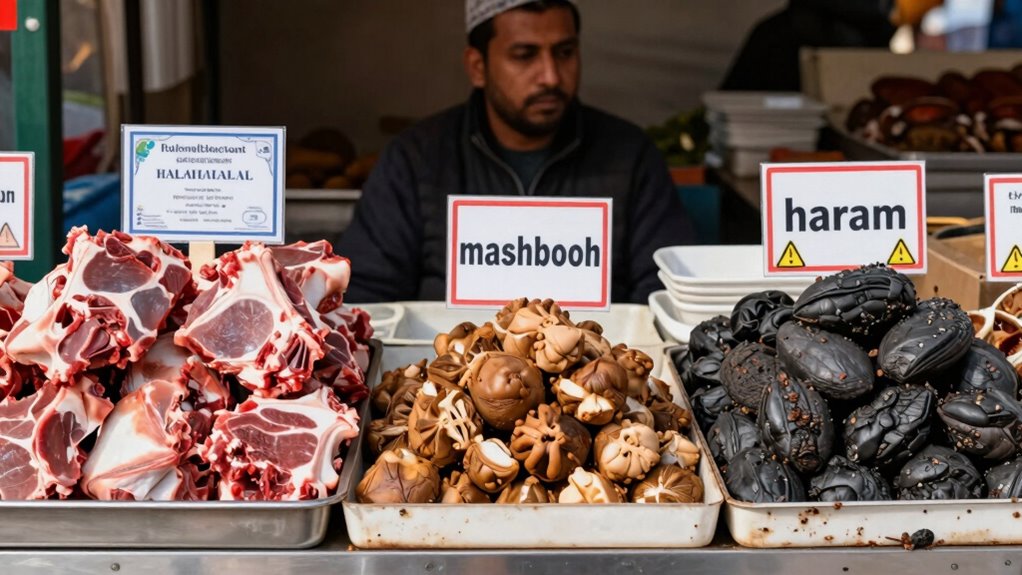
To make confident dietary choices in Islam, it’s important to understand the different classifications of food—halal, haram, and mashbooh. Applying a clear decision tree can help you evaluate uncertain situations quickly and accurately. With this approach, you’ll feel more assured about what you eat and stay true to your faith.
Understanding Dietary Classifications
Understanding the different dietary classifications in Islam can seem complex at first, but it’s essential for making confident choices about what you eat. Cultural influences shape how communities interpret and practice dietary laws, leading to variations in what’s considered halal or haram. Modern food trends also impact these classifications, introducing new ingredients and processing methods that may blur traditional lines. To navigate this, stay informed about the sources of your food and seek trusted halal certifications. Recognize that some foods might fall into a gray area, known as mashbooh, which requires careful consideration. Developing a clear understanding of these classifications helps you make mindful decisions aligned with your faith, cultural background, and current food environment.
Applying a Decision Tree
Making confident dietary choices in Islam involves more than just knowing what’s halal, haram, or mashbooh; it requires a practical approach to applying these classifications in everyday life. To do this effectively, consider cultural influences that shape food practices and beliefs. Recognize that historical context also plays a role in how certain foods are viewed and classified. Use a decision tree as a guide: ask if the food is explicitly permitted, prohibited, or uncertain based on Islamic teachings. When in doubt, consult trusted scholars or reliable sources. This approach helps you navigate complex situations, especially when cultural practices influence food choices. By understanding the historical and cultural background, you gain confidence in making informed, consistent decisions aligned with Islamic principles. Additionally, consider the potential for infection risks when consuming certain foods, as some dietary choices may have health implications.
Frequently Asked Questions
How Do Cultural Differences Influence Halal and Haram Food Interpretations?
Cultural differences greatly influence how you interpret halal and haram foods. You might find that Regional Halal Standards vary, shaping your understanding based on local practices. Cultural Dietary Variations, such as traditional cooking methods or ingredient preferences, also impact perceptions. These differences mean you need to take into account regional customs and standards to make informed decisions, ensuring your food choices align with your cultural and religious beliefs.
Are There Any Modern Foods or Ingredients That Are Inherently Mashbooh?
Modern additives and plant-based alternatives can be inherently mashbooh because their sources or processing methods aren’t always clear. For instance, some artificial flavors or emulsifiers might contain alcohol or animal derivatives, raising questions about their permissibility. When you encounter these ingredients, it’s best to research their origins or consult knowledgeable sources to determine if they’re halal, haram, or mashbooh, ensuring your choices align with your beliefs.
How Do Scholars Determine if a New Food Product Is Halal or Haram?
Like a detective uncovering hidden clues, scholars examine new foods meticulously. They assess certification standards and ingredient transparency to determine if a product is halal or haram. They scrutinize sourcing, processing methods, and additives, consulting religious texts and experts. If doubts arise, they err on the side of caution, labeling it mashbooh. This careful process guarantees your food choices align with your faith and ethical standards.
Can a Food Be Considered Halal but Not Recommended During Certain Times?
Yes, a food can be considered halal but not recommended during certain times due to timing considerations. For example, some scholars advise avoiding specific foods during fasting hours or certain seasons, even if they’re technically halal. Personal preferences also play a role; you might choose to avoid certain foods at particular times for health, spiritual, or cultural reasons. Always consider both timing and personal comfort when making such decisions.
What Role Does Intention Play in Consuming Questionable or Mashbooh Items?
Your intention impacts your consumption of mashbooh items by shaping their acceptability, as sincere intent towards purity influences your judgment. When you approach questionable foods with the aim to maintain spiritual and physical cleanliness, your actions align with Islamic principles. Intentionality affects purity considerations, guiding you to avoid doubtful items unless necessity or sincere need outweighs doubts. In this way, your sincere intention helps uphold your faith’s ethical and spiritual standards.
Conclusion
Exploring your dietary choices in Islam isn’t always straightforward, but with patience and understanding, you can find clarity. Think of the decision tree as a gentle guide, helping you steer through moments of uncertainty with confidence. Trust your intuition and remember that seeking knowledge is a continuous journey. By approaching each decision with sincerity, you’ll nurture your faith and make mindful choices that align with your values, even when the path isn’t immediately clear.
NFL season / tailgating Picks
team gear
As an affiliate, we earn on qualifying purchases.