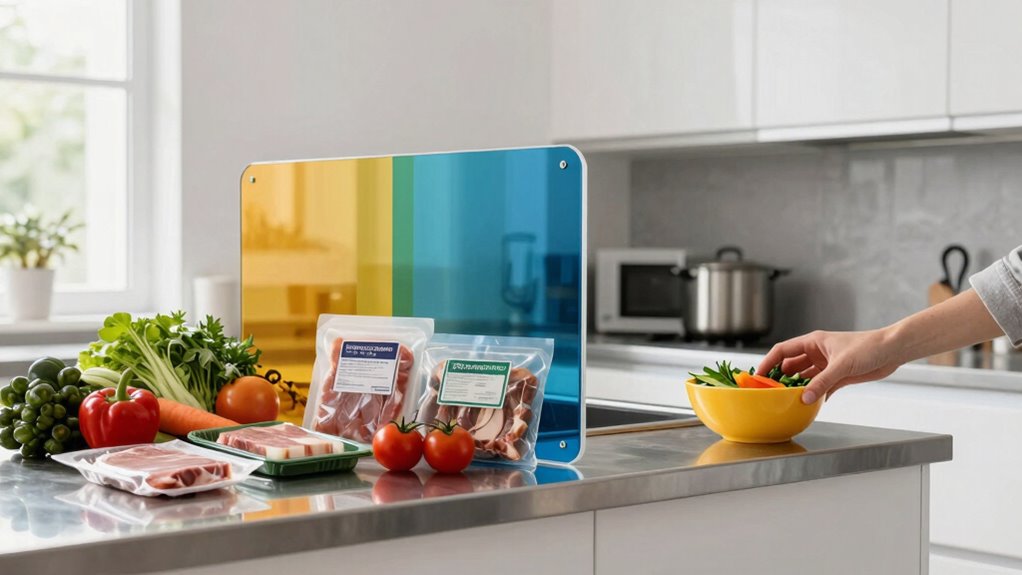

To create a Halal zone at home in a shared kitchen, you should first assess the space for cross-contamination risks and designate specific areas and storage for Halal foods using labels and visual cues. Maintain strict hygiene by cleaning surfaces, utensils, and storage containers regularly. Communicate boundaries clearly to everyone, emphasizing the importance of respect and hygiene. With proper organization and ongoing vigilance, you can keep your Halal zone pure—learn more for detailed tips and strategies.

Get kitchen staples and gadgets delivered free with Prime
- Fast, free delivery on millions of items
- Prime Video, Amazon Music and more included
- Member-only deals all year
Key Takeaways
- Assess kitchen layout and establish designated Halal zones with clear boundaries and visual cues to prevent cross-contamination.
- Use separate, labeled storage containers for meats, dairy, and perishables to maintain segregation.
- Implement strict hygiene practices by cleaning surfaces, utensils, and storage areas regularly with certified products.
- Communicate boundaries and routines effectively with all users through visual aids and respectful dialogue.
- Regularly monitor and organize the Halal zone, ensuring proper storage, cleanliness, and adherence to hygiene standards.
Halal food storage containers with labels
As an affiliate, we earn on qualifying purchases.
As an affiliate, we earn on qualifying purchases.
How to Assess Your Shared Kitchen Space for Halal Needs
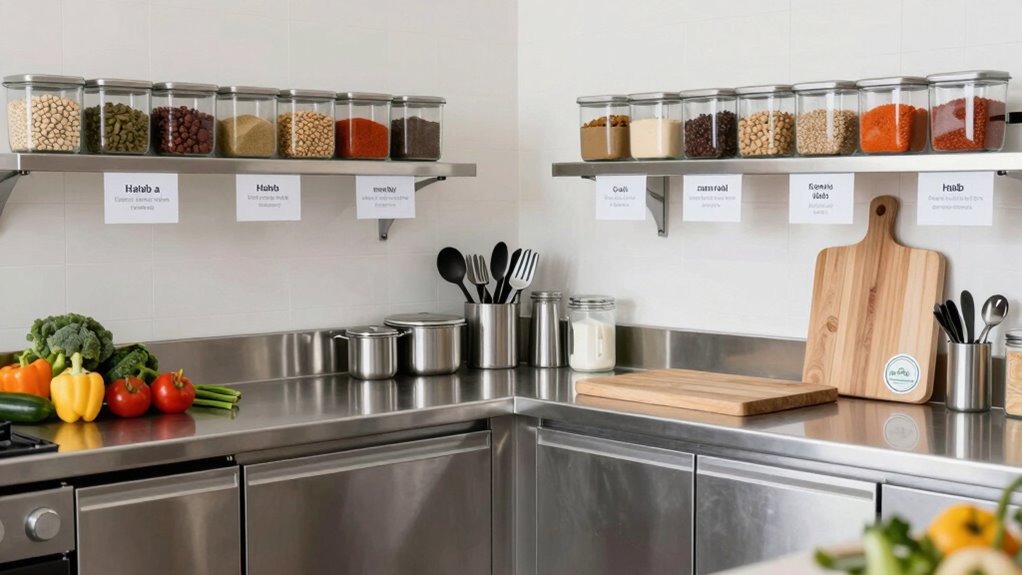
To guarantee your shared kitchen meets your Halal needs, start by thoroughly inspecting the space for potential cross-contamination. Examine the kitchen layout to identify areas where non-Halal foods might mix with Halal ingredients, such as shared countertops or utensils. Pay close attention to food labeling—ensure all products are clearly marked as Halal or non-Halal. Check whether there are designated zones for Halal foods and separate storage areas to prevent accidental contact. Look for any signs of previous non-Halal food preparation, like residue or unclean surfaces. Assess the placement of appliances and containers to see if they can be easily segregated. A careful review of these elements helps you determine if the space can accommodate your Halal requirements safely. Additionally, consider implementing pressure cooker tips to streamline your cooking process while adhering to Halal guidelines. Also, ensuring you have protective gear can enhance your overall kitchen safety while preparing meals. Incorporating natural materials in your kitchen can help create a warm and inviting atmosphere, complementing your Halal cooking practices. Furthermore, using bike generators as a sustainable energy source can contribute to a more eco-friendly cooking environment. Understanding the importance of early socialization can also help in creating a harmonious atmosphere where everyone respects food preferences.
Setting Clear Boundaries for Your Halal Zone
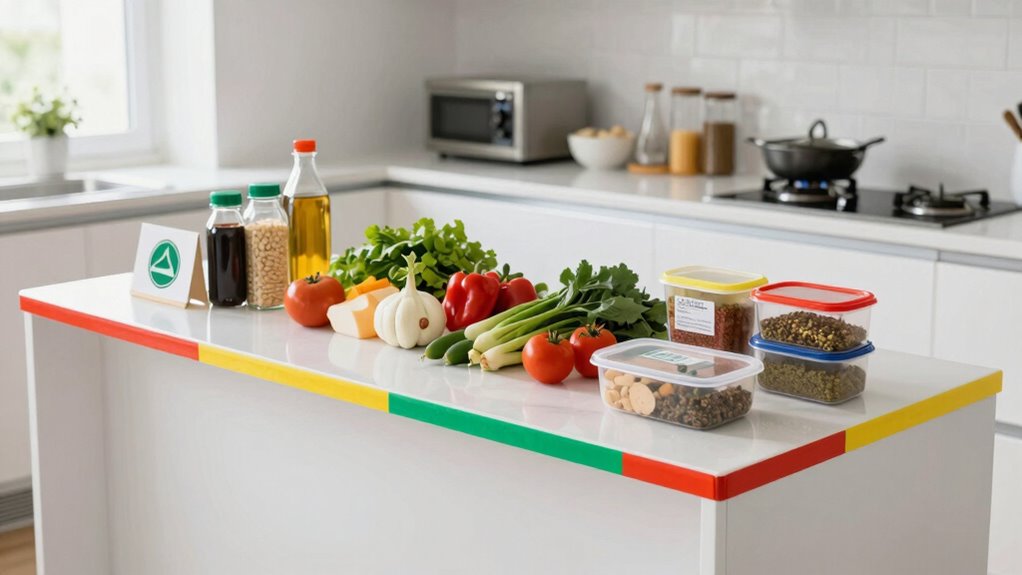
Once you’ve assessed the shared kitchen space for potential cross-contamination, the next step is to establish clear boundaries to protect your Halal foods. This involves setting physical and visual cues to mark your Halal zone, emphasizing your dietary preferences. To do this effectively:
Establish clear physical and visual boundaries to safeguard your Halal foods from cross-contamination.
- Use color-coded containers and labels indicating Halal certification to prevent mix-ups. Incorporating specific areas for Halal cooking can further enhance the safety of your food preparation. Additionally, employing an easy conversion tool can help you manage ingredient quantities accurately when transitioning between different units. This can be especially useful when navigating ethical product choices that may not always align with your dietary needs. Remember, just as in a Gold IRA, where IRS regulations dictate eligible assets, clear guidelines in your kitchen can help maintain the integrity of your Halal zone.
- Designate specific shelves or areas solely for Halal ingredients and utensils.
- Communicate your boundaries clearly to others sharing the space, ensuring they respect your dietary choices. Additionally, creating a long-term structure for your Halal zone can help maintain organization and awareness over time.
Choosing Safe Storage Solutions for Halal Food
Choosing Safe Storage Solutions for Halal Food
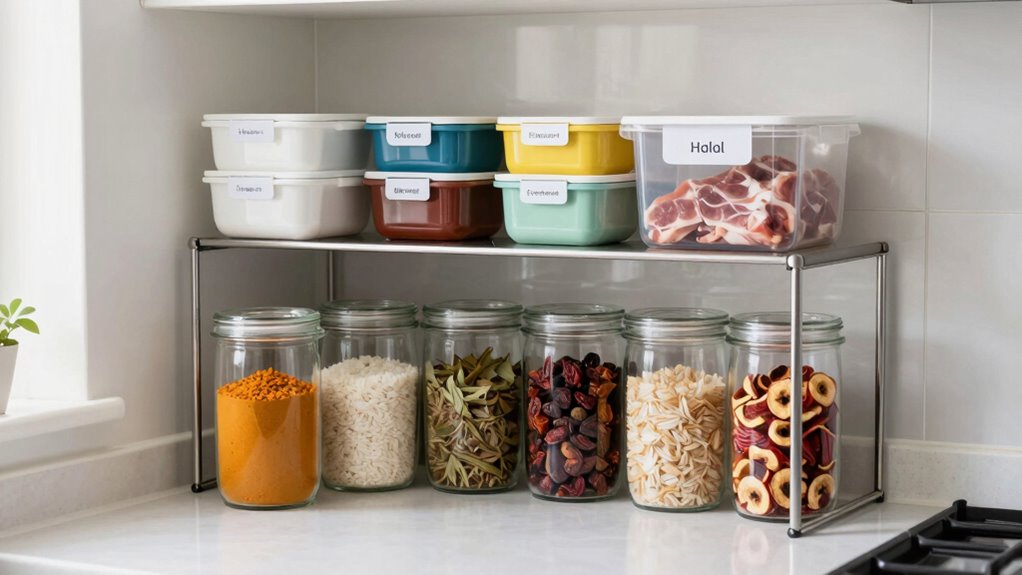
Choosing the right storage solutions is essential to maintaining the integrity of your Halal foods in a shared kitchen. Look for containers and storage units with clear Halal certification to guarantee they meet dietary standards. When possible, select options with organic labeling to avoid contamination from non-organic products or chemicals. Use separate, clearly labeled containers for Halal meats, dairy, and other perishable items to prevent cross-contamination. Store these items in designated areas away from non-Halal foods, ideally in airtight and leak-proof containers. Regularly clean and inspect storage solutions to prevent spoilage and contamination. By prioritizing certified and properly labeled storage, you safeguard the purity of your Halal foods while respecting shared space constraints. Additionally, understanding meal planning techniques can further ensure that your Halal ingredients are efficiently used and preserved. Furthermore, using proper storage methods can help maintain the freshness of your ingredients over time. Moreover, implementing robust contingency plans can help you manage unexpected situations in a shared kitchen environment. Furthermore, exploring emerging trends in digital publishing can provide innovative ideas for effective food storage solutions. Furthermore, consider integrating hydrotherapy techniques into your routine to relieve stress that may arise from shared kitchen dynamics.
Best Hygiene Practices to Keep Your Halal Kitchen Pure
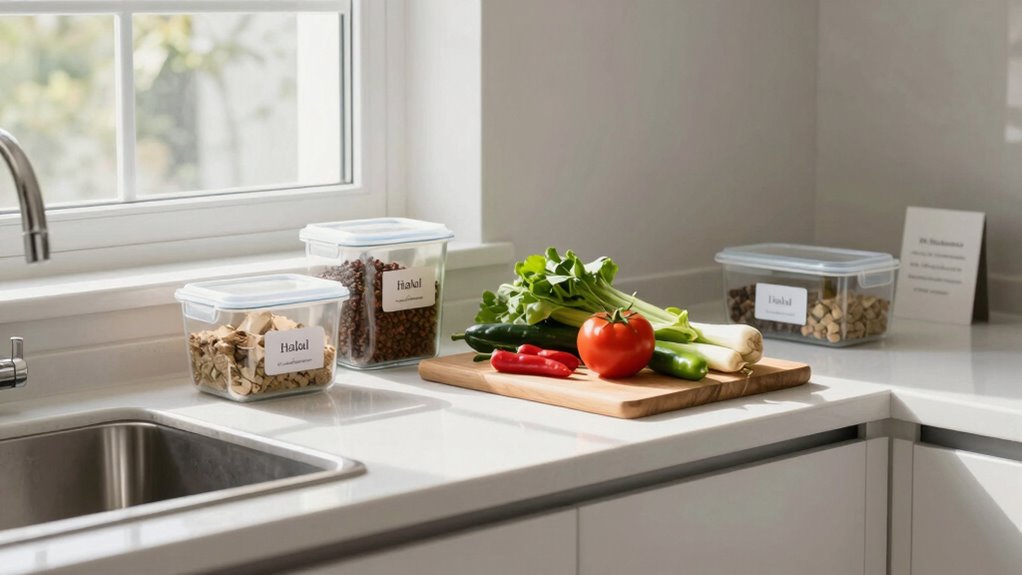
Maintaining excellent hygiene is essential for keeping your Halal kitchen pure and compliant with dietary standards. To do this effectively, focus on key practices:
Maintaining hygiene ensures a pure, compliant Halal kitchen through regular cleaning, proper ventilation, and sanitized utensils.
- Regularly clean surfaces with organic-certified cleaning products to prevent cross-contamination. Additionally, using advanced filtration systems can help ensure that airborne impurities are minimized during the cleaning process. Incorporating high color accuracy in your kitchen decor can also promote a more inviting environment.
- Guarantee proper kitchen ventilation to remove odors and airborne bacteria, maintaining a fresh environment.
- Keep utensils and storage containers thoroughly sanitized, especially when handling Halal foods, to uphold purity.
These steps help preserve the sanctity of your Halal zone. Proper kitchen ventilation not only improves air quality but also reduces the risk of impurities. Using organic certification for cleaning supplies guarantees your cleaning methods align with Halal standards. Additionally, understanding Halal dietary laws can further ensure that your kitchen practices are in line with cultural traditions. By consistently applying these hygiene practices, you’ll maintain a clean, pure, and compliant Halal kitchen.
How to Communicate Your Halal Boundaries to Others
Sure! Here’s your revised content with the requested changes:
—
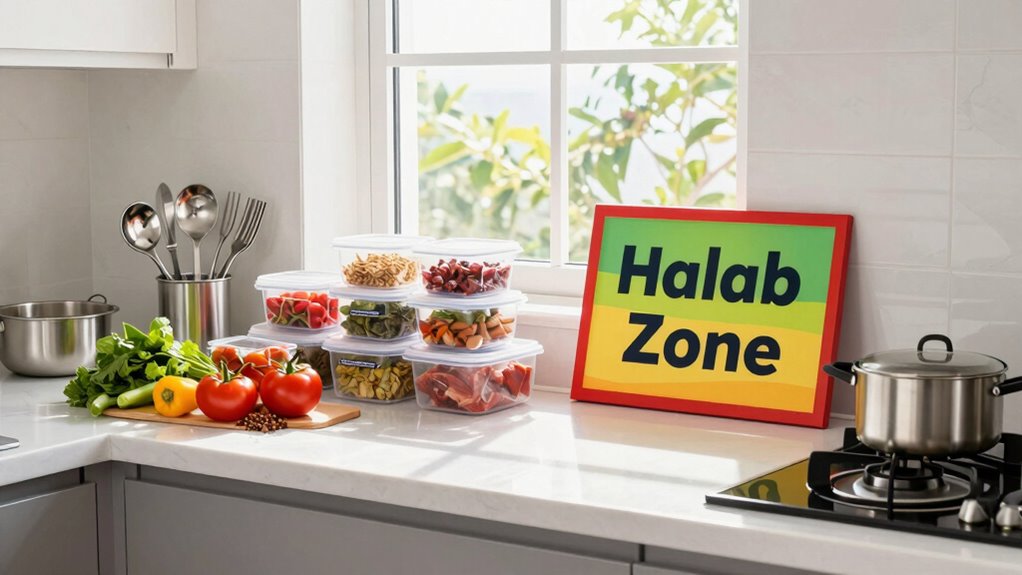
Have you ever struggled to explain your Halal boundaries to friends or family? Clear, respectful communication is key. Approach the conversation with cultural sensitivities in mind, emphasizing your need for a Halal zone without causing offense. Use “I” statements to express your boundaries calmly. Visualizing your shared space can help others understand your needs better:
| Your Space | Shared Space |
|---|---|
| Halal foods only | Respectful handling of all items |
| Specific utensils | Clear labeling and separation |
| No cross-contamination | Open dialogue about routines |
| Personal containers | Mutual respect for boundaries |
This approach fosters understanding and shows you value their feelings while asserting your religious requirements. Additionally, being aware of user privacy can help create a comfortable environment for everyone involved. Establishing clear Gold IRA options can also provide a sense of security and stability for your financial future. Utilizing proper cabling solutions can enhance your shared kitchen setup, making it more functional. Engaging in auditory feedback therapy techniques can also improve communication and reduce misunderstandings. Incorporating luxurious lifestyle products can elevate the ambiance of your shared space, making it a more enjoyable environment for all. Respectful communication creates harmony and helps everyone coexist comfortably.
Strategies to Prevent Cross-Contamination in a Shared Kitchen

To prevent cross-contamination, you should use separate storage containers for different foods, especially for allergens or special diets. Establish clear cooking zones to keep raw and cooked foods apart, reducing the risk of accidental contact. By organizing your space this way, you can maintain a safer, more respectful shared kitchen environment. Additionally, understanding the importance of communication and emotional connection can help in negotiating shared responsibilities and fostering a collaborative atmosphere in the kitchen. Implementing gentle methods in your kitchen approach can further enhance the emotional well-being of all involved.
Separate Storage Containers
Ever wonder how to keep your shared kitchen safe from cross-contamination? Using separate storage containers is essential. First, implement clear labeling methods—mark containers with labels for halal, non-halal, or specific ingredients to avoid mix-ups. Second, prioritize storage organization by designating specific shelves or drawers for different types of foods, making it easier to find and return items. Third, choose airtight containers to prevent spills and cross-contact. This setup minimizes accidental mixing and keeps flavors distinct. Regularly check and clean containers to prevent residue buildup. By applying these simple strategies, you create a safer, more organized environment, respecting dietary needs and reducing contamination risks. Proper storage practices guarantee everyone can enjoy a clean and compliant shared kitchen.
Clear Cooking Zones
Creating clear cooking zones in a shared kitchen is essential to prevent cross-contamination. You can achieve this by designating specific areas for halal foods and avoiding mixing different ingredients. Adjust your kitchen layout to keep cooking utensils separate—use different sets for each zone or store them distinctly. Clearly label each zone and utensil set to reinforce boundaries. When preparing meals, always use different cutting boards and cookware for non-halal items. This approach minimizes accidental contact and contamination. Regularly clean and sanitize each zone to maintain hygiene. By organizing your kitchen with intentional layout and dedicated utensils, you create a safe, efficient environment where halal standards are upheld, and cross-contamination risks are minimized.
Tips to Maintain Your Halal Zone Over Time
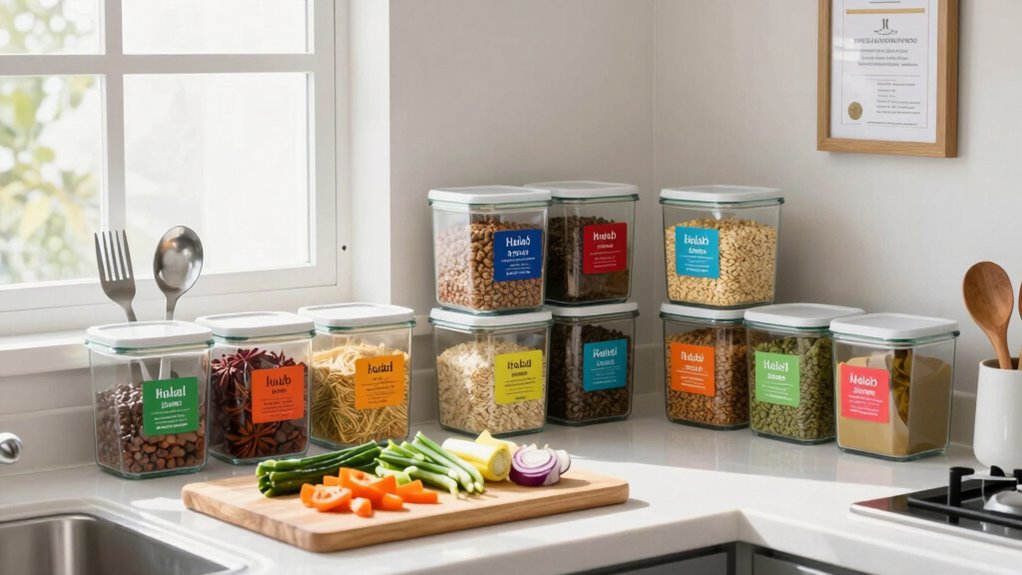
Maintaining your Halal zone in a shared kitchen requires ongoing vigilance and consistent practices. To keep it effective over time, focus on these key steps:
- Regularly maintain cleanliness by thoroughly cleaning surfaces, utensils, and storage areas after each use. This prevents cross-contamination and keeps your zone pure.
- Track supplies carefully, ensuring only Halal ingredients are stored there. Check expiration dates frequently and restock as needed to avoid mixing non-Halal items.
- Set clear boundaries with others sharing the kitchen. Communicate your needs and remind everyone to respect the Halal zone to prevent accidental contamination.
Troubleshooting Common Challenges in Shared Halal Kitchens
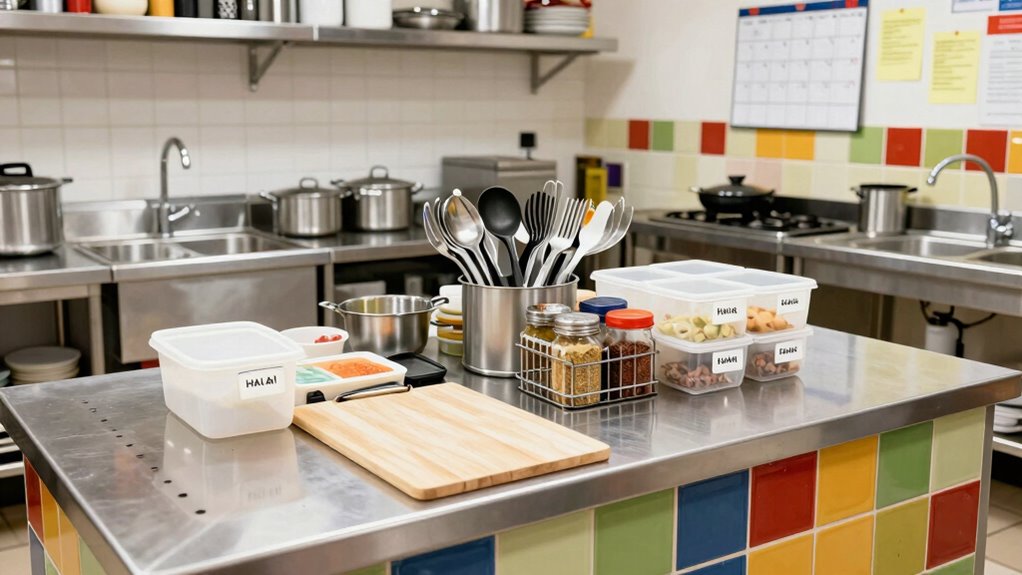
Sharing a kitchen can lead to unexpected challenges, especially when trying to keep your Halal zone pure. One common issue is maintaining Halal certification standards amid shared space. You need to regularly verify that utensils, appliances, and surfaces are free from cross-contamination with non-Halal items. Dietary restrictions add complexity, so clear labeling and dedicated storage help prevent mix-ups. Communicate openly with others using the kitchen, setting boundaries to respect your needs. If conflicts arise, calmly explain the importance of Halal practices and the need for careful handling of items. Regular cleaning and strict segregation are essential for troubleshooting issues. By staying vigilant and organized, you can successfully navigate these challenges and preserve the integrity of your Halal zone.
Frequently Asked Questions
How Do I Handle Non-Halal Accidental Contact in Shared Spaces?
When accidental contact with non-halal items occurs, immediately wash your hands and utensils to prevent cross contamination. Follow faith-based etiquette by calmly explaining your needs to housemates, emphasizing respect for your dietary practices. Use separate tools or designated areas for halal food when possible. Communicate openly, stay patient, and practice cross contamination prevention to maintain harmony and uphold your religious principles in shared spaces.
What Are the Best Cleaning Products for Maintaining a Halal Kitchen?
For maintaining a halal kitchen, choose cleaning products with halal certification to guarantee purity. Stick to regular cleaning routines, using gentle, alcohol-free disinfectants that won’t compromise the halal status. Prioritize cleaning surfaces, utensils, and appliances thoroughly after use. Using designated tools for halal items helps prevent cross-contamination. Consistent cleaning routines and certified products are key to preserving the sanctity of your halal zone at home.
Can I Use Shared Appliances for Halal Food Preparation?
You can use shared appliances for halal food preparation if you practice strict cross contamination prevention. Always clean appliances thoroughly before use and designate specific tools or areas for halal foods. Consider implementing an appliance sharing policy, like labeling or scheduling, to maintain purity. By actively managing these steps, you guarantee your halal standards are upheld and minimize the risk of contamination, making shared appliances safe for halal food prep.
How Do I Train Others on Halal Kitchen Protocols?
You train others on halal kitchen protocols by clearly explaining the importance of halal certification and food segregation. Show them how to properly separate utensils, cookware, and ingredients for halal and non-halal foods. Demonstrate best practices, like washing hands and surfaces thoroughly, and emphasize respecting the halal standards. Regularly review these protocols and encourage questions to guarantee everyone understands and maintains the integrity of the halal zone.
What Legal Considerations Exist for Shared Halal Kitchen Spaces?
When managing a shared halal kitchen, you need to take into account legal aspects like securing halal certification if required by local regulations. You should establish clear shared space management policies to prevent cross-contamination, ensuring all users understand and follow halal standards. Additionally, check zoning laws and health regulations that might affect shared kitchen operations. Staying informed about these legal considerations helps maintain compliance and ensures your halal zone is trustworthy and respected.
Conclusion
Creating and maintaining a halal zone in a shared kitchen isn’t just about rules—it’s about respect and mindfulness. With over 80% of Muslims worldwide seeking to keep their food halal, ensuring your shared space aligns with these needs is essential. By setting boundaries and practicing good hygiene, you protect your beliefs while fostering a respectful environment. Stay vigilant, communicate clearly, and adapt as needed—you’ll find that a well-managed halal zone can bring peace of mind and harmony to your shared kitchen.
NFL season / tailgating Picks
team gear
As an affiliate, we earn on qualifying purchases.