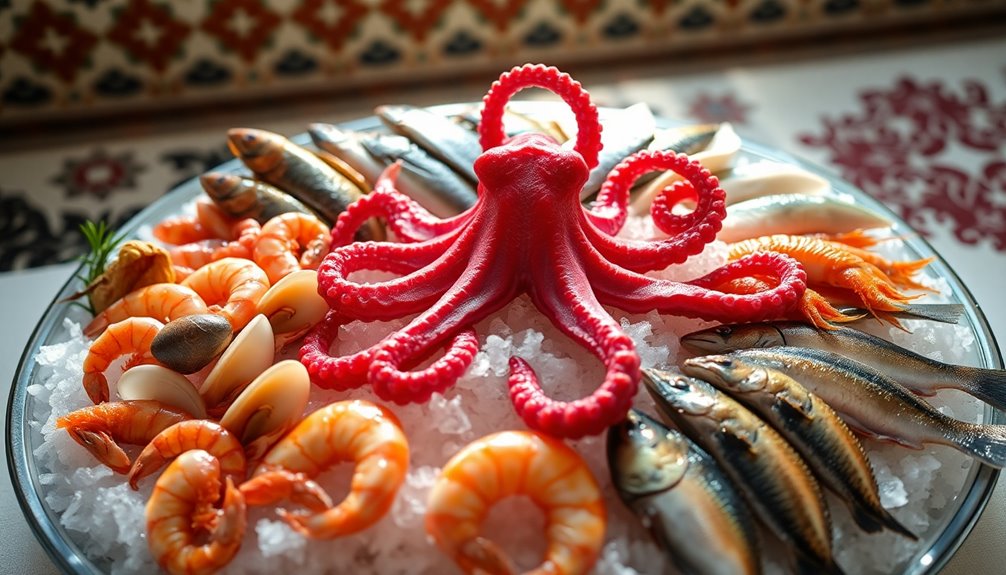
Octopus's halal status can be quite intricate, and it varies among Islamic schools of thought. Most Sunni scholars, including Shafii, Maliki, and Hanbali, classify it as halal due to its aquatic nature, referencing Surah Al-Maidah (5:96). However, the Hanafi school considers it makrooh, while Shia Islam views it as haram since it lacks scales. Local customs also influence acceptance. Overall, while many believe octopus is halal, some advocate caution. To navigate these differing opinions and enhance your understanding, there's more to explore about seafood rules in Islam.

Get kitchen staples and gadgets delivered free — and shop member deals
- Fast, free delivery on millions of items
- Access to Prime Big Deal Days deals on October 6–7
- Prime Video, Amazon Music and more included
Key Takeaways
- The majority Sunni view classifies octopus as halal, aligning with general seafood guidelines in Surah Al-Maidah (5:96).
- The Hanafi school considers octopus makrooh, suggesting caution when consuming seafood.
- Shia Islam deems octopus haram, permitting only fish with scales.
- Local customs and cultural beliefs may influence individual dietary practices regarding octopus.
- Certification standards for halal seafood ensure compliance with Islamic law, aiding informed consumer choices.
halal seafood certification labels
As an affiliate, we earn on qualifying purchases.
As an affiliate, we earn on qualifying purchases.
Introduction

When considering what to eat, you might wonder about the permissibility of octopus in Islam. The views on octopus vary among Islamic schools of thought.
Most Sunni scholars, including those from the Shafii, Maliki, and Hanbali schools, deem octopus halal based on Quranic verse Surah Al-Maidah (5:96), which states that all sea creatures are lawful unless harmful.
In contrast, the Hanafi school categorizes octopus as makrooh, advocating for caution and restricting permissible seafood primarily to fish with scales.
Similarly, Shia Islam considers only fish with scales halal, classifying octopus as haram.
This diversity in opinions highlights the importance of consulting knowledgeable scholars and adhering to your beliefs and community standards when navigating Islamic dietary laws.
Halal: Spiritual and Ethical Guidelines

Understanding the halal status of octopus involves more than just its classification; it ties into broader spiritual and ethical guidelines that govern what Muslims can consume.
Halal refers to foods permissible under Islamic law, emphasizing adherence to spiritual and ethical principles outlined in the Quran and Hadith. When considering seafood like octopus, varying interpretations among Islamic schools of thought influence its permissibility, impacting your choices.
Ethical guidelines stress humane treatment of animals and fair financial practices, ensuring that your consumption aligns with Islamic values. Engaging with these principles not only reflects your commitment to halal but also enhances your spiritual integrity, as consuming haram items could compromise your faith.
Ultimately, ethical considerations are becoming increasingly significant in halal-certified food sourcing.
Halal's Role in Personal Wellness

Halal guidelines play a significant role in your personal wellness by promoting a lifestyle that aligns with both physical health and spiritual fulfillment.
Choosing halal food, including permissible seafood, ensures you avoid harmful substances and toxins often found in haram options. This adherence to Islamic principles not only supports your health but also enhances your spiritual well-being.
Engaging in halal consumption fosters a sense of community among Muslims, reinforcing shared values and emotional wellness.
Moreover, following these guidelines reflects obedience to Islamic jurisprudence, providing you with purpose and fulfillment. Additionally, being aware of filial responsibility laws can help in planning for future healthcare needs while respecting Islamic values.
Research suggests that this mindful approach to your diet encourages healthier personal choices, ultimately contributing to improved overall wellness and a balanced lifestyle.
Halal Product Verification Standards

To ensure your seafood aligns with Islamic dietary laws, it's essential to be aware of halal product verification standards.
These standards guarantee that seafood is processed and handled according to Islamic law, significantly reducing the risk of contamination with haram substances.
To confirm the halal status of octopus or any seafood, look for halal certification labels, which indicate compliance with processing standards.
Recognized authorities like GAC and SFDA play a vital role in this certification process, conducting audits on supply chains and ingredient sourcing.
Being informed about these standards enhances your confidence as a consumer, fostering trust in the food market while ensuring that the seafood you choose truly meets halal requirements.
Clarifying Seafood Classification Issues

How can differing interpretations of seafood classification impact your dietary choices?
For Muslims, the classification of seafood like octopus can vary significantly. The Sunni schools, particularly Shafii, Maliki, and Hanbali, generally permit octopus based on the Quranic verse in Surah Al-Maidah (5:96), which declares most sea creatures halal unless harmful.
However, the Hanafi school considers it makrooh, or disliked. On the other hand, Shia scholars impose stricter rules, allowing only fish with scales and deeming octopus haram.
These diverse interpretations can create confusion about what's permissible in your diet. Cultural beliefs and local customs further influence individual choices, leading to a rich tapestry of seafood practices within Muslim communities.
Seafood Sourcing and Preparation Tips

Understanding the nuances of seafood classification can help you make informed choices about sourcing and preparing your meals.
Always look for halal certification labels when sourcing seafood to ensure it meets Islamic processing standards and is free from haram substances. Verify that the seafood comes from reputable suppliers who adhere to halal guidelines in their harvesting and processing practices.
To prevent cross-contamination, use separate utensils and equipment for preparing halal seafood, especially in shared kitchen environments. Pay attention to your preparation methods; cooking seafood in haram substances, like alcohol-based marinades, can render it non-halal.
Educate yourself about local halal options and suppliers, as community practices and available products can vary significantly by region.
Addressing Seafood Confusion

What causes the confusion around octopus and its halal status? The differing interpretations among Islamic schools of thought, especially between Sunni and Shia perspectives, play a significant role.
While Sunni schools like Shafii, Maliki, and Hanbali generally accept octopus as halal based on Quranic verses, the Hanafi school classifies it as makrooh, or disliked.
In contrast, Shia scholars impose stricter rules, allowing only fish with scales as halal, deeming octopus haram.
Although Surah Al-Maidah (5:96) supports the permissibility of seafood, interpretations about specific creatures like octopus vary widely.
Additionally, local customs and cultural beliefs can further complicate your understanding of octopus consumption, leading to diverse dietary practices within Muslim communities.
Seek Knowledge, Embrace Understanding

While navigating the complexities of halal dietary laws, it's crucial to seek knowledge and embrace a deeper understanding of the principles that guide your choices.
Engaging with religious scholars can illuminate the halal status of various seafood, like octopus, while providing clarity on differing interpretations across Islamic schools of thought.
Understanding Quranic verses, especially Surah Al-Maidah (5:96), is essential, as it outlines the general permissibility of seafood, yet specific rulings may differ based on scholarly interpretations.
Being aware of local customs can also influence your seafood consumption choices, reflecting the diverse approaches within the Muslim community.
Continuous education on halal and haram concepts will empower you to make informed choices aligned with your faith.
Additional Resources

When exploring the halal status of octopus and other seafood, you'll find a wealth of resources to guide your understanding.
Various Islamic schools of thought, such as Shafii, Maliki, and Hanbali, generally agree that octopus is considered halal, citing Surah Al-Maidah (5:96) on lawful sea creatures.
However, the Hanafi school classifies octopus as makrooh, advising against non-fish sea animals.
Shia Muslims impose stricter rules, permitting only fish with scales, thus deeming octopus haram.
For clarity on the permissibility of eating octopus, it's essential to consult knowledgeable religious authorities. Their insights will help you navigate the diverse Islamic rulings and ensure that your choices align with your beliefs regarding halal seafood.
Frequently Asked Questions
Is It Haram to Eat Octopus in Islam?
You might wonder if it's haram to eat octopus in Islam. The answer varies based on the school of thought you follow.
While most Sunni scholars consider octopus halal, the Hanafi and Shia schools typically classify it as haram or makrooh.
If you're unsure, it's best to consult a knowledgeable religious authority who can provide guidance based on your beliefs and practices.
Always consider the interpretations that align with your understanding of Islamic dietary laws.
Which Seafood Is Halal in Islam?
When you ponder the vast ocean, think of it as a treasure chest of flavors.
In Islam, the general rule is that seafood is halal, with some nuances. Sunni scholars largely agree on this, although the Hanafi school restricts it to fish with scales.
The Shafii, Maliki, and Hanbali schools embrace a wider variety, while Shia scholars remain stricter, limiting halal seafood to fish with scales.
Always check your specific school's stance for clarity.
Is Octopus Halal According to Hanafi?
If you're wondering about the halal status of octopus according to Hanafi jurisprudence, it's generally seen as makrooh, meaning it's disliked but not sinful to consume.
The Hanafi school emphasizes a stricter definition of halal seafood, primarily recognizing only fish as permissible.
While octopus isn't outright haram, many Hanafis are advised to avoid it, reflecting this cautious approach to dietary choices within their tradition.
Always consider your beliefs and consult knowledgeable sources.
Is Octopus Halal or Haram in Islamqa?
When you're considering whether octopus is halal or haram according to IslamQA, you'll find differing opinions.
Many Sunni scholars deem it halal, while the Hanafi school views it as makrooh.
If you're following Shia interpretations, you might find it haram since they permit only fish with scales.
It's essential to consult knowledgeable scholars within your tradition to make informed dietary choices that align with your beliefs and practices.
NFL season / tailgating Picks
team gear
As an affiliate, we earn on qualifying purchases.