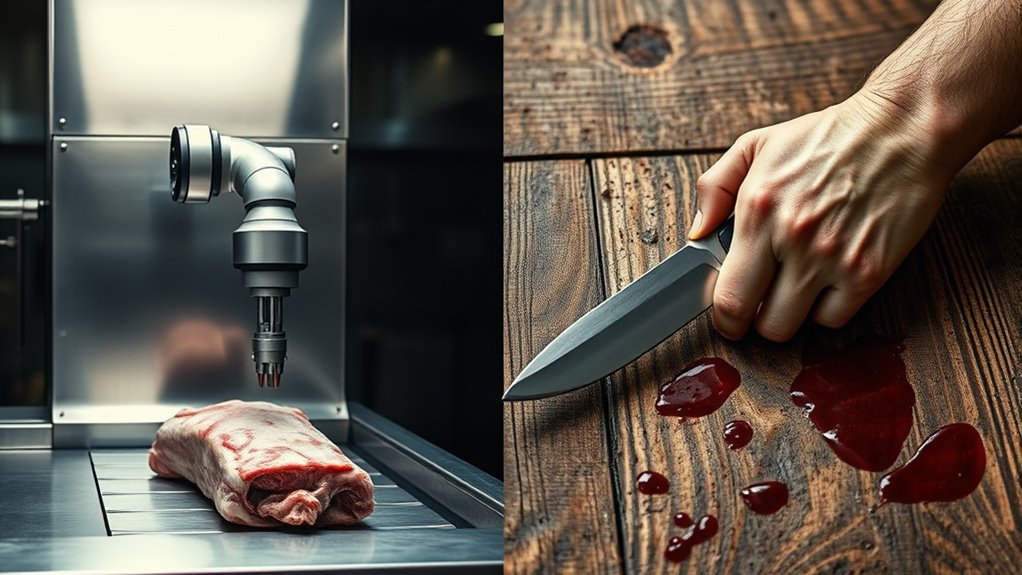

Scholars and standards recognize that machine slaughter offers consistency, speed, and reduces human error, making it efficient and often more humane when properly maintained. Hand slaughter relies on skilled operators who can handle animals gently, potentially enhancing animal welfare if done correctly. However, human error and fatigue can cause suffering. Both methods have pros and cons, and ongoing improvements aim to balance efficiency with humane treatment. If you want to understand how these methods compare and what experts recommend, keep exploring.

Get kitchen staples and gadgets delivered free with Prime
- Fast, free delivery on millions of items
- Prime Video, Amazon Music and more included
- Member-only deals all year
Key Takeaways
- Standards emphasize both methods’ importance, requiring proper maintenance for machines and skilled handling for manual slaughter.
- Machines offer speed and consistency, reducing human error but depend on regular calibration for humane outcomes.
- Skilled hand slaughter can be gentler and more adaptable but is variable and relies heavily on operator expertise.
- Both methods require rigorous oversight, training, and equipment checks to ensure animal welfare.
- Scholars recognize that combining technology with skilled personnel can optimize humane slaughter practices.
Have you ever wondered which method of slaughter—machine or hand—is more humane and efficient? When you look into the debate, you’ll find that scholars and standards organizations often have differing opinions, but both aim to improve animal welfare and streamline processes. Understanding their perspectives helps you grasp the complexities behind choosing one method over the other. Machines are designed to standardize slaughter, ensuring each animal receives a quick and precise kill. They often operate at high speeds, reducing the time animals experience distress. Many standards emphasize that mechanical stunning or slaughter equipment, when properly maintained and calibrated, can minimize pain and fear. This consistency is essential because human error in manual methods can lead to incomplete stunning, causing unnecessary suffering.
However, experts also recognize that machines aren’t infallible. Malfunctions or improper operation can compromise animal welfare, which is why strict regulations and regular inspections are crucial. In contrast, hand slaughter relies heavily on the skill and experience of the operator. When performed correctly, it can be a humane method, providing a gentle, calm approach that minimizes stress for the animal. Skilled workers often develop a rapport with the animals, leading to smoother handling and more humane outcomes. Still, the potential for human error is significant. Fatigue, inexperience, or negligence can result in inconsistent stunning, increasing the risk of suffering. This variability makes hand slaughter less predictable and harder to standardize across large operations.
Scholars tend to agree that both methods have their merits and drawbacks. Many argue that technology, when properly implemented, can enhance animal welfare by reducing human error and increasing efficiency. Others highlight the importance of skilled labor and proper training in manual slaughter to ensure its humane application. Standards organizations often set strict guidelines, requiring regular equipment checks for machines and emphasizing training and certification for human operators. They recognize that neither method is perfect, but with rigorous oversight, both can meet animal welfare expectations. Ultimately, the debate centers on balancing efficiency, consistency, and humane treatment. While machines promise uniformity and speed, skilled hand slaughter can offer gentler handling, provided the operator is well-trained. For you, understanding these nuances helps in appreciating the ongoing efforts to improve practices in slaughterhouses worldwide.
As an affiliate, we earn on qualifying purchases.
Frequently Asked Questions
How Do Consumer Preferences Influence Slaughter Methods?
Your preferences greatly influence slaughter methods. If you prioritize animal welfare, you might favor slaughtering practices that minimize stress and pain, often leaning toward more humane, perhaps hand-driven, methods. Conversely, if you value efficiency and consistency, you may support automated slaughterhouses that provide faster, more uniform processes. Your choices shape industry standards and push producers to adapt methods that meet your ethical, quality, and safety expectations.
What Are the Environmental Impacts of Each Slaughter Technique?
Imagine you’re living in the age of steam engines; now, consider how each slaughter method impacts the environment. Machine slaughter tends to use more energy and produces more waste, contributing to pollution. Hand slaughter, while less energy-intensive, may result in inconsistent waste management. Your choice affects land use, water quality, and emissions, so understanding these impacts helps you support more sustainable practices in food production.
Are There Cultural or Religious Considerations in Slaughter Choices?
You need to take into account that cultural and religious beliefs heavily influence slaughter choices. Many traditions, like kosher and halal, require specific methods to ensure meat is ritually acceptable, often favoring hand slaughter performed by trained practitioners. These practices reflect deep spiritual significance and community identity. When choosing a slaughter technique, you must respect these beliefs, balancing religious requirements with ethical, environmental, and safety considerations.
How Do Slaughter Methods Affect Meat Nutritional Value?
You’ll find that slaughter methods can influence meat’s nutritional value, especially regarding tenderness and fat content. Machine slaughter often results in more consistent cuts, preserving nutrients better, while hand slaughter may cause slight variations. However, the core nutritional qualities like protein, vitamins, and minerals stay largely intact regardless of method. Your choice might influence meat quality, but overall, both methods provide similar nutritional benefits when properly executed.
What Innovations Are Emerging in Slaughter Technology?
You might think slaughter tech is stuck in the past, but surprisingly, innovations are popping up. You’ll see smarter, more humane systems using AI and robotics to improve efficiency and animal welfare. Automated stunning devices now minimize stress, while advanced monitoring ensures food safety. These breakthroughs aim to balance speed with compassion, proving that even in slaughter, technology’s pushing boundaries—perhaps making things less brutal, without sacrificing productivity.
Conclusion
Choosing between machine and hand slaughter is like steering a delicate tightrope—you want efficiency without losing sight of ethics. While machines can streamline the process, human hands often bring a softer touch rooted in tradition and compassion. Ultimately, it’s about balancing speed with care, ensuring that standards and scholars’ insights guide your decision. Remember, the choice shapes not just the quality of meat but also the dignity of life behind each process.
Halloween Picks
halloween
As an affiliate, we earn on qualifying purchases.