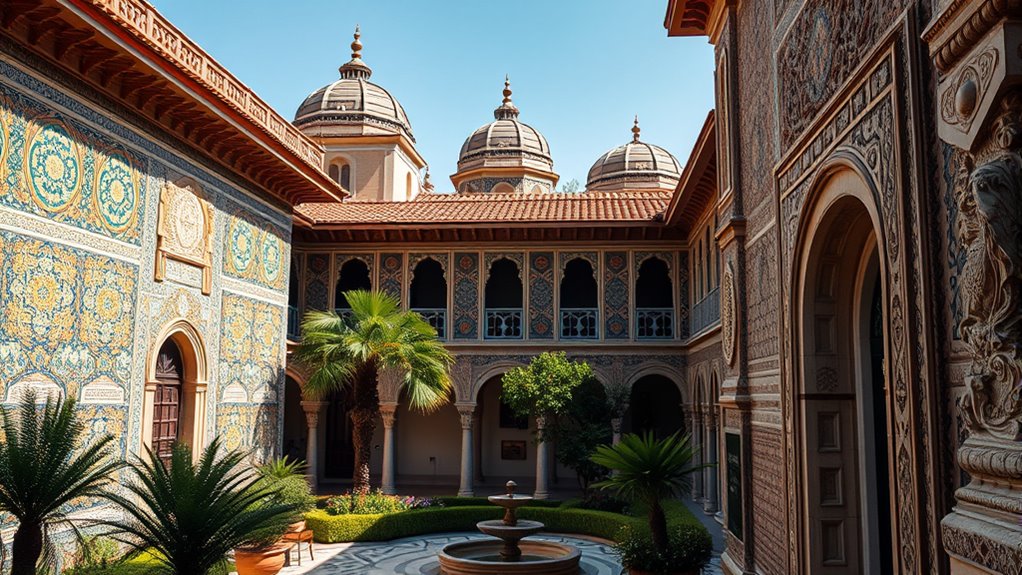

Islamic architecture goes beyond just mosques, showcasing the grandeur of palaces, schools (madrasas), and tombs. You’ll find palaces adorned with harmonious gardens and intricate designs symbolizing paradise. Schools feature colorful mosaics and spacious courtyards that foster learning and community. Tombs are designed with ornate domes and carvings, creating serene spaces for reflection. Each structure reflects deep cultural and spiritual significance. Stick around to discover more about these fascinating architectural wonders.
Open a free Amazon Business account
Business pricing, bulk buying and tax-exempt orders.
As an affiliate, we earn on qualifying purchases.
Key Takeaways
- Islamic palaces feature elaborate gardens symbolizing paradise, integrating geometric patterns and water features for aesthetic appeal and tranquility.
- Gardens in palaces enhance spiritual symbolism and serenity with lush greenery, flowing water, and floral motifs, creating immersive environments.
- Madrasas emphasize the importance of education through spacious courtyards, colorful mosaics, and intricate tile work, blending functionality with beauty.
- Architectural elements in madrasas showcase decorative arts and calligraphy, fostering an engaging atmosphere for learning and cultural appreciation.
- Tombs are designed with ornate domes and intricate carvings, creating serene spaces for reflection while embodying significant architectural achievements.
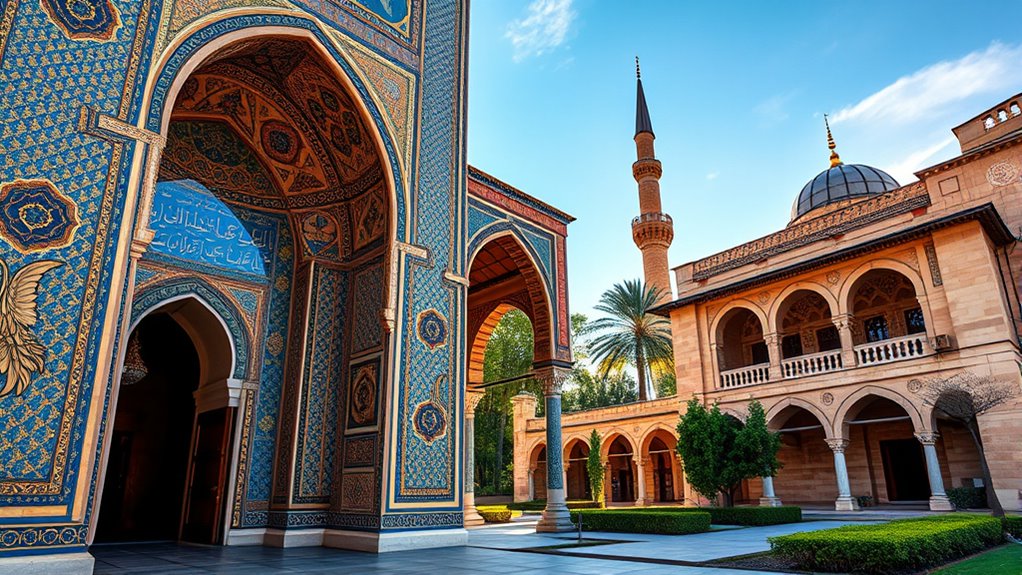
While many people immediately think of mosques when discussing Islamic architecture, there’s a rich tapestry of structures that reflect the diversity and creativity of Muslim cultures. Among these, palaces, schools, and tombs stand out, showcasing the intricate designs and artistic finesse that define Islamic architecture beyond religious spaces. Each of these structures tells a unique story, illustrating how various elements come together to create breathtaking environments.
Take palaces, for example. These grand edifices are often adorned with elaborate garden designs, which not only serve as a visual feast but also symbolize paradise on Earth. You can picture yourself strolling through lush greenery, shaded by palm trees, while water features gently flow around you. The gardens often incorporate geometric patterns and floral motifs, reflecting the principles of balance and harmony found in Islamic art. The interplay between architecture and garden design in these palaces creates an immersive experience, inviting you to appreciate the beauty of nature as well as the skill of the architects.
Palaces embody paradise through lush gardens and intricate designs, celebrating nature and architectural mastery.
When it comes to schools, or madrasas, their architectural forms also hold significant value. These institutions serve as centers of learning, and their designs often incorporate spacious courtyards and intricate tile work. You’ll notice how the decorative arts come into play here, with colorful mosaics and calligraphy embellishing walls and ceilings. As you walk through these halls, you can almost hear the echoes of students engaging in lively discussions about philosophy, religion, and science. The combination of functionality and aesthetic appeal in these educational spaces reflects the importance of knowledge and culture in Islamic society.
Tombs, too, offer a fascinating glimpse into Islamic architectural achievements. Often designed with a sense of reverence and beauty, these structures serve to honor the deceased while providing a tranquil space for reflection. You might find yourself captivated by the ornate domes and intricate carvings that adorn these resting places. The use of light, space, and symmetry in tomb design creates a serene atmosphere, inviting contemplation and respect for those who have passed.
In all of these structures, you see how Islamic architecture transcends mere functionality. It’s about crafting experiences that engage the senses, celebrating a rich heritage through garden design, decorative arts, and thoughtful architecture. By exploring these diverse forms, you gain a deeper appreciation for the creativity and cultural significance embedded in Islamic architecture.
Islamic architecture model replica
As an affiliate, we earn on qualifying purchases.
As an affiliate, we earn on qualifying purchases.
Frequently Asked Questions
What Are the Defining Features of Islamic Palatial Architecture?
Islamic palatial architecture’s defining features include intricate decorative tilework and expansive courtyard layouts. You’ll notice how vibrant tiles adorn walls, creating stunning visual effects that reflect cultural motifs. Courtyards serve as central gathering spaces, often surrounded by lush gardens and water features, fostering tranquility. Arches and domes enhance the grandeur, while calligraphy and geometric patterns add depth. These elements together create a harmonious blend of beauty and functionality, making the palaces truly unique.
How Did Islamic Architecture Influence Western Styles?
Islamic architecture spread like a revitalizing breeze, influencing Western styles profoundly. You’ll notice how the intricate calligraphy ornamentation and geometric patterns in Islamic design inspired European artists and architects. The use of arches, domes, and elaborate tile work became staples in Western architecture during the Renaissance. As you explore various buildings, you’ll see how these elements merged, creating a unique blend that shaped architectural beauty across cultures.
What Materials Were Commonly Used in Islamic Tomb Construction?
In Islamic tomb construction, you’ll find a variety of materials, but marble ornamentation and geometric tilework stand out. Using marble not only adds elegance but also durability, while intricate geometric tilework enhances the aesthetic appeal, creating mesmerizing patterns that reflect Islamic artistry. These materials work together to create tombs that aren’t just resting places but also stunning architectural statements, showcasing the rich cultural heritage and craftsmanship of the time.
How Do Schools Reflect Islamic Architectural Principles?
When you step into an Islamic school, you’ll find it beautifully embodies principles of harmony and learning. The courtyard design invites tranquility, encouraging reflection and study. You’ll notice Qur’anic motifs adorning walls, serving as gentle reminders of faith and knowledge. These elements don’t just beautify the space; they create an atmosphere that nurtures the mind and spirit, making education a sacred experience. Each detail whispers the importance of wisdom in daily life.
Are There Any Famous Islamic Architectural Ruins?
Yes, there are several famous Islamic architectural ruins you should explore. The ancient ruins of the Great Mosque of Samarra in Iraq showcase stunning minaret designs, while the archaeological sites of the Alhambra in Spain highlight intricate tile work and serene gardens. You can also visit the ruins of the Qasr al-Hayr al-Gharbi in Syria, reflecting the grandeur of past Islamic civilizations. Each site tells a unique story of architectural brilliance.
Conclusion
In exploring Islamic architecture, you’ve uncovered a treasure trove that extends far beyond mosques. From the grandeur of palaces to the wisdom encapsulated in schools and the solemn beauty of tombs, each structure tells a story as rich as the desert sands. These architectural wonders capture the essence of a culture that values knowledge, beauty, and reverence. So, next time you admire a mosque, remember the entire universe of Islamic architecture waiting to enchant you.
Flea & tick season Picks
flea and tick prevention
As an affiliate, we earn on qualifying purchases.