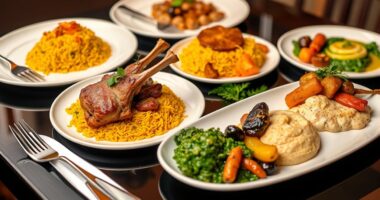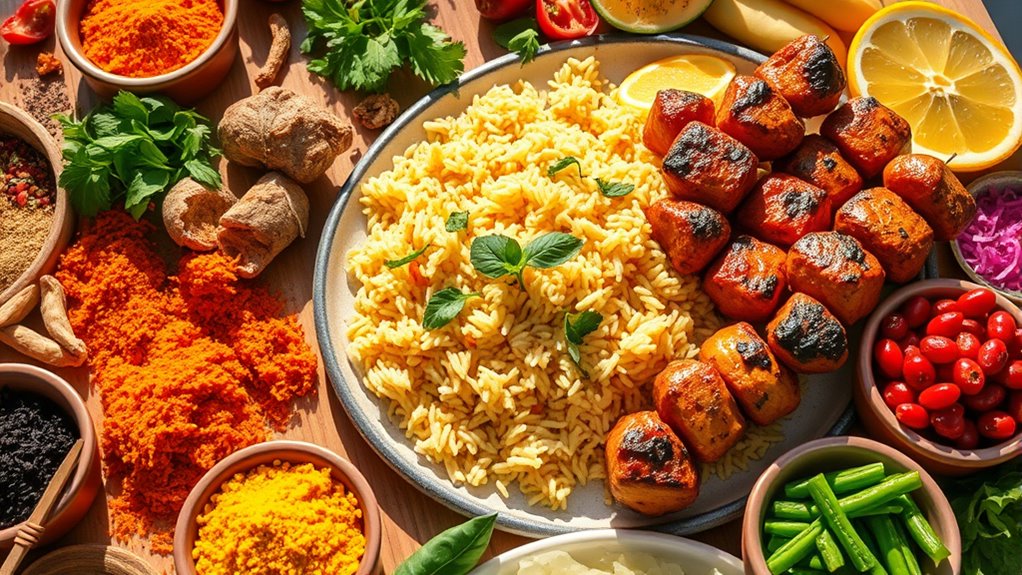
Halal food and traditional medicine go hand in hand by emphasizing purity and the use of natural, healing ingredients. When you choose Halal, you’re not just following dietary laws; you’re embracing a holistic approach to health that incorporates herbs and spices known for their therapeutic properties. This way of eating supports both physical and spiritual well-being, creating a nourishing experience for the body and soul. Discover how this connection can enhance your health and lifestyle even further.
Key Takeaways
- Halal food emphasizes purity, aligning with traditional medicine’s focus on natural, therapeutic ingredients beneficial for health and healing.
- Common spices in Halal cuisine, like turmeric and ginger, provide anti-inflammatory and antioxidant properties, promoting overall wellness.
- Incorporating herbs such as mint and parsley into meals enhances digestion and supports a holistic approach to health.
- Consuming Halal-certified honey and fresh juices encourages natural healing through nutrition, reducing reliance on medications.
- Sharing Halal meals fosters community bonds while nourishing both body and spirit, integrating spiritual well-being with physical health.

As you explore the rich tapestry of Halal food and traditional medicine, you’ll find that these two concepts intertwine in fascinating ways. Halal food, which adheres to Islamic dietary laws, emphasizes purity and wholesomeness. When you think about what you eat, it’s not just about taste; it’s also about how food can heal and nourish your body. Halal certification ensures that the food you consume meets these spiritual and health standards, promoting a lifestyle rooted in both faith and wellness.
Discover the profound connection between Halal food and traditional medicine, where purity meets healing for body and spirit.
The principles behind Halal food align closely with traditional medicine, particularly in the use of herbal remedies. Many cultures have long recognized the healing properties of plants and herbs, using them to treat various ailments. You might be surprised to learn that many Halal foods incorporate these natural ingredients, enhancing their nutritional value while also providing therapeutic benefits. For instance, spices like turmeric and ginger, commonly found in Halal cuisine, have been praised for their anti-inflammatory and antioxidant properties.
When you choose Halal-certified foods, you’re not just adhering to dietary laws; you’re also embracing an approach to health that prioritizes natural ingredients. This connection between food and medicine is evident in many traditional practices, where meals are crafted not just for sustenance but also for healing. You’ll often find that herbal remedies are integrated into everyday meals, allowing you to enjoy their benefits without the need for separate supplements or medications.
Incorporating these principles into your daily life can be both fulfilling and beneficial. When you prepare meals, think about how you can include herbal remedies that are Halal. For example, adding fresh herbs like mint or parsley can enhance flavor while also providing digestive support. You might also consider using Halal-certified honey as a natural sweetener, known for its antimicrobial properties. Additionally, incorporating fresh juices like Amla juice can offer a boost of vitamin C and antioxidants, enhancing your overall health.
Beyond physical health, the act of consuming Halal food can also foster a sense of community and spirituality. Sharing meals that are both Halal and rich in herbal remedies can create bonds, enhance relationships, and promote overall well-being. As you navigate the world of Halal food and traditional medicine, remember that every meal you prepare can be an opportunity for healing—nourishing your body and spirit in the process. Embrace this holistic approach, and you’ll likely find that your diet can play a significant role in your overall health journey.
Frequently Asked Questions
What Are the Benefits of Halal Food Beyond Dietary Restrictions?
Halal food offers benefits beyond dietary restrictions by reinforcing your cultural identity and promoting ethical consumption. By choosing halal, you’re supporting humane treatment of animals and sustainable practices, which aligns with many people’s values. It fosters a sense of community as you share meals rooted in tradition. Plus, halal diets often emphasize fresh, wholesome ingredients, contributing to overall health and well-being. So, embracing halal can enrich both your life and those around you.
Can Halal Food Be Integrated Into Modern Medicine Practices?
Absolutely, you can integrate halal food into modern medicine practices. By collaborating with nutritionists and healthcare providers, you can develop meal plans that respect dietary restrictions while promoting health. Halal food integration can enhance patient care, providing options that align with cultural beliefs and improving compliance. Utilizing halal ingredients in therapeutic diets may also support holistic healing, fostering a deeper connection between diet and overall well-being in medical settings.
How to Ensure Halal Certification for Traditional Medicine Products?
To guarantee halal certification for traditional medicine products, you’ll need to follow specific halal certification processes. Start by sourcing ingredients from suppliers who are certified halal. Understand traditional medicine regulations in your region, as they may vary. Collaborate with recognized halal certifying bodies to get your products assessed and approved. Regularly review your practices to maintain compliance and stay updated on any changes in both halal and traditional medicine standards.
Are There Specific Halal Herbs That Promote Healing?
Yes, there are specific halal herbs that promote healing. You can explore herbal healing through traditional remedies like ginger, which aids digestion, and turmeric, known for its anti-inflammatory properties. Other beneficial herbs include garlic, which boosts immunity, and mint, which soothes the stomach. Incorporating these halal herbs into your diet not only aligns with your values but also enhances your overall well-being, making your healing journey more holistic and effective.
Is There a Connection Between Halal Diets and Mental Health?
Absolutely, there’s a profound connection between halal diets and mental health. When you embrace dietary mindfulness, you’re not just nourishing your body; you’re nurturing your soul. Faith intertwines with well-being, creating a tapestry of peace and purpose in your life. Eating halal can instill a sense of discipline and gratitude, enhancing your emotional resilience. It’s like finding a warm hug in every meal, reminding you that what you consume impacts not just your body, but your mind too.
Conclusion
Incorporating halal food into your daily diet can feel like crafting a vibrant tapestry, each thread representing a healing element. Just as a skilled artisan weaves together diverse colors to create beauty, you too can blend traditional medicine with wholesome halal ingredients. Imagine nourishing your body with a plate that not only satisfies your hunger but also promotes wellness. By embracing this approach, you’re not just eating; you’re participating in a time-honored tradition that celebrates health and spirituality.