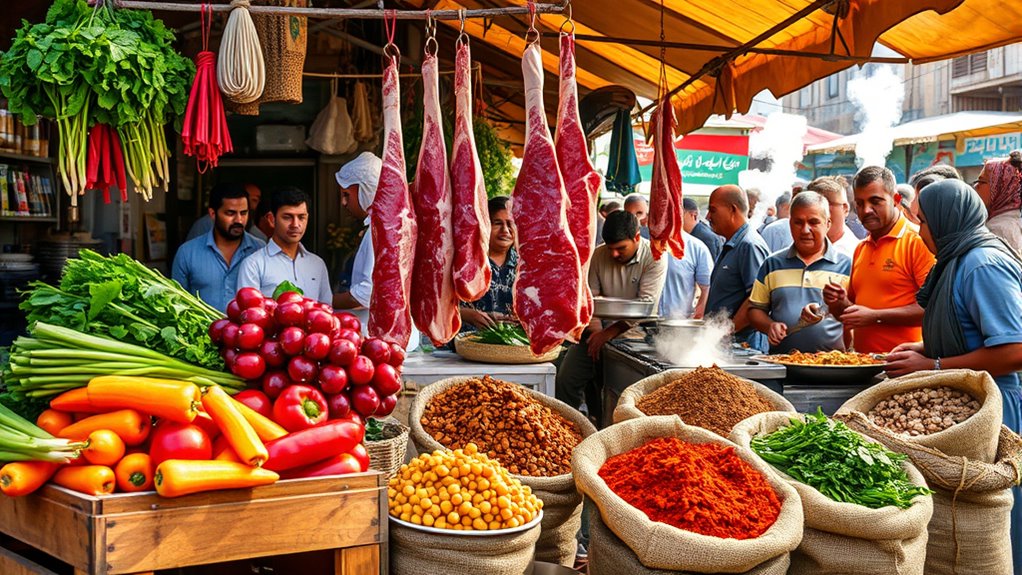

Halal food comes from Islamic dietary laws found in the Quran, which defines what's permissible (halal) and forbidden (haram). These guidelines emphasize ethical sourcing and humane treatment of animals, forming the core of Muslim dietary practices. In the U.S., halal food emerged in the 1960s, gaining popularity with the rise of Muslim immigrants. By the 1990s, it evolved into a commercial label, expanding into mainstream markets. Discovering more about its journey will reveal its growing cultural significance.

Get kitchen staples and gadgets delivered free with Prime
- Fast, free delivery on millions of items
- Prime Video, Amazon Music and more included
- Member-only deals all year

Have you ever wondered where halal food comes from and what it truly means? The origins of halal food lie in Islamic dietary laws outlined in the Quran, which clearly delineate what's permissible (halal) and forbidden (haram). These guidelines not only govern what you can eat but also how animals should be treated and slaughtered. The teachings of Prophet Muhammad form the foundation of these laws, and over centuries, they've shaped dietary practices among Muslims worldwide.
The essence of halal food stems from Islamic dietary laws, emphasizing ethical treatment and humane practices in food sourcing.
In the United States, the introduction of halal food began in the 1960s, coinciding with an increase in Muslim immigrant populations. This growing demographic created a rising demand for halal products, and soon, halal meat became more accessible. As communities expanded, so did the need for markets and butchers who specialized in halal-certified goods, ensuring that what you consume aligns with Islamic law.
By the 1990s, halal food evolved into a commercial label, marking a significant shift in the food market. With globalization, halal-certified products began to appear in mainstream grocery stores, reflecting an increasing acceptance and awareness of halal principles among non-Muslims. This change has made it easier for everyone, regardless of faith, to access halal food options. You might even find halal snacks or beverages in places you'd least expect!
Today, the halal food market is valued at over $1 trillion globally, showcasing its importance in the food and beverage industry. The Middle East remains a stronghold for halal practices, but the influence of Muslim immigrants has helped spread these concepts far and wide, transforming the culinary landscape in many countries. As you explore the food market, you may notice the variety of halal products available, each catering to diverse tastes while adhering to Islamic guidelines. Additionally, the growth of sustainable brands has led to an increased focus on ethically sourced halal options, reflecting a broader trend towards conscious consumerism.
Understanding what halal food means can deepen your appreciation for the cultural and religious significance behind it. It's not just about the food itself; it's about ethical sourcing, humane treatment of animals, and respecting dietary laws.
Frequently Asked Questions
Where Did Halal Food Originate?
Halal food originated from Islamic dietary laws established in the Quran.
You'll find that it emphasizes what's permissible and forbidden, especially regarding pork and alcohol.
The practice of preparing halal food dates back to the 7th century, aligning with the rise of Islam.
This tradition not only includes specific dietary restrictions but also promotes ethical treatment and slaughter of animals, shaping a significant aspect of cultural identity for Muslim communities around the world.
What Is the Scientific Reason Behind Halal?
Imagine a world where every meal you eat isn't only nourishing but also ethically sourced. That's the essence of halal.
The scientific rationale behind halal centers on hygiene and humane treatment of animals. You're ensuring that your food is clean and free from harmful substances.
Halal practices, like the swift dhabīḥah slaughter method, minimize stress for animals, potentially leading to healthier meat. This aligns with modern values of animal welfare and sustainability in food production.
What Does Halal Mean in World History?
Halal means "permissible" in Arabic, and it's crucial in world history as it shapes dietary practices and ethical considerations for millions.
You'll find that halal guidelines originated from Islamic teachings, influencing not just food but also societal norms across cultures.
As you explore various regions, you'll see how these practices have fostered community identity and respect for religious beliefs, ultimately contributing to the rich tapestry of global culinary traditions and intercultural exchanges.
What Is the Logic Behind Halal Meat?
Did you know that the global halal market is projected to reach over $2 trillion by 2025?
The logic behind halal meat revolves around ethical treatment and humane practices. You'll find that halal slaughter, or dhabīḥah, emphasizes minimizing animal suffering while invoking Allah's name, adding a spiritual touch.
Moreover, the prohibition of pork and alcohol highlights adherence to Islamic teachings, ensuring that what you consume aligns with purity and quality standards.
As an affiliate, we earn on qualifying purchases.
Conclusion
In conclusion, understanding where halal food comes from is like peeling an onion—each layer reveals important cultural and religious significance. You've learned that halal isn't just about what you eat; it's about the process, ethics, and respect for life. By choosing halal, you're connecting with centuries of tradition and values that highlight compassion and mindfulness in consumption. So next time you enjoy a halal meal, remember the rich history and meaning behind it.
NFL season / tailgating Picks
team gear
As an affiliate, we earn on qualifying purchases.