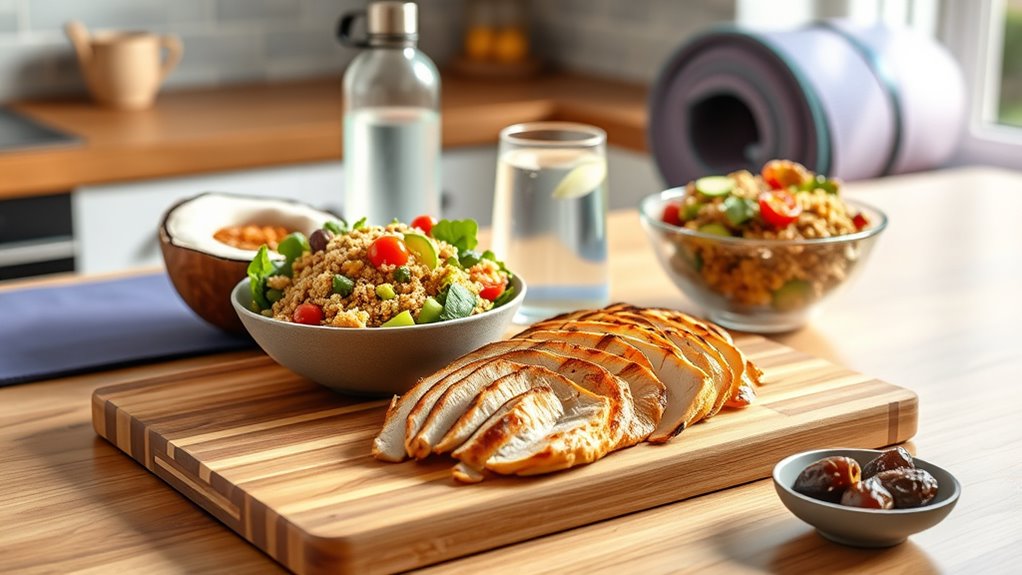
For Halal fitness nutrition, eat easily digestible carbs like oats with fruit or whole wheat toast with natural peanut butter 1-2 hours before your workout to boost energy. Pair them with moderate protein and stay hydrated with water. After your workout, consume high-quality halal protein sources like lentils or chickpeas, combined with carbs such as quinoa or rice, and healthy fats like avocado. Keep your meals aligned with your faith, and you’ll learn more about optimizing your nutrition as you continue.

Get kitchen staples and gadgets delivered free with Prime
- Fast, free delivery on millions of items
- Prime Video, Amazon Music and more included
- Member-only deals all year
Key Takeaways
- Consume easily digestible, Halal-certified carbohydrates paired with moderate protein 1-2 hours before exercise for sustained energy.
- Hydrate well with water or Halal electrolyte drinks prior to workout to maintain optimal hydration levels.
- After exercise, prioritize high-quality, Halal-certified proteins and carbs like lentils or brown rice for muscle repair and glycogen replenishment.
- Check product labels and certifications to ensure all foods are Halal-compliant and minimally processed for maximum health benefits.
- Plan meals to align with workout timing, eating 1-2 hours pre-exercise and within 30-60 minutes post-exercise for better results.

With the growing focus on health and spirituality, more fitness enthusiasts are seeking Halal-certified nutrition options that align with their faith. If you’re committed to maintaining a healthy lifestyle while following Halal guidelines, understanding what to eat before and after workouts becomes essential. Proper nutrition fuels your body, enhances performance, and speeds up recovery, all while respecting your religious beliefs. So, you need to choose your foods carefully, prioritizing Halal-certified items that are nutritious and energizing.
Prioritize Halal-certified, nutritious foods to fuel your workouts and support recovery while honoring your faith.
Before your workout, your goal is to consume foods that provide sustained energy without feeling too heavy. Opt for easily digestible carbohydrates paired with a moderate amount of protein. For example, a small bowl of oatmeal topped with fruits like bananas or berries can offer complex carbs that release energy gradually, keeping you fueled throughout your session. Alternatively, a whole wheat toast with a thin spread of natural peanut butter provides quick energy and some healthy fats. Hydration is equally important, so drink plenty of water beforehand to stay hydrated and prevent fatigue. If you prefer something more portable, a Halal-certified energy bar made from natural ingredients can work well, provided it’s low in added sugars and artificial additives.
After your workout, focus on replenishing lost nutrients and supporting muscle recovery. Your post-exercise meal should include high-quality protein, which is crucial for repairing muscles, along with carbs to replenish glycogen stores. Grilled chicken or fish seasoned with Halal spices paired with brown rice or quinoa offers a balanced, nutrient-dense option. If you’re vegetarian or vegan, options like lentils or chickpeas combined with vegetables can serve as excellent sources of both protein and carbs. Incorporate healthy fats from sources like avocado or olive oil to support overall recovery. Remember, rehydration remains key, so continue drinking water or include Halal electrolyte drinks to replace lost minerals during sweating.
Balancing your pre- and post-workout nutrition with Halal-certified foods ensures you stay aligned with your faith while optimizing your fitness results. Always check product certifications and ingredient labels to confirm they meet Halal standards. Incorporating whole, minimally processed foods helps you avoid unwanted additives and ensures you’re fueling your body with clean, natural nutrients. When planning your meals, think about timing as well—consume your pre-workout meal about 1-2 hours before exercising, and aim to eat your recovery meal within 30 to 60 minutes afterward. This approach maximizes energy use and accelerates muscle repair, helping you stay consistent and motivated on your fitness journey.
As an affiliate, we earn on qualifying purchases.
Frequently Asked Questions
Are Halal Protein Powders Suitable for Muscle Gain?
Yes, halal protein powders are suitable for muscle gain. They provide high-quality protein that helps repair and grow muscles after workouts. Look for products with complete amino acid profiles and minimal additives. Incorporate them into your diet by mixing with water, milk, or blending into smoothies. Consuming halal-certified protein powders guarantees you stay aligned with your dietary needs while effectively supporting your muscle-building goals.
Can I Consume Dairy Products Before Workouts?
Think of your body as a finely tuned engine; dairy acts like premium fuel, giving you the energy needed for a strong workout. You can definitely consume dairy before exercising, especially if your stomach handles it well. Opt for yogurt or a glass of milk for sustained energy. Just be mindful of portion sizes to avoid discomfort. Dairy provides protein and carbs that fuel your muscles and keep you going strong.
What Are Halal Options for Energy Gels?
You can choose halal energy gels made from natural ingredients like honey, dates, or fruit extracts, which are naturally halal and provide quick energy. Check labels for certification to guarantee they contain no forbidden ingredients. You might also consider homemade gels using blended fruits or honey, offering a healthy and halal alternative. Always read labels carefully and opt for trusted brands that specify halal compliance to keep your nutrition halal and effective.
How Do I Ensure Hydration With Halal Drinks?
You’re the captain of your hydration ship, steering through a sea of options. To guarantee halal drinks keep you hydrated, choose water infused with natural flavors like lemon or mint, or coconut water for electrolytes. Check labels for halal certification, avoiding alcohol or animal-derived ingredients. Sip steadily throughout your workout and after, turning every gulp into fuel that keeps your muscles strong and your energy steady for the journey ahead.
Are Vegetarian Halal Foods Effective Pre- and Post-Workout?
Yes, vegetarian halal foods can be effective pre- and post-workout. You get essential carbs, protein, and nutrients to fuel your workout and aid recovery. Incorporate options like lentils, chickpeas, tofu, and whole grains to boost energy and muscle repair. These foods are rich in plant-based protein and fiber, helping you stay full and energized. Pair them with hydrating drinks to maximize your performance and recovery.
Conclusion
So, now you’re all set to conquer your workouts with the perfect halal fuel. Because nothing says dedication like meticulously timing your dates and nuts, right? Remember, fueling right isn’t just about gains — it’s about proving to everyone that you can stay true to your beliefs while crushing those reps. Who knew that halal fitness nutrition could be your secret weapon? Stay disciplined, stay delicious, and let your gains do the talking—preferably in a modest, tasteful manner.
NFL season / tailgating Picks
team gear
As an affiliate, we earn on qualifying purchases.