Modesty holds immense significance across Islamic cultures, shaping your identity and societal norms. It reflects diverse interpretations influenced by local customs and traditions. You’ll find it expressed through various attire, from full-body garments to simpler hijabs, showcasing different values of respect and self-worth. Both men and women actively participate in these expressions of modesty, reinforcing cultural identity. Understanding these nuances can enrich your appreciation of Islamic societies and their rich cultural tapestry. Curious for more insights?
Key Takeaways
- Modesty shapes personal identities and societal norms, reflecting cultural diversity within Islamic communities.
- Dress codes vary widely, influenced by regional customs and interpretations of modesty.
- Both men and women express modesty through clothing choices, highlighting its collective value.
- Modesty serves as a reflection of faith and cultural values, reinforcing community identity.
- Understanding diverse expressions of modesty promotes respect and appreciation of Islamic cultures.
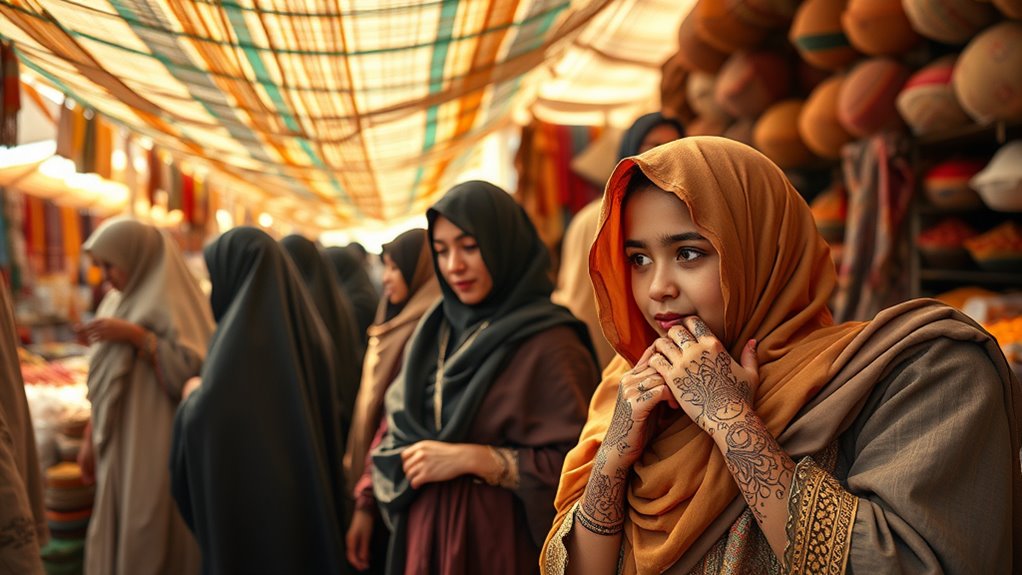
Modesty holds an essential place in Islamic cultures, shaping not just personal identities but also societal norms. When you explore the significance of modesty, you’ll notice how it varies across different cultures, reflecting the diverse backgrounds and interpretations within the Islamic community. Modesty isn’t solely about personal attire; it encompasses behavior, speech, and overall demeanor. This cultural richness adds depth to how modesty is perceived and practiced in various regions.
Modesty is a vital aspect of Islamic cultures, influencing identities, societal norms, and expressions of faith across diverse communities.
As you dive deeper, you’ll find that dress codes are often the most visible expression of modesty. In some cultures, you’ll see women donning full-body garments like the burqa or niqab, while in others, a simple hijab suffices. Each of these choices represents a unique interpretation of modesty, influenced by cultural variations and local customs. For instance, in parts of the Middle East, you might encounter more conservative dress codes, while in South Asia, women may wear colorful shalwar kameez, which balances cultural tradition with modesty.
You also can’t overlook how men participate in this cultural expression. In many Islamic societies, men wear loose-fitting clothing that covers the body, often adhering to similar principles of modesty. This shows that modesty isn’t limited to one gender; it’s a collective cultural value that impacts everyone. You might notice that the emphasis on modesty can also be a reaction to external influences, with communities *aspiring* to maintain their cultural identity in a rapidly globalizing world.
When you engage with Islamic cultures, you’ll realize that the meaning of modesty transcends clothing. It’s about respect, dignity, and self-worth. By dressing modestly, individuals often express their devotion to their faith and commitment to their cultural values. You may find that different communities emphasize different aspects of modesty, which can lead to misunderstandings if not approached with an open mind. Additionally, fostering effective communication skills can enhance mutual understanding regarding cultural practices and beliefs.
As you explore these cultural variations, remember that modesty is a complex and multifaceted concept. It’s not just a set of rules to follow; it’s a reflection of values that shape identities and communities. Understanding the significance of modesty in Islamic cultures enriches your appreciation of the diverse ways people express their beliefs and navigate their social environments. So, whether you’re observing or participating, keep an eye out for the intricate ways modesty weaves through daily life in various Islamic societies.

APRROOT Modest Clothing for Women Abayas Dress Muslim Robe Islamic Kaftan 3 PCS Set Long Sleeve Button Shirts Pants Hijab Dubai Outfits Khaki XL
【Elegant 3-Piece Set for Modest Fashion】:This stylish abaya set includes a long-sleeve button-up shirt, matching pants, and a…
As an affiliate, we earn on qualifying purchases.
As an affiliate, we earn on qualifying purchases.
Frequently Asked Questions
How Do Different Islamic Cultures Interpret Modesty?
Different Islamic cultures interpret modesty in various ways, influenced by cultural variations and local traditions. You’ll find that some communities emphasize specific attire, like the hijab, while others focus more on behavior and etiquette. Ritual practices surrounding modesty can also differ; for instance, some cultures may have unique ways of celebrating modesty during religious events. Overall, your understanding of modesty will deepen as you explore these diverse interpretations and practices.
Is Modesty Only About Clothing in Islam?
Modesty isn’t just about clothing in Islam; it’s a treasure chest of values! While fashion norms play a significant role, personal humility and respect for oneself and others are equally important. You’ll find that modesty encompasses behavior, speech, and intentions too. It encourages you to act with dignity and grace, regardless of what you’re wearing. So, embrace a holistic approach to modesty that goes beyond mere fabric!
Can Men Also Practice Modesty in Islamic Cultures?
Yes, men can definitely practice modesty in Islamic cultures. You’ll find that men’s dress codes often emphasize covering the body appropriately, just like women’s. Modest behavior is equally important; it includes respectful communication and humility. By choosing loose-fitting clothing and avoiding extravagant styles, you embody the principles of modesty. Remember, modesty isn’t just about what you wear, but also how you conduct yourself in social situations.
Are There Any Islamic Texts Specifically Discussing Modesty?
Yes, there are Islamic texts that specifically discuss modesty, emphasizing its importance for both genders. The Quran and Hadith address modesty as a reflection of spirituality and adherence to gender roles. They encourage believers to dress and behave modestly, promoting respect, dignity, and humility. You’ll find that these teachings help cultivate a sense of responsibility, not just personally, but also within the community, fostering an environment that values modesty in all aspects of life.
How Does Modesty Affect Social Interactions in Islamic Communities?
Modesty shapes how you interact in Islamic communities, creating an environment of respect and understanding. By embracing modesty, you reinforce traditional gender roles, fostering a sense of harmony. People often feel more at ease, knowing they’re part of a culture that values dignity. This respectful demeanor enhances community cohesion, making social gatherings more meaningful. So, when you engage with others, remember that modesty isn’t just a personal choice; it’s a communal bond.

LouVasabuce Muslim Clothes For Men Islamic Clothing Umrah Arabic Thobe Kaftan (Black, L)
Material: muslim clothes for men is made of 95% polyester and 5% spandex. Skin-friendly fabric, soft texture, lightweight…
As an affiliate, we earn on qualifying purchases.
As an affiliate, we earn on qualifying purchases.
Conclusion
In conclusion, modesty shapes identities, fosters respect, and strengthens communities across Islamic cultures. It encourages you to express yourself with grace, to interact with kindness, and to uphold values that connect you to your faith. By embracing modesty, you not only honor traditions but also inspire others to appreciate the beauty in restraint, dignity, and humility. So, as you navigate your journey, let modesty guide your actions, enrich your relationships, and reflect your beliefs.

48 Pieces Hijab Pins for Women Muslim Faux Pearl Clips U Shaped DIY Boutonniere Alloy Decorative Brooch Safety Scarf Hijab Pins for Wedding Dress Accessories
Package contents: you will receive 48 pieces of scarf brooches pins in total, abundant quantity and various styles…
As an affiliate, we earn on qualifying purchases.
As an affiliate, we earn on qualifying purchases.

bonballoon XL Long Saudi Niqab Nikab 3 Layers burqa Hijab Face Cover Veil Islam Islamic Jilbab
XL Long Saudi Niqab Nikab 3 Layers burqa Hijab Face Cover Veil Islam Islamic Jilbab
As an affiliate, we earn on qualifying purchases.
As an affiliate, we earn on qualifying purchases.