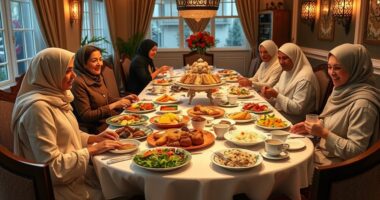
During Ramadan, mosques and food banks play a vital role in community support. You’ll find countless volunteer opportunities, from preparing iftar meals for families in need to helping at local food banks. These acts of generosity foster unity and create connections among diverse groups. Engaging in service not only helps those facing hunger but also broadens your understanding of different cultures. Discover how these communal efforts can enrich your experience and make a positive impact this Ramadan.
Key Takeaways
- Mosques and community centers organize volunteer opportunities, including food distribution and preparing iftar dinners for families in need.
- Food banks collaborate with local organizations to provide meals to the hungry during Ramadan, fostering community unity.
- Interfaith events, such as communal meals, encourage participation from diverse backgrounds and promote understanding among different faiths.
- Engaging in volunteer activities during Ramadan enriches personal connections and creates a sense of purpose within the community.
- Acts of generosity and support during Ramadan contribute to a more inclusive environment and strengthen community bonds.
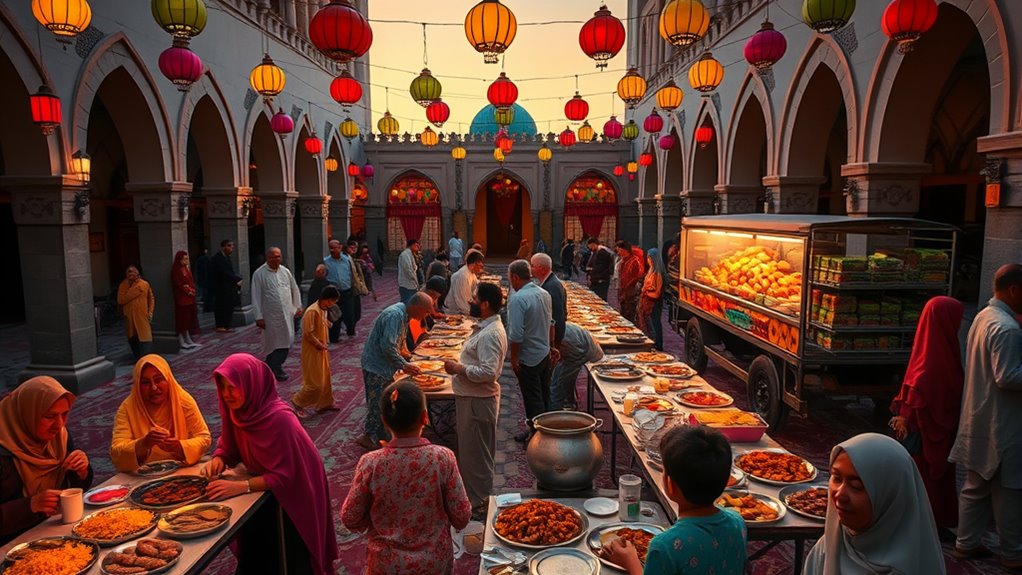
As Ramadan approaches, communities come alive with a spirit of generosity and support that’s hard to ignore. This holy month isn’t just about fasting and prayer; it’s also an opportunity for you to connect with others and give back to those in need. One of the most powerful ways to do this is through interfaith dialogue, where you can engage with people from different backgrounds, sharing experiences and fostering understanding. By opening up these lines of communication, you can create a more inclusive atmosphere that promotes mutual respect and compassion.
During Ramadan, many mosques and community centers organize various volunteer opportunities. You might find yourself helping at food banks, distributing meals, or even preparing iftar dinners for families in need. These activities not only alleviate hunger but also cultivate a sense of unity and purpose within the community. When you volunteer your time, you’re not just serving others; you’re also enriching your own life with meaningful connections and experiences.
Volunteering during Ramadan fosters community unity while enriching your life through meaningful connections and shared experiences.
Moreover, volunteering during this time can be a chance to learn about the importance of Ramadan from a cultural perspective. Engaging with diverse groups will help you appreciate the significance of this month in a broader context. You’ll discover how different communities celebrate, share, and support each other, bringing everyone closer together, regardless of faith. This shared commitment to kindness can lead to lasting friendships and collaborations that extend well beyond the month of Ramadan.
You may also notice that many organizations organize interfaith events during this time, encouraging individuals from various backgrounds to participate. These gatherings often include communal meals, discussions, or service projects, fostering an atmosphere of learning and compassion. By taking part in these events, you’re not only supporting your own community but also enriching your understanding of others. It’s a beautiful way to break down barriers and build bridges.
As you navigate through Ramadan, consider how you can contribute to your community’s well-being. Whether you’re volunteering at a local charity, participating in interfaith events, or simply sharing a meal with someone from another faith, your actions matter. Embrace this opportunity to grow and connect, and watch how your efforts can spark positive change. In doing so, the spirit of Ramadan can transcend personal observance and create a ripple effect of kindness that touches everyone around you. Practicing mindfulness during this time can enhance your experiences and deepen your connections with others.

2PCS Ramadan Serving Trays Decorations for Home – Moon Star Shaped Eid Mubarak Table Decor Gifts, Islam Muslim Al-Fitr Iftar Party Crescent Iron Platters Dishes(Moon/Star Pattern)
【Perfect Ramadan Decoration】You will receive a set of golden metal trays in the shape of moon and star….
As an affiliate, we earn on qualifying purchases.
As an affiliate, we earn on qualifying purchases.
Frequently Asked Questions
How Can Non-Muslims Participate in Ramadan Community Events?
You can participate in Ramadan community events by joining interfaith dialogues and cultural exchanges. Reach out to local mosques or community centers to find events welcoming everyone. Engage in shared meals, learn about fasting, or attend workshops on Islamic traditions. Your presence fosters understanding and respect, enriching the experience for all. Don’t hesitate to ask questions and share your own traditions; it’s a great way to build bridges and create lasting friendships.
Are There Specific Volunteering Opportunities During Ramadan?
Yes, there are specific Ramadan volunteering opportunities you can join. You can help with community outreach by serving meals at food banks, distributing care packages, or assisting with local iftar events. You can also participate in organizing clothing drives or tutoring programs for those in need. Each effort you make strengthens the community bonds and fosters understanding during this holy month, enhancing both your experience and the lives of others.
What Types of Food Are Typically Distributed by Food Banks?
Food banks typically distribute a variety of items, guaranteeing you receive nutritious snacks and canned goods. You might find canned vegetables, fruits, proteins, and soups, which are all essential for balanced meals. Nutritious snacks like granola bars, trail mix, and dried fruits can also be included to help sustain energy levels. By supporting food banks, you ensure that those in need get access to healthy food options during difficult times.
How Can I Donate to Local Mosques or Food Banks?
You can donate to local mosques or food banks by exploring various donation options. Start by visiting their websites, where you’ll often find links for online contributions. You can also attend local fundraising events, which are great for meeting community members and learning about their needs. Don’t forget to ask about in-kind donations, like food or supplies, as these can be just as valuable during times of need. Your support makes a big difference!
What Safety Measures Are in Place for Community Gatherings?
For community gatherings, health protocols are strictly followed to guarantee everyone’s safety. You’ll notice hand sanitizing stations, mask requirements, and social distancing measures in place. Crowd management strategies are implemented to prevent overcrowding, allowing for a more enjoyable experience. Event organizers usually monitor attendance and adjust accordingly, so you can feel comfortable participating. Staying informed about these measures helps you enjoy gatherings while prioritizing your health and the well-being of others.

FixtureDisplays® Plexiglass Acrylic Lucite Clear Transparent Rice Grains Cereal Display Spice Container Coffee Bean Bin Candy Tube Donation Box Piggybank 100858-NF
FixtureDisplays Plexiglass Acrylic Lucite Clear Transparent Rice Grains Cereal Display Spice Container Coffee Bean Bin Candy Tube Donation…
As an affiliate, we earn on qualifying purchases.
As an affiliate, we earn on qualifying purchases.
Conclusion
During Ramadan, community support thrives through shared meals, united prayers, and compassionate outreach. You witness mosques opening their doors, food banks distributing essential supplies, and neighbors lending a helping hand. As you engage in acts of kindness, you not only nourish your spirit but also strengthen the bonds that connect you to those around you. Together, you create a tapestry of hope, resilience, and generosity, ensuring that no one faces the challenges of this holy month alone.

Wheel of The Year for 2025 with Wiccan Events Calendar 2025 Pagan Holidays Calendar Annual Cycle of Seasonal Festivals Interfaith Almanac Canvas Poster Wall Art Bedroom Office Room Decor Gifts Frame 1
The poster is printed on canvas which is one kind of best material for poster. It is waterproof,moisture…
As an affiliate, we earn on qualifying purchases.
As an affiliate, we earn on qualifying purchases.

Retisee 24 Pcs Ramadan Eid DIY Lantern Craft Kit, Paper Lanterns with 1000 Gold Yellow Tissue Paper & Double-Sided Tape, Islamic Moon Star Motif Decor for Home Table Mosque Party Art Project
Complete Ramadan DIY Lantern Kit : you will get 24 intricately designed cardboard lanterns with classic Islamic moon…
As an affiliate, we earn on qualifying purchases.
As an affiliate, we earn on qualifying purchases.