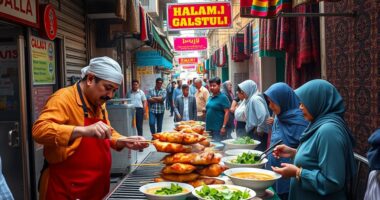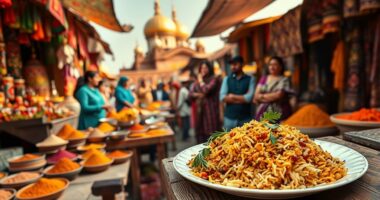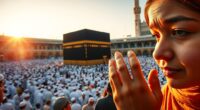
Eid Al-Fitr celebrations vary across nations, but they all embody community spirit and joy. You’ll find families gathering for prayer in mosques or open spaces, donning vibrant traditional attire. Sweet dishes like baklava and maamoul fill the air with delight, while acts of charity guarantee everyone can join in the festivities. Visiting friends and sharing gifts strengthen social bonds. Experience the diverse customs and rituals that make Eid special, and discover even more about these joyful celebrations.
Key Takeaways
- Eid Al-Fitr is celebrated worldwide with unique customs, including special prayers, feasts, and community gatherings that reflect local cultures.
- Traditional foods vary by region, featuring sweets like baklava in the Middle East and biryani in South Asia, symbolizing cultural heritage.
- Community visits and the exchange of gifts and sweets are common rituals, reinforcing social bonds and fostering unity among families and friends.
- Acts of charity, known as Zakat al-Fitr, are emphasized globally, encouraging generosity and inclusiveness for those in need during the celebrations.
- Festive attire often includes vibrant traditional clothing, showcasing the cultural diversity and artistic expressions associated with Eid Al-Fitr across different nations.
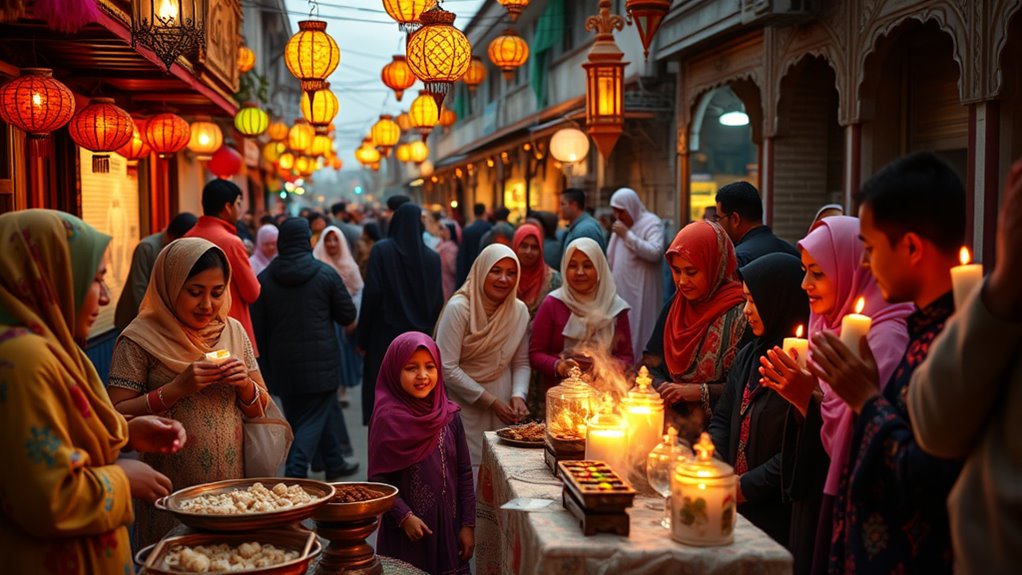
Have you ever wondered how Eid Al-Fitr brings communities together in celebration? This vibrant festival marks the end of Ramadan, a month of fasting, reflection, and spiritual growth for Muslims around the world. As the day approaches, excitement fills the air, and you can feel the anticipation building within your community. Families and friends gather to share in the joy, often donning beautiful Muslim festive attire that reflects their cultural heritage. You might notice the bright colors and intricate designs of traditional outfits, each telling a story of its own.
On Eid morning, the atmosphere is electric. You join the congregation for the special prayer, usually held in large open spaces or mosques. The sense of unity is palpable as you stand shoulder to shoulder with fellow worshippers, all dressed in your best. After the prayers, greetings of “Eid Mubarak” fill the air, as hugs and smiles are exchanged. It’s a moment that reinforces the bonds of friendship and community, making you feel connected to something larger than yourself.
The morning of Eid is a vibrant celebration of unity, filled with joyful prayers and heartfelt greetings that strengthen community bonds.
One of the most delightful aspects of Eid Al-Fitr is the food. You can’t help but indulge in the array of traditional sweet dishes that are an essential part of the celebration. From baklava to maamoul, each bite is a burst of flavor that brings back cherished memories. Families often prepare these treats together, passing down recipes through generations. The aroma of freshly baked goods wafts through the neighborhood, inviting everyone to partake in the festivities. It’s not just about the food; it’s about sharing love and joy with those around you.
As the day unfolds, you’ll likely find yourself visiting friends and family, exchanging gifts and sweets. Each visit strengthens the ties within your community, reminding you of the importance of togetherness. Children play and laugh, their innocent joy adding to the festive spirit. You can’t help but smile at their excitement, as they dress up and revel in the moment.
In many cultures, giving to those in need is a significant part of Eid Al-Fitr. You might find yourself participating in charitable acts, ensuring that everyone can share in the joy of the festival. This spirit of generosity not only enhances the day but also reinforces the values of compassion and kindness that the festival embodies. By the end of the day, you’ve not only celebrated but also contributed to the sense of community and togetherness that defines Eid Al-Fitr. Embracing mindful living during this time can foster appreciation for the connections and traditions that enrich our lives.

YEMYIQZ Muslim Robe for Men Arab Long Sleeve Kaftan Islamic Arabic Abaya Thobe Ramadan Middle East Islamic Clothing Shirt Gown (L, Black)
【Men Muslim Robes】Dubai Kaftan for Men Muslim Robes is made of soft, skin-friendly fabric for comfort, breathability, and…
As an affiliate, we earn on qualifying purchases.
As an affiliate, we earn on qualifying purchases.
Frequently Asked Questions
What Is the Significance of Eid Al-Fitr in Islam?
Eid al-Fitr’s significance in Islam lies in its celebration of the end of Ramadan fasting. You’ve spent a month in spiritual reflection, deepening your connection to faith and community. This festive occasion marks gratitude for the strength and discipline you’ve shown during Ramadan. It’s a time for joyful gatherings, sharing meals, and giving to those in need. By celebrating Eid, you acknowledge the importance of unity and compassion in your spiritual journey.
How Do Different Cultures Prepare for Eid Al-Fitr?
Different cultures prepare for Eid al-Fitr with unique Eid preparations and cultural customs. You might find families cleaning their homes, buying new clothes, and cooking special dishes. In some regions, people decorate their homes with lights and colorful ornaments. You’ll also notice the importance of giving to charity, as many communities focus on helping those in need before the celebration. Each culture brings its own flavor, making Eid a vibrant and diverse occasion.
What Traditional Foods Are Served During Eid Al-Fitr Celebrations?
Imagine a vibrant table, overflowing with the essence of celebration. During Eid feasts, you’ll savor traditional dishes like biryani and kebabs, each bite symbolizing unity and joy. Don’t forget the traditional sweets, like baklava and maamoul, which add a touch of sweetness to the occasion. As you gather with loved ones, these foods become more than just meals; they embody the spirit of generosity and togetherness that Eid represents.
Are There Any Specific Prayers Associated With Eid Al-Fitr?
Yes, there are specific prayers associated with Eid al-Fitr. You’ll perform the Eid prayer, which consists of two units, or rak’ahs. Before the prayer, you’ll recite Eid-specific supplications, thanking Allah for the strength to fast and for the blessings received during Ramadan. This prayer is typically held in congregation, emphasizing community and unity. After the prayer, you’ll often share greetings of “Eid Mubarak” with fellow worshippers to celebrate the occasion.
How Do People Exchange Gifts on Eid Al-Fitr?
People exchange gifts during Eid Al-Fitr as a way to strengthen bonds and show appreciation. You’ll often find families giving Eid gift packages filled with sweets, clothes, or money, especially to children. Cultural exchanges happen, too, as friends and neighbors share unique gifts from their traditions. It’s a joyful time where you express love and gratitude, making the celebration even more special by including thoughtful presents that reflect personal connections.

OSNIE Eid Mubarak Gift Bag Empty Baskets – 24 Sets Islamic Eid Gold Lantern and Moon Party Gift Baskets Empty with Cellophane Bags and Ribbons Bows for Festivals Holiday Business Carnival (4 Styles)
Package Included: Everything you need for 24 complete gifts is included! Each set comes with 1 decorative cardboard…
As an affiliate, we earn on qualifying purchases.
As an affiliate, we earn on qualifying purchases.
Conclusion
As the sun sets on Eid Al-Fitr, the joy of celebration lingers like the sweet scent of freshly baked treats. You’ve witnessed how diverse cultures come together, weaving their unique customs into a vibrant tapestry of unity and gratitude. Whether you’re sharing meals, exchanging gifts, or embracing loved ones, the essence of Eid shines through in every smile and every prayer. So, let this festive spirit carry you forward, reminding you of the beauty of togetherness throughout the year.

Prayer Rug Muslim Mat Islamic – Padded Very Thick Prayer Rug Sajadah for Men Women with Islam Prayer Beads for Eid Travel Ramadan, Soft and Luxury (Grey)
Good for prayer at home, Masjid or Travel
As an affiliate, we earn on qualifying purchases.
As an affiliate, we earn on qualifying purchases.

Cerez Pazari Baklava Pastry 8.5oz, Baklava Gift Box with Rich Pistachios, Walnuts, Hazelnuts and Cashews, Halal Shatila Baklava, Traditional Turkish Arabic Dessert Gift Box, Sweet Food Gifts for Women
EXPERIENCE THE DELICIOUS TASTE OF GOURMET BAKLAVA SWEETS ASSORTMENT : Witness The Original, Mouth Watering And Pure Baklava…
As an affiliate, we earn on qualifying purchases.
As an affiliate, we earn on qualifying purchases.