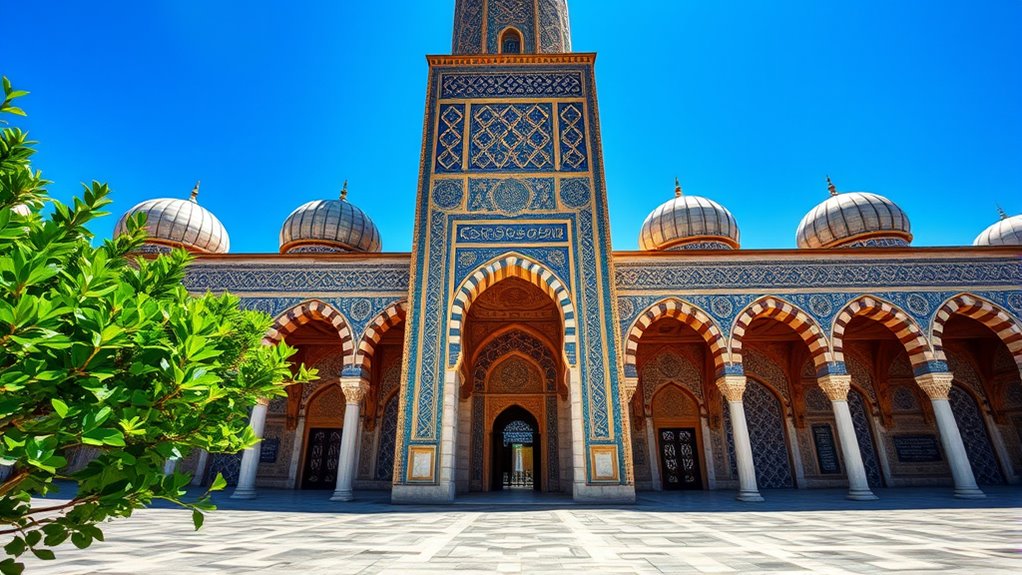

Islamic architecture showcases an awe-inspiring blend of artistry and spirituality in mosques. You’ll notice intricate calligraphy that transforms Quranic verses into visual art, emphasizing beauty over human imagery. Geometric patterns convey infinity and harmony, reflecting divine creation. Each design detail fosters a deeper connection to faith and culture, elevating the spiritual experience. As you explore further, you’ll uncover the profound symbolism behind these artistic choices and their impact on Islamic identity.
Key Takeaways
- Islamic architecture integrates intricate calligraphy and geometric patterns, reflecting spirituality and mathematical precision in mosque design.
- Calligraphy serves as a visual expression of Quranic verses, enhancing spiritual connections and aesthetic beauty in mosques.
- Geometric patterns symbolize infinity and unity, creating a sense of harmony and tranquility in architectural spaces.
- The design of mosques embodies the values of the Islamic faith, merging artistic expression with spiritual devotion.
- Overall, Islamic architecture invites reflection on the divine and the universe, enriching cultural identity through its symbolic significance.
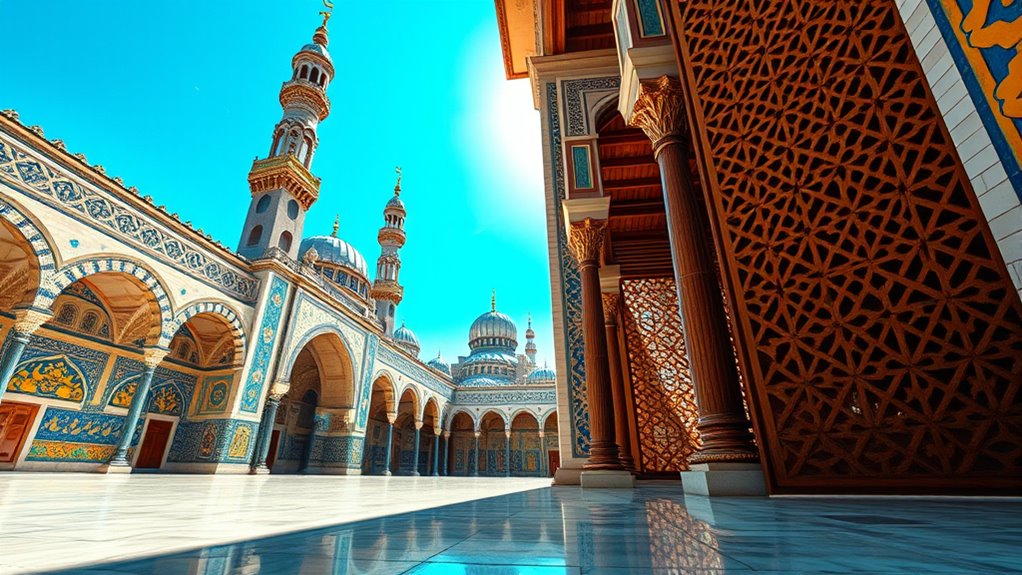
Have you ever wondered what makes Islamic architecture so mesmerizing? It’s a unique blend of artistry, spirituality, and mathematical precision that captures your imagination. As you explore the stunning mosques and structures, you’ll notice how every detail serves a purpose, drawing you into a world rich in symbolism and beauty. The intricate calligraphy art and geometric patterns you see aren’t just decorations; they convey deeper meanings and reflect the values of the Islamic faith.
When you look at the calligraphy art adorning the walls, you’re witnessing a tradition that transcends mere words. Instead of depicting human forms, Islamic art emphasizes the beauty of script, turning verses from the Quran into visual masterpieces. You can’t help but be captivated by the flowing lines and curves that transform simple phrases into stunning displays. Each stroke tells a story, inviting you to reflect on the divine while appreciating the skill involved in its creation. This focus on calligraphy not only beautifies the mosque but also serves as a means to communicate the teachings of Islam, making it an integral part of the architectural experience.
As you step further into the mosque, the geometric patterns surrounding you draw your attention. These designs are more than just aesthetics; they symbolize the infinite nature of the universe and the unity of creation. The patterns seem to go on forever, just as the divine is believed to be boundless. You might find yourself lost in the mesmerizing repetition of shapes, realizing that these patterns are a reflection of the mathematical principles that govern our world. The architects of these structures meticulously employed geometry to create harmony and balance, evoking a sense of peace and tranquility.
Islamic architecture isn’t just about visual splendor; it’s a manifestation of faith and devotion. The use of calligraphy art and geometric patterns serves to elevate the spiritual experience within the mosque. You can feel the intention behind every curve and line, wrapping you in a sense of connection to something greater. It’s this combination of artistic expression and spiritual significance that makes Islamic architecture so enchanting. Furthermore, the intricate designs often reflect the values of the Islamic faith, creating a deeper connection between the architecture and its cultural context.
Islamic architecture beautifully intertwines artistic expression with spiritual significance, creating a profound sense of connection to the divine.
Next time you visit a mosque or an Islamic structure, take a moment to appreciate the richness of the calligraphy art and the complexity of the geometric patterns. You’ll find that these elements are not just beautiful; they are woven into the very fabric of Islamic culture and spirituality, inviting you to explore their deeper meanings.
As an affiliate, we earn on qualifying purchases.
Frequently Asked Questions
What Materials Are Commonly Used in Islamic Architecture?
In Islamic architecture, you’ll often find materials like stone, brick, and wood. These elements create stunning structures adorned with Islamic calligraphy and intricate geometric patterns. You might notice that ceramics and tiles are also popular, adding vibrant color and detail to buildings. The combination of these materials not only showcases artistic beauty but also serves functional purposes, ensuring durability and strength in the architecture you admire.
How Does Climate Influence Mosque Design?
When it comes to mosque design, climate’s influence is colossal, shaping everything from layout to materials. You’ll notice how architects prioritize climate adaptation, ensuring comfort and sustainability. For instance, they often incorporate architectural ventilation techniques, like high ceilings and courtyards, to maximize airflow. These features help keep the interior cool in hot climates while providing warmth in cooler areas, creating a serene atmosphere for worshippers regardless of the weather outside.
Are There Regional Differences in Mosque Architecture?
Yes, there are significant regional variations in mosque architecture. You’ll notice how stylistic influences differ based on local cultures, available materials, and climatic conditions. For instance, mosques in North Africa often feature intricate tile work and large courtyards, while those in the Middle East may emphasize soaring minarets and domes. In South Asia, you might find elaborate carvings and vibrant colors, showcasing the diverse architectural expressions shaped by their unique environments and histories.
What Role Do Colors Play in Mosque Design?
Colors dance through mosque design, whispering stories of faith and devotion. You’ll find that color symbolism plays a vital role; vibrant blue often evokes tranquility, while rich gold hints at the divine. The interior color schemes create an atmosphere that invites reflection and peace. Each hue serves a purpose, guiding your spirit and fostering a connection with the sacred. When you step inside, you feel the colors weaving a tapestry of spirituality around you.
How Do Islamic Architectural Styles Evolve Over Time?
Islamic architectural styles evolve over time due to various historical influences and architectural innovations. You’ll notice how each era, from the Umayyad to the Ottoman period, reflects cultural exchanges and technological advancements. As new materials and techniques emerge, they reshape designs, blending traditional elements with modern aesthetics. This dynamic evolution allows you to see a unique tapestry of creativity, where each mosque tells a story of its time, adapting to the needs of its community.
Conclusion
In exploring Islamic architecture, you’ve seen how symbolism and design intertwine to create spaces that invite reflection and connection. Just as the saying goes, “Beauty is in the eye of the beholder,” each mosque tells a story that resonates differently with every visitor. Whether it’s the intricate patterns or the serene domes, these elements invite you to appreciate not just the artistry, but the deeper meanings behind them. Embrace the experience and let it inspire your own understanding.