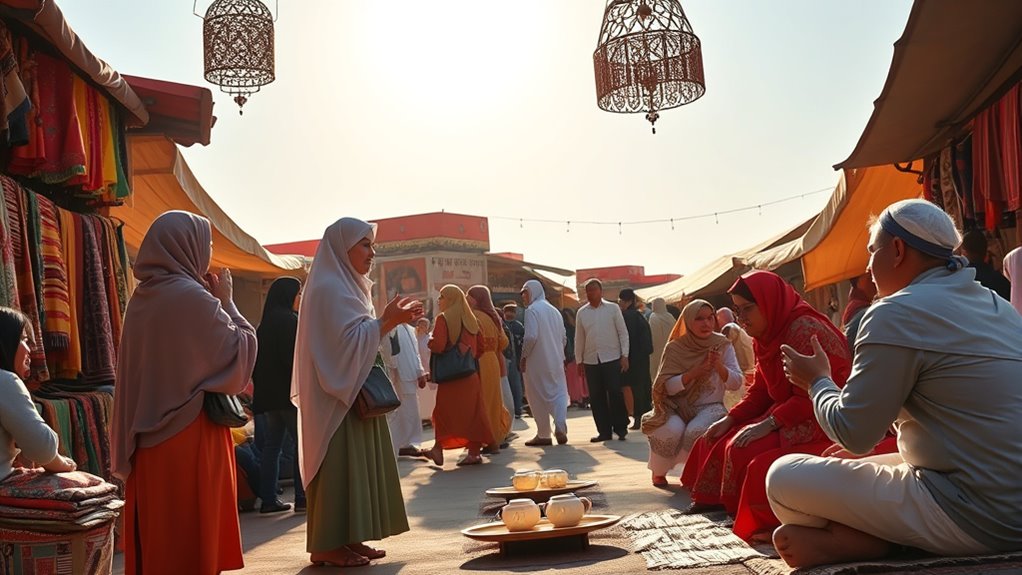

When traveling in Muslim-majority countries, it’s key to respect local customs. Dress modestly, covering your arms and legs, and avoid eating in public during Ramadan. Use your right hand for eating and greeting, and bring small gifts when invited to homes. Be mindful of prayer times and cultural norms to foster goodwill. By embracing these practices, you’ll enrich your experiences and interactions. There’s much more to explore about connecting with locals thoughtfully.
Key Takeaways
- Dress modestly, covering arms and legs, to show respect for local customs and foster goodwill.
- Observe prayer times and remain quiet near mosques to demonstrate cultural sensitivity.
- Use your right hand for eating and greeting, as it is considered respectful in many cultures.
- Bring small gifts when invited to homes to express gratitude and appreciation for hospitality.
- Be mindful of local customs, including Ramadan fasting, to avoid misunderstandings and enhance your travel experience.
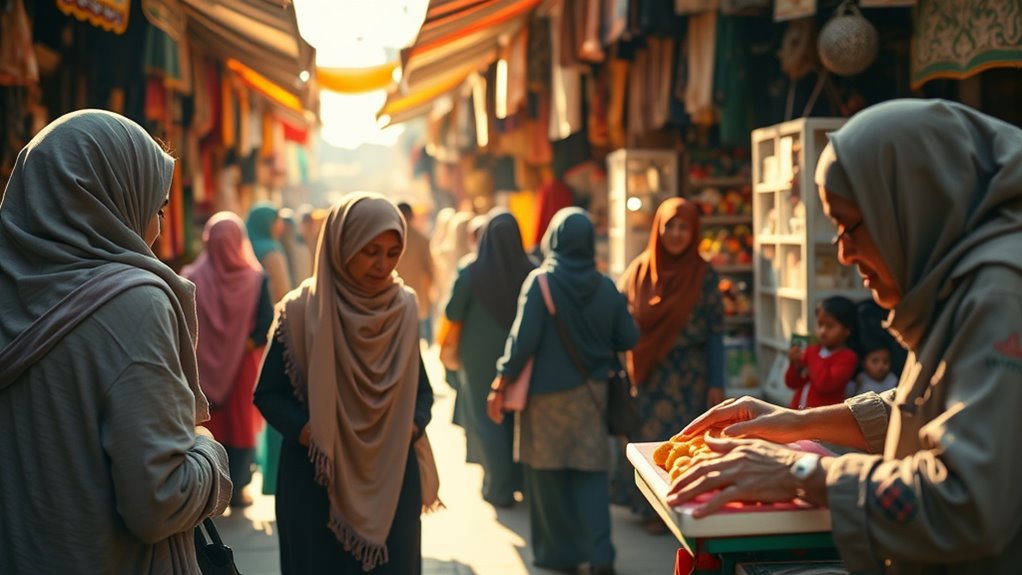
When you travel to a new country, understanding the local customs and etiquette can make all the difference in your experience. In Muslim-majority countries, being mindful of cultural norms is especially important. A key aspect of this is the dress code. You’ll want to dress modestly, which often means covering your arms and legs. For women, this might require wearing long skirts or loose-fitting trousers and tops. Men should also avoid shorts and sleeveless shirts in public spaces. By adhering to the local dress code, you’re showing respect for the culture and its values, which will likely earn you goodwill and open doors to more authentic interactions.
Understanding and respecting local customs, especially dress codes, is essential for a positive experience in Muslim-majority countries.
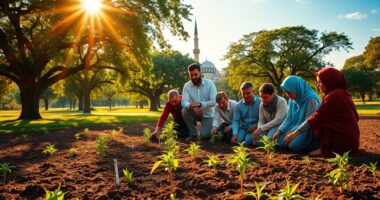
Another crucial custom to be aware of is the prayer customs observed in many Muslim societies. Most Muslim-majority countries observe five daily prayers, and during these times, you may notice people pausing their activities to pray. If you find yourself in a mosque or near a prayer area, be respectful by remaining quiet and allowing those praying their space. It’s also important to note that during the month of Ramadan, many Muslims fast from dawn until sunset. If you’re visiting during this time, try to be considerate by not eating or drinking in public during daylight hours. This small act of respect can go a long way in fostering positive relationships with locals.
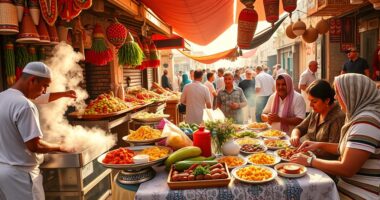
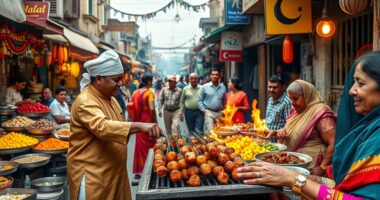
When dining, you might be surprised by the etiquette involved. In many Muslim cultures, the right hand is used for eating and greeting, as the left hand is considered unclean. If you’re invited into a home, it’s customary to bring a small gift, perhaps sweets or fruit, as a token of appreciation. If you’re offered food, it’s polite to at least try a small amount, even if you’re not particularly hungry. Additionally, regularly assessing and rotating items in your travel gear can help keep your packing organized and efficient.
Lastly, remember that communication styles can vary. While direct eye contact is often encouraged in many Western cultures, it can be perceived differently in some Muslim communities. Be observant of body language and adapt accordingly. By being aware of these customs, you’ll not only enhance your travel experience but also create meaningful connections with the people you meet. Embracing the local culture can turn your trip into an unforgettable journey, filled with rich interactions and newfound friendships.

Sampeel Workout Sets for Women 2 Piece Set Summer Travel Vacation Outfits Cozy Wide Leg Pants Comfy Business Casual Work Clothes T Shirts Airport Jogger Set Black XL
- Fabric: Buttery-soft, cozy material for comfort
- Design: Two-piece set with crew neck, pockets, drawstring
- Occasion: Suitable for casual, travel, work, and vacation
As an affiliate, we earn on qualifying purchases.
As an affiliate, we earn on qualifying purchases.
Frequently Asked Questions
Can I Photograph People Without Their Permission?
You shouldn’t photograph people without their permission, as it often violates cultural sensitivities and privacy boundaries. Respecting others’ space is vital, especially in unfamiliar environments. Before snapping a photo, ask for consent; it shows respect and consideration. Many people appreciate it and may even pose for you. Always be aware of your surroundings and the local customs to make sure you don’t unintentionally offend anyone while capturing your travels.
Is It Acceptable to Use Public Displays of Affection?
In a world where even a simple selfie can cause a stir, you should tread carefully with public displays of affection. While holding hands might fly in some places, kissing or hugging can cross cultural boundaries in many Muslim-majority countries. It’s best to gauge your surroundings and respect local customs. Opt for subtle gestures that show affection without drawing too much attention, ensuring you remain polite and considerate of local norms.
What Should I Do if I Accidentally Offend Someone?
If you accidentally offend someone, quickly acknowledge the mistake. Use respectful language to express your sincere apology, showing that you understand their feelings. Simple gestures like a smile or a nod can help convey your intent. Let them know you didn’t mean to offend, and be open to listening to their perspective. It’s important to remain calm and respectful, as this can help mend the situation and foster understanding.
Are There Specific Dress Codes for Different Muslim-Majority Countries?
When you step into a vibrant tapestry of culture, you’ll find that dress codes in Muslim-majority countries vary like the colors of a sunset. In some places, traditional dress codes demand modesty, with women often wearing hijabs or loose clothing, while men might don long robes. However, regional clothing variations can surprise you; in Turkey, for example, styles may be more relaxed. Always research local customs to blend in and show respect.
How Do I Find Halal Food While Traveling?
To find halal food while traveling, start by using apps like Zomato or HappyCow, which list halal restaurants nearby. You can also check local Muslim community websites or social media groups for recommendations. Don’t hesitate to ask locals for guidance, as they often know the best spots. Many halal restaurants offer prayer facilities, so you can easily combine your meal with a moment of reflection. Enjoy exploring the culinary delights!
Conclusion
When you travel in Muslim-majority countries, remember that respect goes a long way. Adapting to local customs, dressing modestly, and being mindful of prayer times can enhance your experience and foster goodwill. As the saying goes, “When in Rome, do as the Romans do.” By embracing these cultural etiquettes, you’ll not only show appreciation for the local traditions but also create lasting connections with the people you meet along the way. Happy travels!