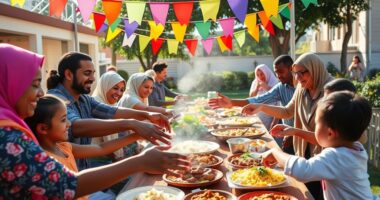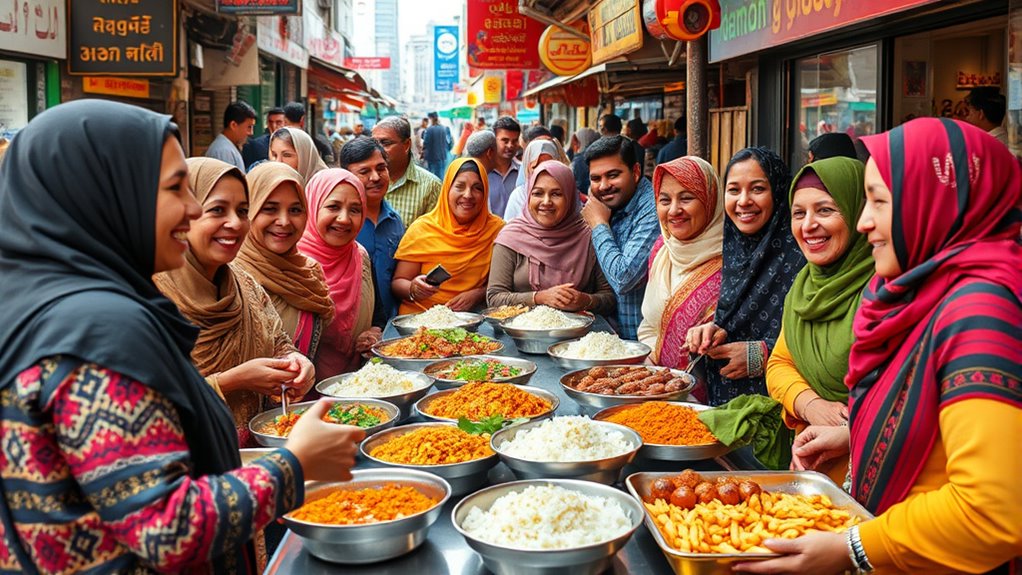
Halal food’s more than just a meal; it’s an essential part of your cultural identity, especially in diaspora communities. It helps you connect to your roots and share traditions with younger generations. Through recipes and communal dining, you create lasting bonds and pass down stories. This culinary practice not only preserves heritage but also fosters understanding in multicultural societies. Discover how these meals shape identities and contribute to community narratives that matter to you.
Key Takeaways
- Halal food serves as a vital expression of cultural identity, connecting diaspora communities to their heritage and traditions.
- Recipes and communal dining practices reinforce cultural continuity and strengthen familial bonds among community members.
- Cooking traditional halal dishes enables younger generations to learn cultural stories and rituals, fostering intergenerational connections.
- Sharing halal meals promotes understanding and appreciation of cultural diversity within multicultural societies.
- Halal food symbolizes the balance between preserving cultural traditions and adapting to modern environments, shaping contemporary identities.
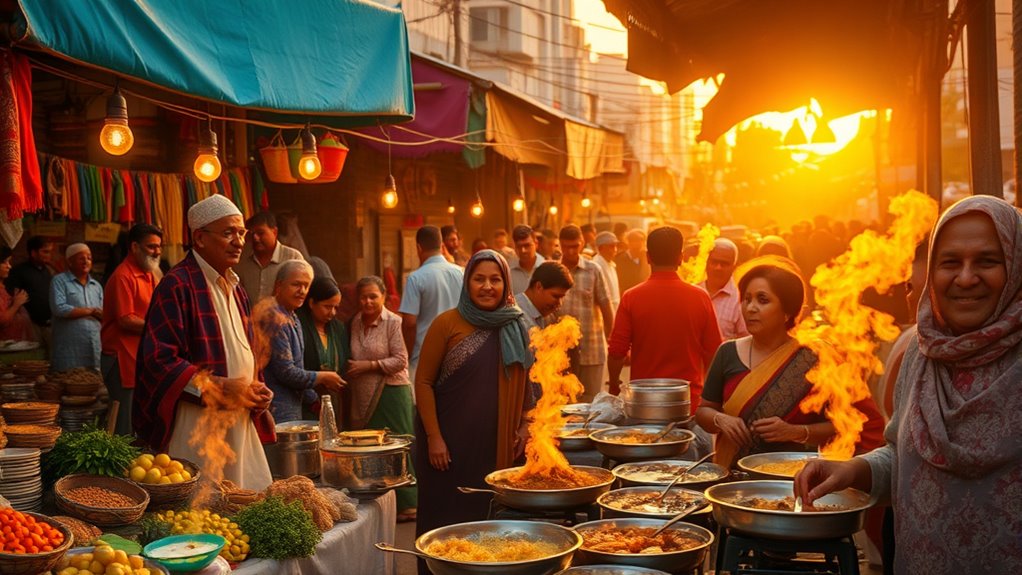
As you explore the diverse culinary landscape of the world, you’ll find that halal food serves not only as a dietary choice but also as an essential expression of cultural identity. For many in diaspora communities, adhering to Muslim dietary laws transcends mere nutrition; it’s a means of staying connected to their roots while steering through life in a new environment. You might notice that halal food markets and restaurants flourish in areas with significant Muslim populations, acting as cultural hubs where tradition meets modernity.
Halal food is a vibrant expression of cultural identity, connecting diaspora communities to their roots in new environments.
When you explore more deeply, you’ll discover that halal food often acts as a vehicle for cultural preservation. For members of diaspora communities, the recipes, cooking techniques, and communal dining experiences tied to halal food create a sense of belonging. You might find that sharing a meal prepared in accordance with Muslim dietary laws fosters connections among family and friends, reinforcing shared identities amid the challenges of assimilation. Each dish tells a story, each flavor evokes memories of home, and that’s something you can’t underestimate.
In many cases, halal food becomes a bridge between generations. As you watch younger members of the community learn how to prepare traditional dishes, you’ll see them gaining not only culinary skills but also an appreciation for their heritage. This process is vital for cultural preservation, ensuring that the values and traditions of their ancestors don’t fade away. You’ll find that the act of cooking and sharing halal meals becomes a way to pass down stories, rituals, and the essence of one’s identity.
Moreover, halal food often invites curiosity and interaction with those outside the community. When you invite friends to share a halal meal, you’re introducing them to a rich tapestry of flavors while simultaneously educating them about your culture. This openness can strengthen social ties and foster understanding, breaking down barriers that often exist in multicultural societies. You might see how halal food can be a conversation starter, allowing you to share experiences and values that might otherwise remain hidden.
In essence, halal food serves as a powerful symbol of cultural identity for diaspora communities. It encapsulates the intricate dance between maintaining traditions and embracing new experiences. As you steer through the world, remember that every halal meal you partake in isn’t just about what’s on your plate; it’s about the rich cultural narratives that accompany it, connecting you to a shared past while informing your present. Furthermore, the importance of cultural preservation in food practices cannot be overlooked, as it enriches the community’s identity and continuity.

Kitchen Utensil Set-Silicone Cooking Utensils-33 Kitchen Gadgets & Spoons for Nonstick Cookware-Silicone and Stainless Steel Spatula Set-Best Kitchen Tools, Useful Pots and Pans Accessories
- Complete Cooking Utensil Set: Includes 33 essential kitchen tools
- Durable and Long-lasting: Made with stainless steel handles and silicone heads
- Non-scratch Silicone Heads: Protects non-stick cookware from scratches
As an affiliate, we earn on qualifying purchases.
As an affiliate, we earn on qualifying purchases.
Frequently Asked Questions
What Are the Origins of Halal Dietary Laws?
Halal dietary laws originate from Islamic teachings found in the Quran and Hadith. You’ll find that these laws have undergone a historical evolution, adapting to different cultures over time. The halal certification processes guarantee food meets these standards, making it permissible for Muslims to consume. Understanding these origins helps you appreciate the significance of halal practices in daily life, as they reflect both religious beliefs and cultural values that vary across communities.
How Does Halal Certification Work?
Ever wondered how you can be sure your food aligns with your values? Halal certification works through rigorous processes that verify compliance with dietary laws. Certifying bodies inspect facilities and ingredients, ensuring ethical considerations are met. They evaluate sourcing, animal welfare, and processing methods. Once approved, products receive certification marks, giving you confidence in your choices. This way, you can enjoy meals that resonate with your beliefs and lifestyle.
Are There Vegetarian Halal Options Available?
Yes, there are vegetarian halal options available. Many restaurants and grocery stores offer meals and products that carry halal labeling, ensuring they meet dietary requirements. You’ll find a variety of vegetarian dishes, such as lentil curries, vegetable biryanis, and falafel. Just look for the halal certification on the packaging or ask the staff about their vegetarian offerings. Enjoying delicious halal vegetarian options can be both satisfying and culturally enriching!
Can Non-Muslims Consume Halal Food?
Absolutely, non-Muslims can enjoy halal food! Think of it like sharing a meal at a friend’s house; you’re partaking in their culture while fostering interfaith dialogue. Many people appreciate the dietary inclusivity that halal offers, as it often emphasizes quality and ethical sourcing of ingredients. So, whether you’re trying a halal dish out of curiosity or to support a friend, you’re contributing to a richer, more diverse culinary experience.
How Is Halal Food Prepared Differently From Non-Halal Food?
Halal food’s prepared differently mainly through its meat slaughtering process. You guarantee that the animal is treated humanely and slaughtered according to Islamic guidelines, invoking God’s name during the act. Regarding food preparation techniques, you often avoid cross-contamination with non-halal ingredients. Additionally, you’ll use specific spices and cooking methods that align with halal principles, enhancing flavors while adhering to dietary laws. This attention to detail creates a distinct culinary experience.
Conclusion
In the tapestry of diaspora life, halal food serves as a vibrant thread weaving together cultural identity and shared heritage. Each meal becomes a symbol of connection, where spices and flavors tell stories of home, resilience, and belonging. As you savor each bite, you’re not just nourishing your body; you’re honoring your roots and affirming your identity. Embracing halal food is like holding a lantern, illuminating the path that links generations, reminding you that culture thrives in every delicious moment.