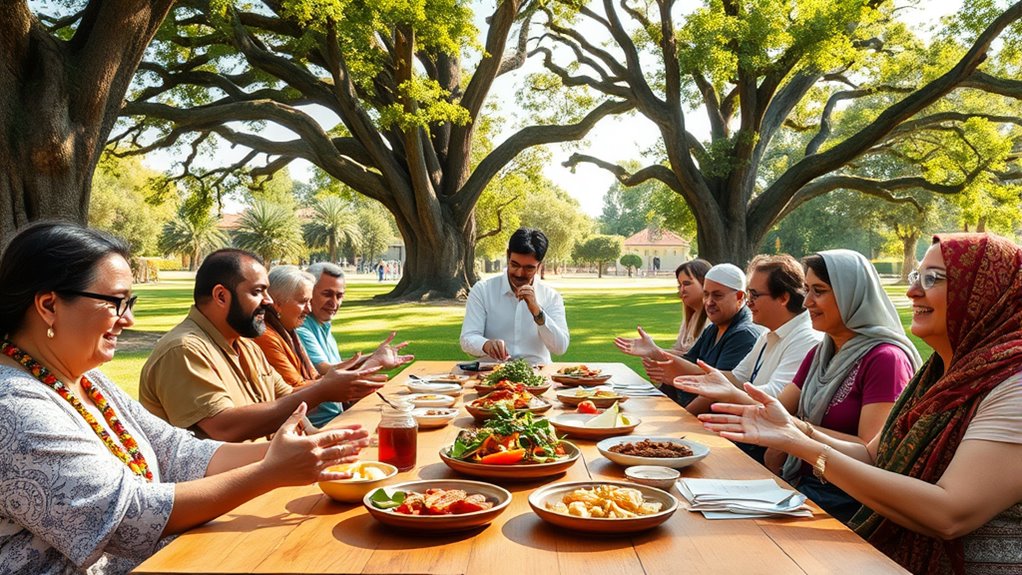

Fostering interfaith dialogue is essential for building bridges in diverse communities. By actively participating in conversations, you can promote mutual respect and understanding. Listening without judgment opens doors to learning about different faiths, while emphasizing common ground nurtures collaboration. Remember, relationships take time and ongoing dialogue is key to sustaining these connections. Engaging in shared service projects not only strengthens community bonds but also contributes to a more harmonious society. There’s so much more to explore on this topic.
Key Takeaways
- Encourage active participation in interfaith conversations to foster mutual respect and understanding among diverse communities.
- Promote religious tolerance through listening without judgment and being open to learning about different beliefs.
- Emphasize common ground by highlighting shared values, such as love and compassion, that unite various faiths.
- Engage in continuous relationship-building through regular meetings and community service projects to strengthen interfaith bonds.
- Utilize global intelligence to inform dialogue and enhance efforts for peace among diverse groups in an interconnected world.
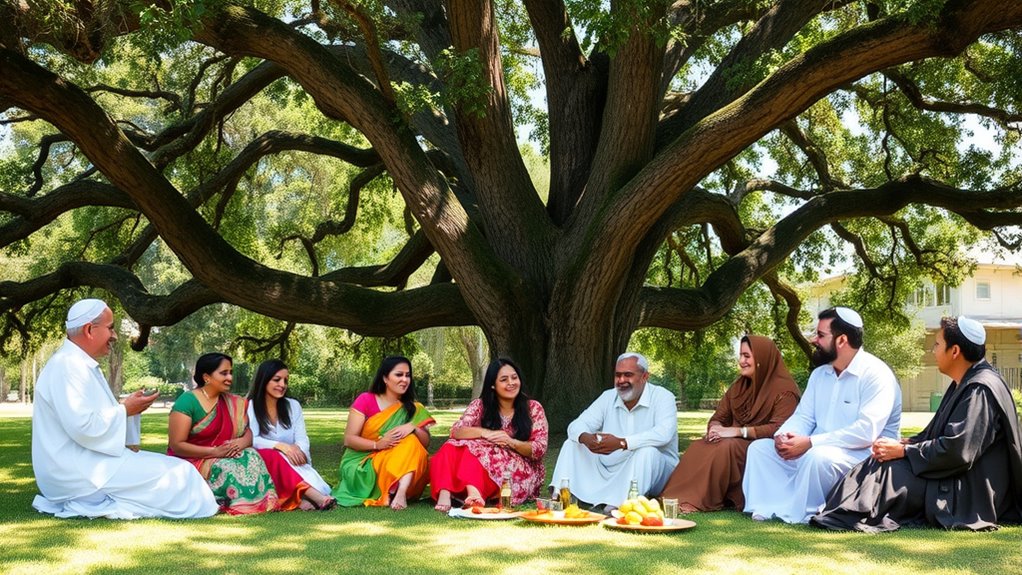
How can we bridge the gap between diverse faiths and foster understanding? This question is vital in today’s interconnected world. You might often find yourself in situations where different religious beliefs intersect, and it’s essential to approach these interactions with an open heart and mind. Fostering interfaith dialogue isn’t just about tolerance; it’s about actively engaging with one another to build bridges of understanding and compassion.
Start by recognizing the value of interfaith cooperation. It’s not merely about acknowledging the existence of different religions but actively participating in conversations that promote mutual respect. When you engage in dialogue with someone from a different faith, you’re not just exchanging ideas; you’re sharing parts of your identity and understanding their experiences. This exchange can illuminate shared values and beliefs, reinforcing the idea that, at our core, we’re all human.
To foster this dialogue effectively, practice religious tolerance in your daily life. This means listening without judgment and being open to learning. When you attend gatherings or events that promote interfaith discussions, approach them with curiosity. Ask questions and engage with the stories and experiences shared by others. You’ll often find that many of your concerns or misconceptions about different faiths stem from a lack of understanding. By actively listening, you dismantle these barriers and promote a sense of community.
In your interactions, emphasize common ground. Many faiths promote love, compassion, and service to others. Highlighting these shared values can create a strong foundation for collaboration. Whether it’s volunteering together or participating in community service projects, interfaith cooperation can manifest in tangible ways, strengthening bonds among diverse groups. You’ll discover that working together on shared goals fosters not only friendships but also a deeper understanding of one another’s beliefs.
Finally, remember that fostering interfaith dialogue is a continuous process. It’s about building lasting relationships that transcend differences. Create spaces for ongoing conversations, whether it’s through regular meetings, educational workshops, or social events. Encourage your friends and family to join in, as the more people actively participating in this dialogue, the more vibrant and inclusive your community will become. Additionally, understanding the role of global intelligence in promoting peace can further enhance these interfaith dialogues.

Spirit and Nature: Why the Environment is a Religious Issue–An Interfaith Dialogue
As an affiliate, we earn on qualifying purchases.
As an affiliate, we earn on qualifying purchases.
Frequently Asked Questions
How Can I Initiate Interfaith Conversations in My Community?
To initiate interfaith conversations in your community, start by organizing interfaith festivals that celebrate diverse beliefs through food, music, and storytelling. Invite local faith leaders to participate and share their traditions. You can also host community prayer events where people come together to reflect and support one another. Encourage open dialogue by creating safe spaces for discussions, allowing everyone to share their thoughts and experiences. This approach fosters understanding and strengthens community bonds.
What Resources Are Available for Learning About Different Faiths?
You can explore various resources to learn about different faiths, including websites and literature from faith-based organizations that offer insights into their beliefs and practices. Attend local cultural exchange events, where you can connect with people from diverse backgrounds and engage in meaningful discussions. Additionally, consider joining interfaith dialogue groups or workshops that promote understanding and respect among various religions, enhancing your knowledge and fostering connections within your community.
Are There Successful Examples of Interfaith Dialogue Initiatives?
You’ll find plenty of successful interfaith dialogue initiatives, like interfaith art projects that unite diverse groups through creativity. These projects often lead to shared community services, where participants collaborate on local issues, fostering understanding and relationships. Cities across the globe have embraced these initiatives, creating vibrant spaces for dialogue and collaboration. By participating, you can witness firsthand how art and service bring people together, breaking down barriers and promoting unity in diversity.
How Do I Address Potential Conflicts During Interfaith Discussions?
To address potential conflicts during interfaith discussions, focus on respectful listening. Acknowledge belief differences without judgment, and encourage participants to share their perspectives openly. Create a safe space where everyone feels heard and valued. When conflicts arise, remind everyone of common goals and the importance of understanding. By promoting empathy and fostering dialogue, you can help bridge gaps and find common ground, turning conflicts into opportunities for deeper connections.
What Role Does Social Media Play in Interfaith Dialogue?
Social media’s like a digital campfire, where diverse voices gather to share stories. In the domain of interfaith dialogue, it serves as a platform for virtual faiths, helping you connect with online communities you might not encounter otherwise. You can easily exchange ideas, learn from different perspectives, and foster understanding. By engaging in these spaces, you not only broaden your horizons but also build meaningful relationships across various faiths and beliefs.
religious tolerance educational kits
As an affiliate, we earn on qualifying purchases.
As an affiliate, we earn on qualifying purchases.
Conclusion
In the garden of humanity, each faith is a unique flower, contributing to a vibrant tapestry of colors and fragrances. By nurturing interfaith dialogue, you cultivate understanding and compassion, allowing these blooms to thrive side by side. Just as bees gather nectar from diverse blossoms, you can draw wisdom from different beliefs, creating honeyed connections. So, let’s tend this shared garden together, embracing our differences while celebrating the unity that binds us all.
interfaith community service project supplies
As an affiliate, we earn on qualifying purchases.
As an affiliate, we earn on qualifying purchases.

Steadfast Selections Christian Conversation Cards Game – 200 Faith-Based Conversation Starters for Bible Games Study, Youth Groups & Family – Christian Card Games for Meaningful Discussions About God
Meaningful Conversations: Explore 200 thought-provoking Christian conversation cards about God, faith, and life; perfect for Bible study groups,…
As an affiliate, we earn on qualifying purchases.
As an affiliate, we earn on qualifying purchases.