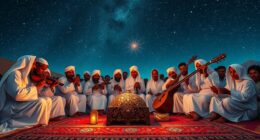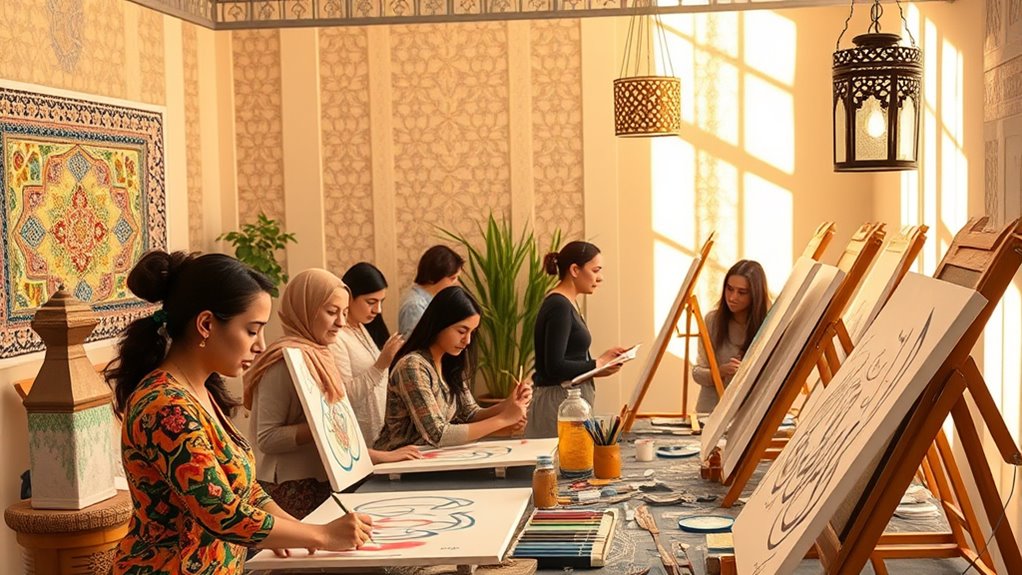

Islamic art therapy blends creativity with traditional practices to promote emotional and psychological healing. You explore calligraphy and geometric patterns, turning them into tools for meditation and self-expression. Engaging in these art forms helps you find inner peace and clarity while alleviating stress and anxiety. The process focuses on the journey of creation, allowing for joyful exploration and personal growth. Discover how this unique approach can transform your well-being and enhance your emotional resilience.
Key Takeaways
- Islamic art therapy combines creativity with traditional practices, promoting emotional and psychological well-being through artistic engagement.
- Calligraphy techniques foster mindfulness and emotional expression, creating a calming flow that alleviates anxiety and enhances focus.
- Geometric patterns symbolize balance and order, providing a meditative experience that fosters relaxation and emotional clarity.
- The integration of calligraphy and geometric patterns promotes holistic healing by enhancing creativity and emotional connection.
- Engaging in the artistic process nurtures joy and transformation, supporting overall mental and spiritual health.
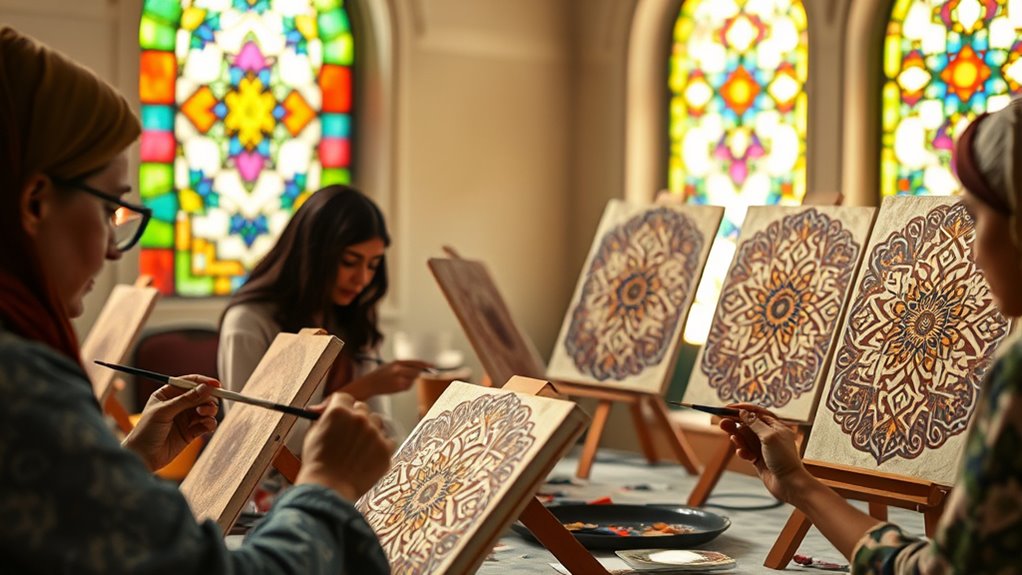
Have you ever wondered how art can heal the mind and spirit? Islamic art therapy offers a unique approach, combining creativity with traditional practices to foster emotional and psychological well-being. When you engage with this form of art, you’re not just creating; you’re beginning on a journey of self-discovery and healing. The intricate designs and meditative processes inherent in Islamic art serve as powerful tools for relaxation and reflection.
One of the most captivating aspects of Islamic art is its use of calligraphy techniques. When you pick up a brush or pen to practice these techniques, you’re not merely replicating letters; you’re expressing your emotions and thoughts. Each stroke allows you to connect with the beauty of language while also cultivating mindfulness. As you focus on each letter, you find a rhythm, a flow that calms your mind. This meditative practice can reduce anxiety and stress, creating a sanctuary for your thoughts.
Engaging in Islamic calligraphy allows you to express emotions and cultivate mindfulness, transforming each stroke into a calming meditation.
In addition to calligraphy, geometric patterns play a vital role in Islamic art therapy. These patterns are more than just visually appealing; they’re a reflection of the harmony found in nature and the universe. When you engage with geometric designs, you tap into a sense of order and balance. As you create or analyze these patterns, you’re invited to lose yourself in their symmetry, which can help alleviate feelings of chaos in your life. The repetitive nature of creating these designs can serve as a form of meditation, allowing you to find peace amid your busy thoughts.
Combining calligraphy and geometric patterns can enhance your art therapy experience even further. You might find that intertwining letters with intricate designs not only boosts your creativity but also deepens your emotional connection to the work. As you explore this combination, you’re likely to notice a shift within yourself—an increased sense of clarity and purpose. This practice can also promote self-awareness and resilience, essential components of holistic healing.
Ultimately, Islamic art therapy isn’t just about the end result; it’s about the process. You’re learning to express yourself, to find joy in creativity, and to heal through art. Whether you’re writing beautiful calligraphy or crafting mesmerizing geometric patterns, you’re starting on a transformative journey that nurtures your mind and spirit. By engaging with these art forms, you’ll discover the profound impact creativity can have on your overall well-being.
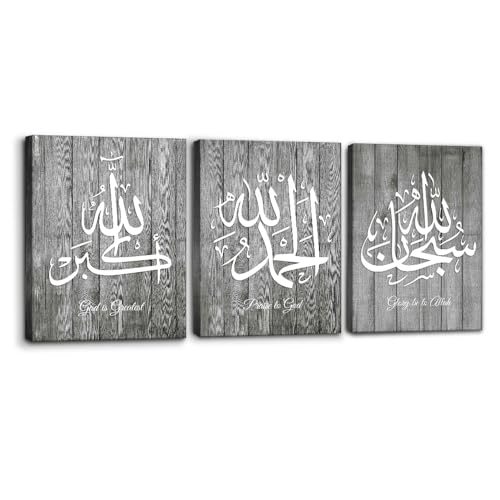
Pacimo 3 Pieces Islamic Canvas Print Wall Art Set Arabic Calligraphy Muslim Modern Canva Art Wall Decoration for Living Room Bedroom Office Stretch and Framed Ready to Hang – 12"x16"x3
ARTWORK SIZE – Each canvas panel is 12 x 16 inch (30x40cm), total 3 panels are 16 x…
As an affiliate, we earn on qualifying purchases.
As an affiliate, we earn on qualifying purchases.
Frequently Asked Questions
What Materials Are Used in Islamic Art Therapy?
In Islamic art therapy, you’ll often use traditional calligraphy and geometric patterns. These materials not only allow for self-expression but also foster a sense of tranquility. You might work with ink, paper, and various tools for calligraphy, while geometric designs can be created using compasses and rulers. By engaging with these elements, you’ll find a deeper connection to your creativity and a pathway to healing through art.
Can Anyone Practice Islamic Art Therapy?
Yes, anyone can practice Islamic art therapy, but it’s vital to take cultural aspects into account. You should understand the significance of Islamic art and its cultural roots to guarantee respectful practice. While formal qualifications aren’t always necessary, having a background in art therapy or psychology is beneficial. It’s essential to approach it with sensitivity and respect for the traditions involved, as this enhances the therapeutic experience for both you and your clients.
How Does Islamic Art Therapy Differ From Other Art Therapies?
Islamic art therapy differs from other art therapies in its deep cultural influences and spiritual symbolism. While general art therapies focus on emotional expression and healing, Islamic art therapy incorporates traditional motifs, geometric patterns, and calligraphy that reflect cultural heritage and spiritual beliefs. This unique blend allows you to explore your inner self through a lens of faith and identity, fostering a stronger connection to both art and personal healing.
Are There Specific Techniques Unique to Islamic Art Therapy?
Yes, you’ll find unique techniques in Islamic art therapy that emphasize the beauty of calligraphy techniques and intricate geometric patterns. These elements symbolize the balance and harmony sought in healing. As you engage with these art forms, you’re not just creating; you’re connecting with deeper meanings. The flowing lines of calligraphy and the precision of geometric shapes help you express emotions and foster mindfulness, making your therapeutic journey both enriching and transformative.
What Age Groups Can Benefit From Islamic Art Therapy?
All age groups can benefit from this approach. For children, it supports their development by enhancing creativity and emotional expression, helping them navigate their feelings. In the elderly, it can improve mental health by providing a meaningful outlet for self-expression and reducing feelings of isolation. By engaging in these art practices, you foster connections, promote healing, and encourage a sense of community across different age ranges, making it a versatile tool for everyone.

Chivao Spiral Art Gear Geometric Ruler Circle Template for Drawing Plastic Template Ruler Drawing Kit Spiral Curve Stencils with Pens Paper for DIY Art Crafts Sketch(Vivid)
Easy to Use and Store: the plastic colorful spiral stencils are equipped with a storage case of approx….
As an affiliate, we earn on qualifying purchases.
As an affiliate, we earn on qualifying purchases.
Conclusion
Incorporating Islamic art therapy into your healing journey can be a transformative experience. As you explore creativity through intricate patterns and vibrant colors, you not only find solace but also a deeper understanding of yourself. Remember, “Art is the most beautiful of all lies.” Embrace this powerful tool to express your emotions and foster inner peace. By connecting with your artistic side, you’ll discover that healing and creativity go hand in hand, leading to a more fulfilled life.

Chakra Meditative Art Therapy: Exploring the Self through Visual Expression
As an affiliate, we earn on qualifying purchases.
As an affiliate, we earn on qualifying purchases.

Islamic Patterns Coloring Book: Anti-Stress Art Therapy About Arabic Geometrical Designs Coloring Pages For All Ages
As an affiliate, we earn on qualifying purchases.
As an affiliate, we earn on qualifying purchases.