Zakat, Sadaqah, and Waqf are key pillars of Islamic charity that promote community well-being. Zakat is compulsory and encourages wealth circulation to alleviate poverty. Sadaqah is voluntary and fosters generosity, allowing anyone to contribute according to their means. Waqf involves donating resources for public benefit, ensuring long-term support for education and healthcare. These practices not only enhance social justice but also create lasting legacies. Explore how these systems impact your community and the world around you.
Key Takeaways
- Zakat is a mandatory charitable practice in Islam, calculated as a specific percentage of savings to promote wealth circulation and alleviate poverty.
- Sadaqah is a voluntary form of charity, encouraging personal generosity without expectations, encompassing various acts of kindness.
- Waqf involves donating wealth or property for public benefit, ensuring long-term community support and creating a lasting legacy.
- Modern technology facilitates Zakat and Sadaqah collections through crowdfunding platforms and apps, making charitable giving more accessible and efficient.
- Cultural intelligence is essential for effective charitable practices, enhancing engagement and ensuring that efforts respect diverse community values and needs.
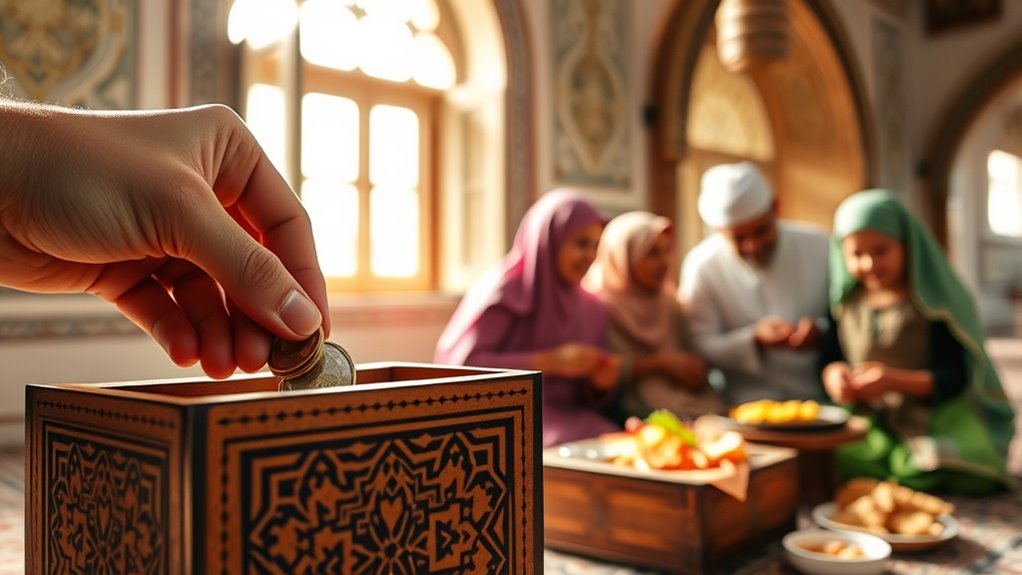
Have you ever wondered how charity plays an essential role in Islamic teachings? It’s fascinating to explore how concepts like Zakat, Sadaqah, and Waqf shape not just individual lives but entire communities. The historical development of these charitable practices highlights their significance throughout Islamic history. Zakat, for instance, is one of the Five Pillars of Islam, a mandatory act of giving that underscores the importance of helping those in need. When you consider that Zakat is calculated as a specific percentage of your savings, it’s designed to guarantee that wealth circulates within the community, alleviating poverty and promoting social justice.
Sadaqah, on the other hand, is a voluntary form of charity. It allows you to give based on your means and intentions, fostering a spirit of generosity and compassion. Historically, Sadaqah has taken many forms, from simple acts of kindness to larger donations aimed at community development. This flexibility means that anyone can participate, regardless of their financial situation. Over centuries, this practice has evolved, but its essence remains the same: it’s about giving without expecting anything in return.
Waqf, or endowment, represents another essential aspect of Islamic charity. It involves donating a portion of one’s wealth or property for public benefit, guaranteeing that the benefits continue to serve the community long after the donor’s passing. Historically, Waqf has funded schools, hospitals, and mosques, creating a legacy of support that impacts generations. In modern implementations, many Muslims continue to establish Waqf, adapting it to contemporary needs, such as providing resources for education and healthcare.
Today, the spirit of these charitable practices persists in various forms. Organizations worldwide focus on facilitating Zakat collections and Sadaqah donations, making certain that funds reach those who need them most. Technology plays an essential role in these modern implementations, making it easier for you to contribute to causes that resonate with your values. Crowdfunding platforms and mobile apps allow you to give with just a few clicks, making charity accessible to everyone. Moreover, understanding cultural intelligence is vital for effectively engaging in charitable work across diverse communities, ensuring that the impact of Zakat, Sadaqah, and Waqf is maximized.
Top picks for "zakat sadaqah waqf"
Open Amazon search results for this keyword.
As an affiliate, we earn on qualifying purchases.
Frequently Asked Questions
Can Zakat Be Given to Non-Muslims?
You can’t give zakat to non-Muslims, as zakat eligibility is specifically for Muslims in need. However, if you’re looking to support interfaith charity, you might consider giving sadaqah instead. Sadaqah is voluntary and can be given to anyone, regardless of their faith. This way, you can still contribute to those in need, fostering goodwill and compassion across different communities while adhering to the principles of zakat.
How Is Sadaqah Different From Zakat?
Sadaqah blooms like a vibrant flower in a garden of compassion, while zakat stands as a sturdy tree rooted in religious obligations. You give zakat with a sense of duty, fulfilling a pillar of faith, whereas sadaqah springs from your charitable intentions, freely offered without conditions. Both enrich the soul and community, but sadaqah’s flexibility allows you to give as your heart leads, creating a personal connection to those in need.
Are There Any Tax Benefits for Giving Waqf?
Yes, there can be tax benefits for giving waqf, depending on your location and local tax laws. Many countries offer tax deductions for charitable contributions, which may include waqf donations. By contributing, you not only support important causes but also take advantage of charitable incentives that could reduce your taxable income. It’s a win-win situation, so make sure to check your local regulations to maximize your benefits!
What Happens if Zakat Is Not Paid?
If you don’t pay your Zakat, you risk facing spiritual and financial consequences. Zakat compliance is vital in Islamic teachings, and failing to fulfill this obligation might lead to penalties for nonpayment, such as increased accountability in the hereafter. You might also miss out on the blessings and rewards associated with giving. It’s essential to prioritize Zakat to maintain your spiritual well-being and support your community effectively.
Can Waqf Properties Be Sold or Transferred?
Waqf properties generally can’t be sold or transferred due to transfer restrictions aimed at preserving the intended charitable purpose. When you establish a waqf, you’re committing that property for a specific use, like supporting education or healthcare. This means it’s meant to benefit the community indefinitely. If you’re considering changes, it’s vital to consult legal guidelines and religious authorities to make certain you respect the original intent of the waqf.
Conclusion
In understanding Islamic charity, you embrace the spirit of giving, the joy of sharing, and the duty of supporting those in need. By practicing zakat, sadaqah, and waqf, you enrich your life, uplift your community, and contribute to a more compassionate world. Remember, every act of kindness counts, every donation matters, and every moment spent helping others strengthens your faith. So, keep giving, keep sharing, and keep making a difference in the lives around you.