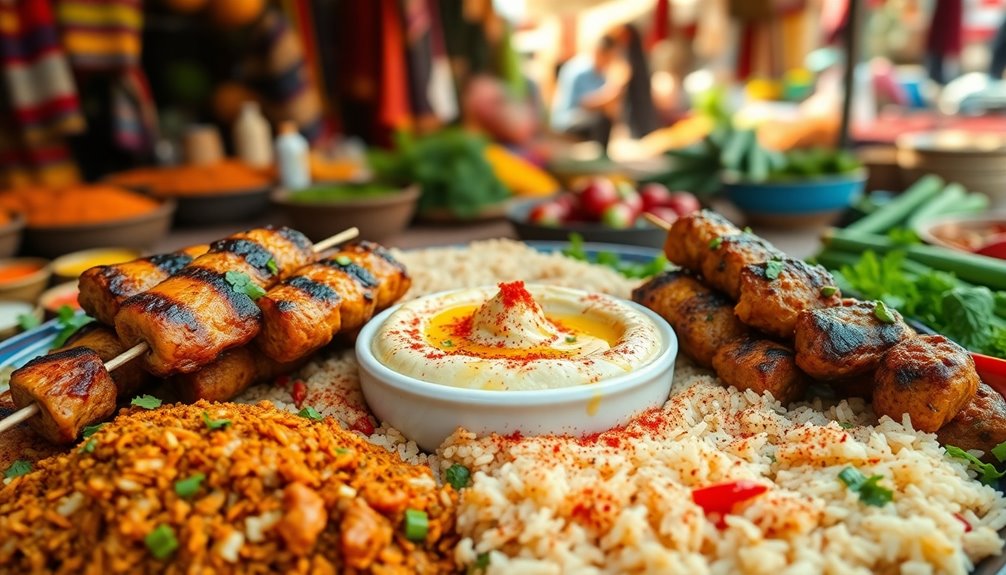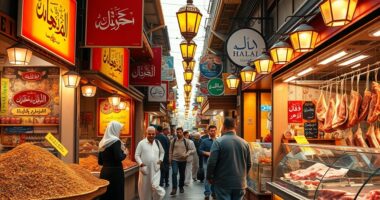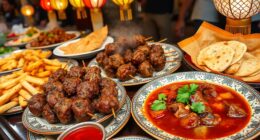
Persian, Ottoman, and Mughal influences create a rich framework for halal cuisine. You’ll find aromatic rice dishes and fragrant stews, highlighting fresh herbs and spices. Techniques like slow cooking and spice blending enhance flavors, while grilled meats celebrate halal practices. Each culture brings unique flair, from the hearty köfte of the Ottoman tradition to the vibrant biryanis of the Mughal heritage. Discovering these culinary connections will deepen your appreciation for halal dishes and their cultural significance.
Key Takeaways
- Persian cuisine emphasizes aromatic rice and stews, relying on fresh herbs and spices to create flavorful halal dishes.
- Ottoman culinary practices showcase diverse spices and hearty meals, utilizing braising and stewing techniques to enhance flavor layering.
- Mughal heritage fuses Indian and Persian traditions, elevating spices in biryanis and kormas while adhering to halal guidelines.
- All three cultures prioritize slow cooking and intricate spice blending, contributing to distinctive and aromatic halal meals.
- Culinary practices from these traditions celebrate cultural significance, using food to honor history and festive occasions with elaborate presentations.
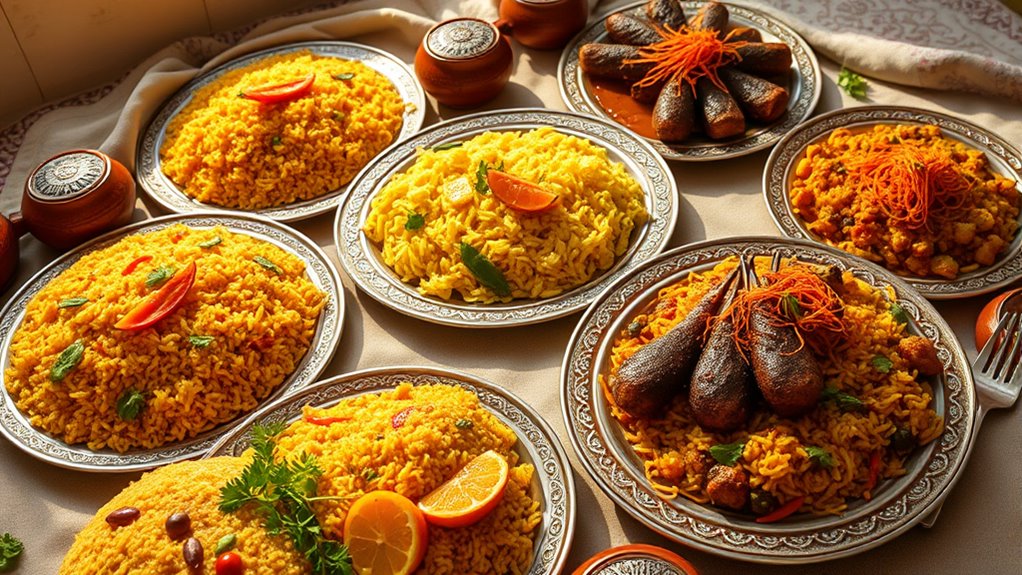
Have you ever wondered how halal cuisine shapes culinary traditions around the world? The influences of Persian, Ottoman, and Mughal cuisines have woven a rich tapestry of flavors and techniques that not only adhere to halal principles but also elevate the dining experience. Each of these cultures has contributed unique spice blending methods and cooking techniques that you can appreciate in halal dishes today.
Persian cuisine, renowned for its aromatic rice dishes and fragrant stews, emphasizes the importance of fresh herbs and spices. When you take a bite of a Persian dish, you might taste the warmth of saffron, the earthiness of cumin, and the brightness of sumac. These ingredients are carefully blended to create harmonious flavors. The cooking techniques used in Persian kitchens often involve slow cooking, allowing the spices to meld beautifully with the meat and vegetables. You’ll find that the use of grilled meats, such as kebabs, is prevalent, showcasing how Persian culinary traditions celebrate halal food with a flair.
Transitioning to Ottoman cuisine, it’s clear how this culture embraced diverse influences from across its vast empire. The Ottomans mastered the art of spice blending, incorporating ingredients like cinnamon, cloves, and allspice into their dishes. As you explore Ottoman-inspired halal meals, you’ll likely encounter dishes like köfte and pilaf, which highlight their innovative cooking techniques. The Ottomans were experts in layering flavors, often using techniques like braising and stewing to create hearty, satisfying meals that adhere to halal guidelines.
Then there’s Mughal cuisine, which showcases a blend of Indian and Persian influences. The Mughals elevated the use of spices to an art form, with biryanis and kormas being prime examples of their rich culinary heritage. You’ll notice how Mughal cooks employed intricate spice blends, often customizing them for specific dishes. The slow-cooking technique, known as dum, allows flavors to develop deeply, making every bite a delightful experience. Mughal cuisine’s emphasis on presentation, along with its adherence to halal practices, means you get not just a meal, but a feast for the senses.
As you explore halal cuisine influenced by these rich traditions, you’ll discover a world where spice blending and cooking techniques come together to create unforgettable flavors. By embracing Persian, Ottoman, and Mughal culinary arts, you’ll find that halal food is not just about dietary laws; it’s a celebration of culture and history on every plate. Additionally, many popular candies with high sugar levels are enjoyed during festive occasions, highlighting the sweet side of cultural celebrations.

Pars Automatic Persian Rice Cooker – Tahdig Rice Maker Perfect Rice Crust, 5 Cup
MASTER THE ART of perfect rice tahdig with a Pars Rice Cooker. Available in 3, 4, 5, 7,…
As an affiliate, we earn on qualifying purchases.
As an affiliate, we earn on qualifying purchases.
Frequently Asked Questions
What Are the Main Ingredients in Halal Cuisine?
In halal cuisine, you’ll find a variety of main ingredients that reflect its rich diversity. You’ll often use fresh meats like chicken, lamb, and beef, prepared according to halal guidelines. Spice blends play a vital role, enhancing flavors with ingredients like cumin, coriander, and turmeric. If you prefer vegetarian options, legumes, grains, and seasonal vegetables are popular choices, ensuring you enjoy delicious meals while adhering to halal principles.
Is Halal Food Available Worldwide?
Yes, halal food’s available worldwide! You’ll find it in many regions, thanks to cultural adaptations that cater to local tastes. From Middle Eastern shawarma to Southeast Asian rendang, regional variations add unique flavors while adhering to halal guidelines. Whether you’re in a major city or a small town, you can often discover halal options in restaurants, markets, or food trucks, making it easier than ever to enjoy delicious halal cuisine wherever you go.
How Does Halal Certification Work?
Halal certification works through a detailed process where food products are evaluated by Halal certification agencies. These agencies assess everything from ingredients to production methods, ensuring they comply with Islamic dietary laws. You’ll need to submit documentation and undergo inspections to demonstrate your commitment to Halal standards. Once approved, you’ll receive a certification that allows you to market your products as Halal, opening doors to a wider customer base seeking compliant options.
Can Non-Muslims Eat Halal Food?
Yes, non-Muslims can eat halal food. In fact, a study found that 60% of non-Muslims in diverse communities enjoy halal options, highlighting its cultural significance. Halal food often emphasizes ethical considerations, ensuring humane treatment of animals and environmental sustainability. By choosing halal, you’re not just enjoying a meal; you’re also participating in a broader conversation about food ethics and respect for traditions. So go ahead, explore the flavors of halal cuisine!
Are There Different Types of Halal Diets?
Yes, there are different types of halal diets. You’ll find that halal dietary laws can vary considerably based on cultural variations. For instance, some might focus on specific types of meat or preparation methods, while others could include additional restrictions, like avoiding certain ingredients. It is crucial to understand these nuances, especially if you’re exploring halal options across various cultures. Each community brings its own traditions and interpretations to what halal means.

Turkish Goodies "Tour of Turkey" Spice Blend Kit – Complete Mediterranean Seasoning Set for Chefs & BBQ – Includes Rare Isot, Aleppo Pepper, Sumac & Ottoman & Kebab Seasoning Blends – All Natural, Non-GMO (5 Pouch Variety Pack)
THE ULTIMATE TOUR OF TURKEY: Embark on a culinary journey through Anatolia with this curated 5-piece collection. From…
As an affiliate, we earn on qualifying purchases.
As an affiliate, we earn on qualifying purchases.
Conclusion
In the rich tapestry of halal cuisine, Persian, Ottoman, and Mughal influences weave together like vibrant threads, creating a culinary masterpiece that tantalizes the senses. Each culture contributes its unique spices and techniques, transforming simple ingredients into symphonies of flavor. As you savor these dishes, you’re not just tasting food; you’re experiencing centuries of history and tradition, where every bite tells a story of a shared heritage that transcends borders and unites palates across the globe.
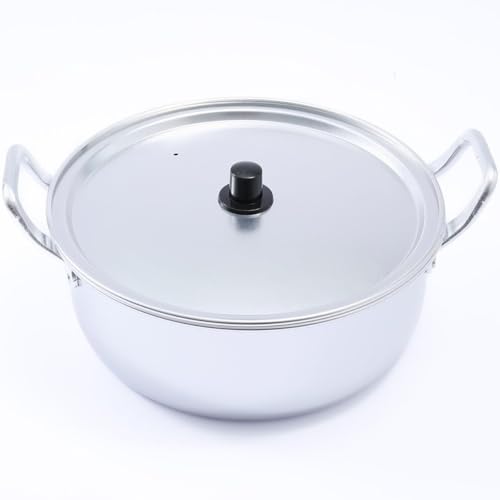
Aluminum Biryani Pot with Lid – 24cm Indian Cooking Vessel for Rice, Curry, Meat – Dum Handi Style Deep Pot for Stove Top | Large Lightweight Sauce Pan for Traditional Meals
Designed for Traditional Dum Biryani 24cm biryani pot with lid made for layered rice and meat dishes like…
As an affiliate, we earn on qualifying purchases.
As an affiliate, we earn on qualifying purchases.

GRILAZ Heavy-Duty Rose Wooden BBQ Grilling Tools Set. Extra Thick Stainless Steel Multi-Function Spatula, Fork & Tongs | Essential Accessories for Barbecue & Grill. Ideal Gift for Father…
𝗥𝗲𝗮𝗹 𝗥𝗼𝘀𝗲𝘄𝗼𝗼𝗱 𝗨𝘁𝗲𝗻𝘀𝗶𝗹𝘀: Upgrade your old, rusting grill tools or start from scratch with our rosewood barbecue utensils…
As an affiliate, we earn on qualifying purchases.
As an affiliate, we earn on qualifying purchases.