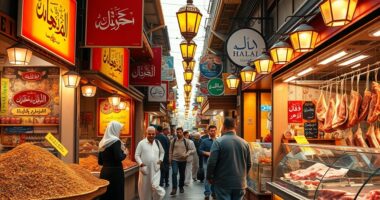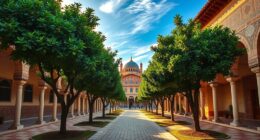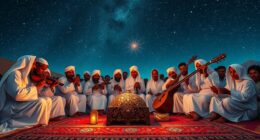
Islamic art has evolved considerably since its emergence in the 7th century. You’ll notice how calligraphy transformed into a visual art form, reflecting spiritual beliefs and cultural richness. Geometric patterns symbolize unity and showcase advanced mathematical principles. Regional influences, such as Persian and Ottoman styles, add layers of complexity. Throughout history, this art form maintained its core essence while adapting to local cultures. Keep exploring, and you’ll uncover even more fascinating aspects of its journey.
Key Takeaways
- Islamic art originated in the 7th century, emphasizing calligraphy as a fundamental expression of artistic creativity.
- Geometric patterns evolved to symbolize infinity, reflecting the unity of the universe and mathematical principles in design.
- Regional influences, such as Persian and Ottoman styles, enriched Islamic art with diverse elements and vibrant colors.
- Over time, Islamic art transformed while maintaining core principles, adapting to local cultures and historical interactions.
- The art reflects spiritual beliefs, serving as a visual language that connects cultural heritage and human expression.
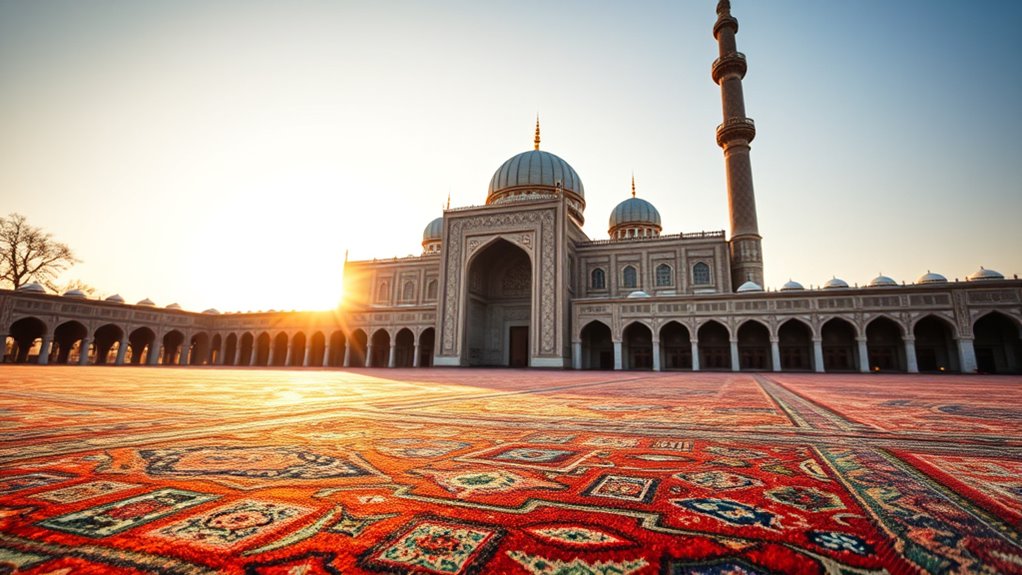
What makes Islamic art so mesmerizing? The answer lies in its intricate calligraphy techniques and mesmerizing geometric patterns, which together create a visual language that speaks to the soul. When you gaze upon a beautifully crafted tile or a stunning manuscript, you can’t help but feel the depth of history and culture that infuses every piece. Islamic art isn’t just about decoration; it’s a reflection of spiritual beliefs and a celebration of the divine.
As you explore the evolution of Islamic art through history, you’ll notice how it transformed across various regions and eras, adapting to the influences of local cultures while maintaining its core principles. In the early days, you’ll see how the art form emerged in the 7th century, characterized by a strong emphasis on calligraphy. The Arabic script evolved into a sophisticated art form, with skilled artisans employing specific calligraphy techniques that turned words into visual masterpieces. You may find that each letter is crafted with precision, creating fluid lines that evoke a sense of movement and rhythm.
Geometric patterns play an equally significant role in Islamic art. As you investigate more deeply, you’ll discover that these patterns are not merely decorative; they symbolize the infinite nature of creation and the unity of the universe. You’ll see how artists employed a variety of geometric shapes, meticulously arranging them to form complex designs that captivate the eye. These patterns often reflect mathematical principles and can be found in everything from architecture to textiles, showcasing a profound understanding of geometry.
Throughout the centuries, Islamic art continued to evolve, influenced by trade, conquest, and cultural exchange. You might notice how Persian, Ottoman, and Moorish styles each brought unique elements to the table, enriching the overall tapestry of Islamic art. As you appreciate these diverse influences, you’ll likely find common threads that bind them together, such as the use of vibrant colors and intricate designs.
In your journey through this art form, you’ll come to understand that Islamic art is more than just a visual experience; it’s a window into the spiritual and cultural life of a civilization. Each piece tells a story, inviting you to reflect on the beauty and complexity of human expression. As you immerse yourself in the world of Islamic art, you’ll find that its allure lies in its harmonious blend of faith, creativity, and tradition.
Top picks for "evolution islamic through"
Open Amazon search results for this keyword.
As an affiliate, we earn on qualifying purchases.
Frequently Asked Questions
What Materials Were Commonly Used in Islamic Art Creation?
In Islamic art creation, you’ll often find materials like clay for ceramic decoration, which showcases intricate designs. Artists use various pigments for vibrant colors, while calligraphy techniques bring elegance to their work. You might see the use of wood, metal, and textiles as well, each adding unique textures and details. These materials combine to create stunning pieces that reflect the rich cultural heritage and artistic expression within Islamic traditions.
How Did Trade Influence Islamic Art Styles?
Trade markedly influenced Islamic art styles by facilitating artistic exchange along trade routes. As you explore different regions, you’ll notice how merchants and travelers brought various artistic ideas and techniques together. This blending of cultures enriched Islamic art, incorporating elements from Persian, Byzantine, and Indian traditions. You’ll see vibrant colors, intricate patterns, and unique motifs that reflect this diverse heritage, showcasing how trade shaped the visual language of Islamic artistry.
What Role Did Religion Play in Islamic Art?
Religion’s a colossal force in Islamic art, shaping every brushstroke and chisel mark! You’ll find that religious symbolism permeates the artwork, reflecting deep spiritual expression that resonates with believers. Every intricate pattern and delicate tile whispers sacred truths, guiding you toward contemplation and connection with the divine. From mosques to manuscripts, the fusion of faith and creativity creates masterpieces that inspire awe and elevate the soul, inviting you into a world of profound beauty.
Are There Modern Movements Influenced by Islamic Art?
Yes, there are modern movements influenced by Islamic art. You’ll find a calligraphy revival in contemporary art, where artists blend traditional techniques with modern styles. Additionally, geometric abstraction has emerged, showcasing intricate patterns reminiscent of Islamic designs. These movements celebrate the rich heritage while pushing boundaries, allowing you to see how Islamic art continues to inspire and evolve today. Engaging with these styles can deepen your appreciation for their cultural significance.
How Does Islamic Art Differ Across Various Regions?
Islamic art differs markedly across regions due to regional diversity and cultural influences. In North Africa, you’ll find intricate tile work and geometric patterns, while in the Middle East, calligraphy often takes center stage. Southeast Asia showcases vibrant colors and unique motifs influenced by local traditions. Each area’s historical context shapes its artistic expression, resulting in a rich tapestry that reflects the diverse cultures and histories within the Islamic world.
Conclusion
As you stand before a stunning mosaic, each tile glistening like a star in the night sky, you can almost feel the pulse of history in every intricate design. Islamic art, with its rich tapestry of colors and patterns, invites you on a journey through time, where culture and faith intertwine. You’ll find that this art isn’t just a visual feast; it’s a living declaration to creativity, resilience, and the enduring spirit of a diverse world.