

Halal folk tales and legends from the Islamic world offer a mesmerizing mix of cultural richness and moral teachings. These enchanting stories not only entertain but also impart wisdom aligned with Islamic values. You’ll find clever protagonists who navigate life’s challenges with humor and wit, embodying virtues like justice and generosity. These narratives serve as reminders of your role within the community. There’s so much more to discover about these beloved tales and their impact on society.
Key Takeaways
- Folk tales from the Islamic world impart moral lessons aligned with Islamic teachings, promoting ethical behavior and virtuous living.
- Engaging storytelling techniques, including vivid imagery and rhythmic patterns, enhance the memorability of these tales and their moral messages.
- Humor, particularly in stories featuring Nasreddin Hodja, conveys wisdom and encourages light-hearted approaches to life’s challenges.
- Common themes in these tales emphasize generosity, justice, and the importance of community, fostering reflection on personal and societal values.
- Sharing these folk tales preserves cultural heritage and moral teachings, ensuring the legacy of wisdom continues for future generations.
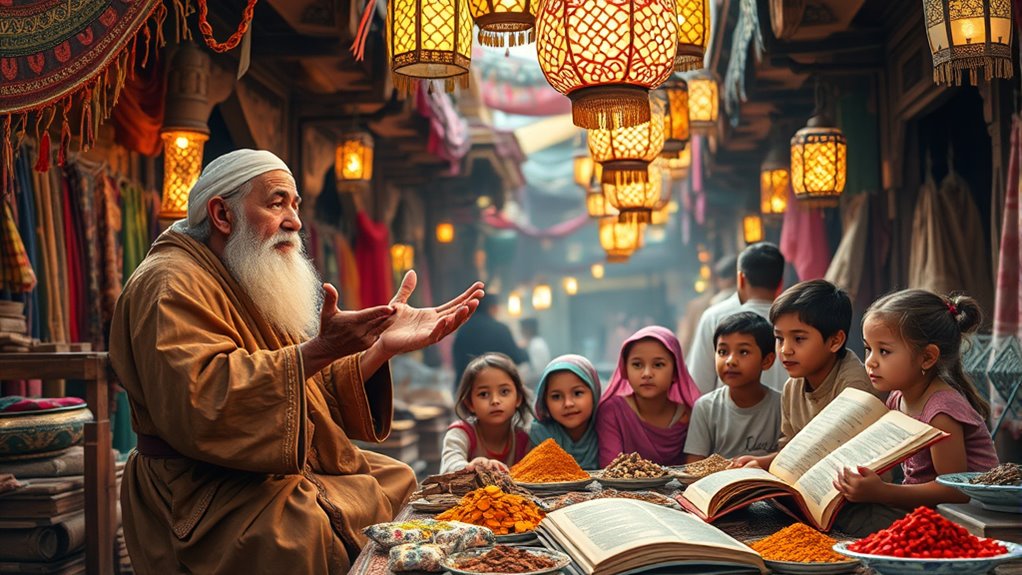
Folk tales and legends from the Islamic world offer a rich tapestry of stories that reflect the diverse cultures and traditions across the Muslim-majority regions. When you immerse yourself in these tales, you’ll find not just engaging narratives but also valuable moral lessons that resonate with the teachings of Islam. These stories often serve as a way to impart wisdom, guiding listeners on a path of ethical behavior and virtuous living.
You might notice that storytelling techniques in these folk tales are as varied as the cultures they come from. Many stories employ vivid imagery and engaging characters, drawing you into fantastical worlds where moral dilemmas unfold. For instance, you’ll encounter clever protagonists who outsmart oppressive figures, showcasing the triumph of good over evil. The use of repetition and rhythmic patterns in narration helps cement the moral lessons in your mind, making them memorable and impactful. You can almost hear the echoes of storytellers in bustling marketplaces, enchanting audiences with their animated performances.
As you explore tales like those of Nasreddin Hodja, you’ll see how humor plays an essential role in conveying moral lessons. His antics, often filled with wit and irony, highlight the importance of wisdom and humility. These stories remind you that life’s challenges can be met with a light heart and a clever mind. When you share these tales with others, you’re not just passing on stories; you’re sharing insights that can inspire meaningful discussions about ethics and values.
Moreover, many folk tales incorporate elements of folklore and cultural practices, allowing you to appreciate the richness of Islamic heritage. You may find stories that revolve around themes of generosity, justice, and the significance of community. These narratives encourage you to reflect on your own life and the values you hold dear. By engaging with these tales, you’re invited to contemplate your role in fostering kindness and understanding in your own community. Additionally, the storytelling tradition within these cultures often emphasizes the importance of oral history, preserving not only the tales but also the moral lessons for future generations.
In essence, the folk tales and legends from the Islamic world are more than just entertainment; they’re a treasure trove of wisdom. Each story you encounter serves as a reminder of the moral lessons embedded within, encouraging you to live a life aligned with the principles of compassion and integrity. So, as you read and share these stories, know that you’re participating in a long-standing tradition that celebrates the beauty and depth of human experience across cultures.

Snow White: An Islamic Tale (Islamic Fairy Tales)
Used Book in Good Condition
As an affiliate, we earn on qualifying purchases.
As an affiliate, we earn on qualifying purchases.
Frequently Asked Questions
What Is the Significance of Storytelling in Islamic Culture?
Storytelling in Islamic culture holds immense significance as it preserves spiritual heritage and strengthens cultural identity. You’ll find that these narratives transmit moral values, historical lessons, and communal beliefs, fostering a sense of belonging among listeners. By sharing stories, you connect generations, bridging past and present. This practice not only enriches your understanding of faith but also deepens your appreciation for diverse traditions, ensuring that the essence of culture remains vibrant and alive.
How Are Halal Folk Tales Different From Other Folk Tales?
Ever wonder what sets halal folk tales apart? They’re rooted in cultural authenticity, reflecting the values and beliefs of the Islamic world. Unlike other folk tales, halal stories focus on moral lessons that guide individuals in their daily lives. You’ll find themes of compassion, justice, and respect woven throughout, ensuring that every tale not only entertains but also imparts wisdom. So, immerse yourself in these narratives and discover the richness they offer!
Are These Stories Suitable for Children?
Yes, these stories are suitable for children. They often feature age-appropriate content that engages young readers while teaching valuable lessons. You’ll find that the themes promote values like kindness, honesty, and respect. Plus, they encourage cultural sensitivity by introducing kids to diverse traditions and perspectives. By sharing these stories, you help your children appreciate different cultures while enjoying enthralling narratives that are both entertaining and educational.
Can I Find These Folk Tales in English Translations?
Yes, you can find these folk tales in English translations. Many publishers focus on translation availability, ensuring you get access to authentic stories. While some translations capture cultural authenticity beautifully, others may miss the nuances. It’s worth exploring various editions to find the ones that resonate with you. Check libraries, online platforms, or bookstores for a range of options, and you’ll discover a treasure trove of enthralling tales waiting for you!
What Themes Are Commonly Explored in Islamic Folk Tales?
Islamic folk tales commonly explore themes of moral lessons and cultural identity. You’ll often find stories that emphasize virtues like honesty, kindness, and perseverance, guiding you toward ethical behavior. These tales also reflect the rich cultural heritage of Islamic societies, showcasing traditions, values, and community bonds. As you investigate into these narratives, you’ll gain insight into the beliefs and practices that shape the identities of various cultures across the Islamic world.

Tales of Nasreddin Hodja: Enchanting Stories of Wit and Wisdom for Kids (Translated & Illustrated by My First Picture Book Inc.)
As an affiliate, we earn on qualifying purchases.
As an affiliate, we earn on qualifying purchases.
Conclusion
In the rich tapestry of Islamic culture, folk tales and legends offer timeless wisdom and a glimpse into the values that shape communities. As the saying goes, “A story told is a lesson learned.” These narratives not only entertain but also impart morals that resonate across generations. Embracing these tales connects you to a world of shared experiences, reminding you of the beauty in diversity and the power of storytelling to bridge divides.

365 Moral Stories for Kids Ages 4–8: A Collection of Short Illustrated Stories That Introduce Moral Values, Good Habits, and Simple Life Lessons for Young Children
As an affiliate, we earn on qualifying purchases.
As an affiliate, we earn on qualifying purchases.

Destiny Disrupted: A History of the World through Islamic Eyes
As an affiliate, we earn on qualifying purchases.
As an affiliate, we earn on qualifying purchases.