
Halal food is gaining popularity in non-Muslim countries, catering to a growing demand for diverse culinary options. Businesses face challenges like sourcing reliable halal suppliers and ensuring proper staff education on dietary restrictions. However, cultural adaptations, such as fusion cuisine, create unique dishes that appeal to a broader audience. This inclusive approach promotes cultural appreciation and engagement. You’ll discover more about the exciting innovations and adaptations shaping this dynamic market.
Key Takeaways
- The rising global Muslim population drives demand for halal food in non-Muslim countries, leading to increased availability in supermarkets and restaurants.
- Businesses face challenges in sourcing reliable halal suppliers and ensuring compliance with certification standards to maintain quality and taste.
- Educating staff on dietary restrictions and preventing cross-contamination during preparation is crucial for halal compliance.
- Cultural adaptations, such as fusion cuisine, create unique halal dishes that appeal to a diverse customer base beyond just Muslims.
- Offering halal options promotes inclusivity, cultural appreciation, and diversification of dietary choices in the marketplace.

Have you ever wondered how halal food finds its way into non-Muslim countries? It’s a fascinating process that involves a blend of cultural adaptation and increasing awareness of dietary restrictions. As the global Muslim population continues to grow, the demand for halal food has surged, prompting suppliers and businesses to seek halal certification. This certification guarantees that the food complies with Islamic dietary laws, allowing Muslims to enjoy meals that align with their beliefs, even in places where they might be a minority.
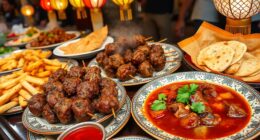
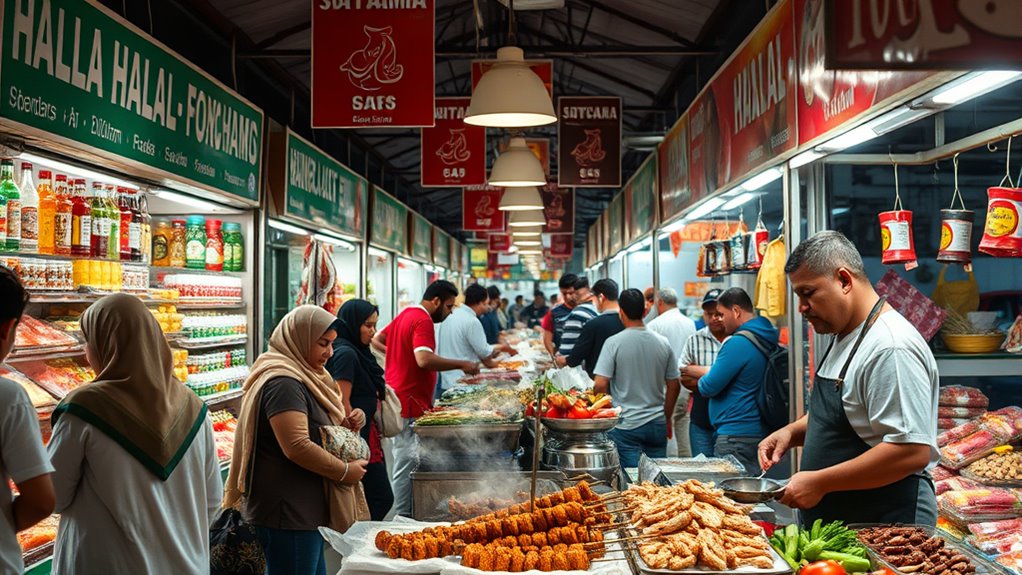
You might have noticed that halal options are popping up in supermarkets, restaurants, and even fast-food chains in your area. This isn’t just a trend; it’s a response to the diverse needs of consumers. Businesses recognize that catering to halal dietary restrictions can broaden their customer base, attracting not only Muslims but also those who are curious about trying something new. The halal certification process can be rigorous, requiring businesses to adhere to specific standards. This includes sourcing ingredients that are permissible under Islamic law and ensuring that they’re prepared in a way that avoids contamination with non-halal items.
Navigating the halal certification process isn’t always straightforward, especially in non-Muslim countries. Companies often face challenges, such as finding reliable suppliers who can provide halal-compliant ingredients. Additionally, they must educate their staff about the importance of these dietary restrictions to prevent cross-contamination. However, many businesses are rising to the occasion, recognizing that offering halal food is not just about compliance—it’s about creating an inclusive environment.
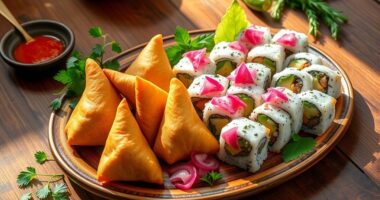
Cultural adaptations also play a significant role in bringing halal food to non-Muslim countries. You might see local cuisines merging with halal principles, leading to unique dishes that reflect both the local culture and Islamic dietary laws. This fusion doesn’t just appeal to Muslims; it invites everyone to explore new flavors and experiences. By offering halal options, restaurants can create a welcoming atmosphere that celebrates diversity. Furthermore, the growing diversification of dietary options in global markets encourages restaurants to innovate and cater to various culinary preferences.

WHICH FOOD ARE HALAL AND WICH ARE HARAM: LITTERALLY BEYOND SUSPICION (Italian Edition)
As an affiliate, we earn on qualifying purchases.
As an affiliate, we earn on qualifying purchases.
Frequently Asked Questions
How Can Non-Muslim Countries Better Accommodate Halal Food Options?
Non-Muslim countries can better accommodate halal food options by promoting halal food education and establishing clear dietary accommodation policies. You can encourage local businesses to learn about halal standards and certifications, helping them offer compliant meals. Partnering with community organizations can raise awareness and create a demand for halal products. Additionally, hosting events that showcase halal cuisine can foster understanding and acceptance, making it easier for everyone to enjoy diverse food choices.
What Are Common Misconceptions About Halal Food in Non-Muslim Societies?
You might think halal food is just about religious restrictions, but that’s a common misconception. Many people confuse halal with being unhealthy or overly restrictive, falling into cultural stereotypes. In reality, halal simply means permissible, focusing on humane treatment of animals and cleanliness. It isn’t solely about religion; it’s also about ethical food practices that can be enjoyed by everyone, regardless of their beliefs. Understanding this can help bridge cultural gaps.
Are There Certification Bodies for Halal Food in Non-Muslim Countries?
Yes, there are certification bodies for halal food in non-Muslim countries. These organizations guarantee food authenticity by verifying that products meet halal standards. You’ll find various local and international certifiers, each with its own criteria. When you look for halal food, checking for a credible certification can help you trust that the food aligns with halal principles. This way, you can enjoy your meals while respecting dietary requirements.
How Do Non-Muslim Countries Handle Cross-Contamination With Halal Foods?
In non-Muslim countries, you’ll often see strict cross-contamination protocols alongside halal labeling standards. Picture a kitchen where halal and non-halal foods are separated like oil and water. They use dedicated utensils and storage areas to prevent any mix-up. Staff undergo training to make certain they understand the importance of these protocols. By maintaining this separation, they help you feel confident that your halal meal is truly compliant and safe from contamination.
What Role Does Consumer Demand Play in Halal Food Availability Abroad?
Consumer demand notably shapes halal food availability abroad. When you choose halal options, your preferences influence local markets, prompting retailers and restaurants to adapt their offerings. More consumers seeking halal food encourage suppliers to source and provide these products. As a result, businesses respond to this market influence, expanding their halal selections to meet your needs. Ultimately, your choices drive the growth and accessibility of halal food in non-Muslim countries.

EINCORN 25g 10 Sheets Gelatin Fish Glue Leaves Silver Leaf Sheet Unflavored Baking Ingredients for Cooking Kitchen Supplies, as the picture shows
1.Beef leaf gelatin sheet is unflavored and easy to dissolve,can be 2.substitutes for powdered gelatine in any recipe.
As an affiliate, we earn on qualifying purchases.
As an affiliate, we earn on qualifying purchases.
Conclusion
In non-Muslim nations, steering the nuances of halal food presents both challenges and cultural adaptations. As you explore these diverse dining experiences, you’ll discover delightful dishes that cater to your dietary desires. By embracing these culinary connections, you not only satisfy your taste buds but also foster understanding and respect. So, step into this savory scene, savor the selections, and celebrate the splendid spectrum of halal offerings that bridge cultural divides and enrich your eating experience.

Ziyad Luncheon Halal Loaf Meat, Chicken/Beef, 29.5 Ounce
DELICIOUS MEAL: Get ready to load your plate with this delicious meat. Make yourself a mouthwatering and flavorful…
As an affiliate, we earn on qualifying purchases.
As an affiliate, we earn on qualifying purchases.

Cuisine Marocaine Fusion: Recettes faciles, inratables et bluffantes (French Edition)
As an affiliate, we earn on qualifying purchases.
As an affiliate, we earn on qualifying purchases.