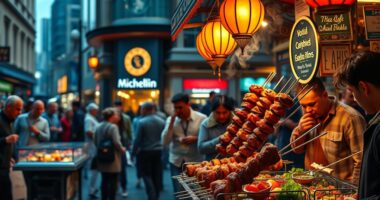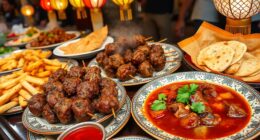
Halal principles shape Southeast Asian street food cultures by ensuring that dishes adhere to Muslim dietary laws. You’ll find vibrant flavors from various backgrounds, like satay and nasi lemak, showcasing this cultural fusion. Vendors creatively adapt traditional recipes while using halal ingredients, making them inclusive for everyone. These practices reflect local traditions and community heritage, celebrating diversity through food. Discover how these rich culinary influences continue to evolve and enhance the street food landscape.
Key Takeaways
- Halal principles ensure dietary compliance, enabling both Muslim and non-Muslim consumers to enjoy a diverse range of Southeast Asian street foods.
- Iconic dishes like satay and nasi lemak showcase the cultural fusion of regional flavors while adhering to halal dietary laws.
- Street food vendors creatively adapt traditional recipes, reflecting local traditions and Muslim community influences while maintaining halal standards.
- The emphasis on halal ingredients fosters trust and inclusivity, allowing for a vibrant exchange of culinary heritage among communities.
- Modern trends in street food highlight diversification, as vendors innovate within halal constraints to meet evolving consumer preferences.
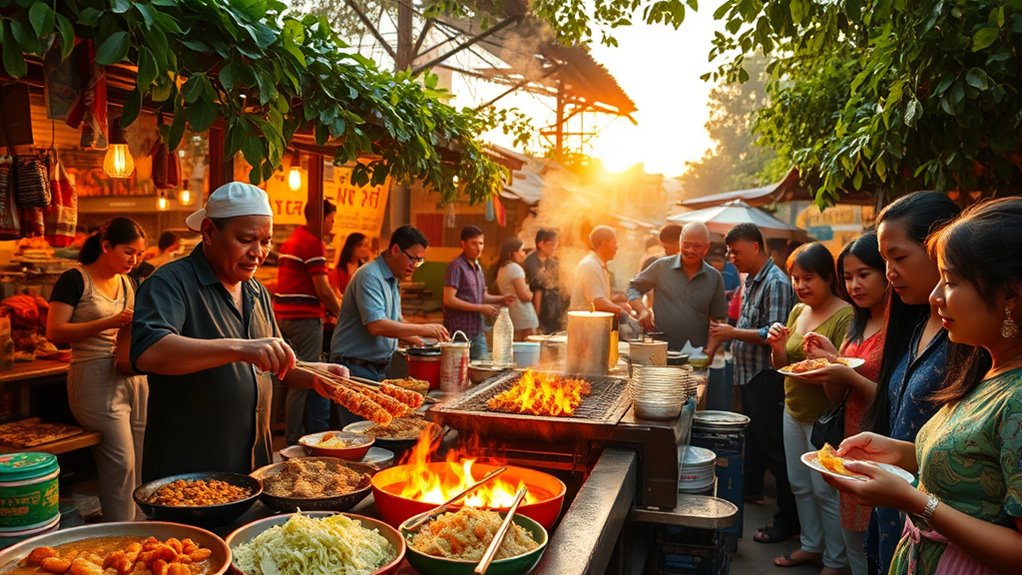
As you stroll through the bustling streets of Southeast Asia, the tantalizing aromas of street food beckon you from every corner, showcasing a vibrant tapestry of flavors deeply influenced by halal practices. Here, in this melting pot of cultures, you’ll find a delightful blend of culinary traditions shaped by the region’s diverse communities, particularly the Muslim population. The rich array of dishes reflects a commitment to Muslim dietary laws, making it a paradise for food lovers seeking halal options.
You might start your journey with the iconic satay, skewered and grilled meat marinated in spices, served with a rich peanut sauce. This dish isn’t just a favorite among locals; it’s a symbol of cultural fusion. The blend of Indonesian, Malaysian, and Thai influences results in a unique flavor that captures the essence of halal street food. You’ll notice how each vendor puts their twist on the recipe, showcasing their heritage while adhering to halal guidelines.
As you continue to explore, you’ll stumble upon nasi lemak, Malaysia’s beloved coconut rice dish. Wrapped in banana leaves, it features tender rice, fried anchovies, peanuts, boiled eggs, and a drizzle of sambal. It’s a meal that’s not only satisfying but also a perfect example of how Muslim dietary laws have shaped local cuisine. The emphasis on halal ingredients ensures that you can enjoy this dish without concern, allowing you to fully immerse yourself in the experience.
You might also encounter dishes like pho and curry, each transformed by the region’s cultural fusion. These meals, often made with halal meat, illustrate how the local Muslim communities have adapted traditional recipes to fit their beliefs. The vibrant flavors and aromas you’ll experience are a proof of the creativity and innovation of street food vendors, who skillfully combine various culinary influences while respecting dietary restrictions.
Street food in Southeast Asia is more than just a meal; it’s an experience that invites you to savor the rich heritage of the region. You’ll see how communities come together through food, showcasing their unique identities while respecting the principles of halal. Additionally, the emphasis on diversification across sectors is mirrored in the variety of street food options available, catering to both traditional and modern tastes. So, as you continue your culinary adventure, remember that every bite is a celebration of diversity, cultural fusion, and the principles that guide the preparation of these delicious dishes. Enjoy your exploration into the flavors of halal street food, where every corner reveals a new story waiting to be tasted.
Top picks for "halal influence southeast"
Open Amazon search results for this keyword.
As an affiliate, we earn on qualifying purchases.
Frequently Asked Questions
What Defines a Dish as Halal in Street Food?
A dish is defined as halal in street food when it meets specific dietary guidelines outlined in Islamic law. You’ll want to look for halal certification, ensuring the food’s prepared according to these rules. Ingredient sourcing is vital too; all components should come from halal-approved suppliers. This means no pork or alcohol, and that animals must be slaughtered in a particular way. Always check for signs or ask vendors to confirm their offerings are halal.
Are There Halal Certifications for Street Food Vendors?
You might think street food vendors are like the wild west of culinary choices, but many do seek halal certifications. Vendors often navigate a halal certification process to guarantee their food meets religious standards. This involves demonstrating compliance with specific guidelines regarding ingredients and preparation methods. By obtaining certification, they not only attract a wider customer base but also build trust within the community, showing their commitment to quality and authenticity.
How Has Halal Impacted Street Food Pricing?
Halal has definitely impacted street food pricing by influencing vendor compliance with certification requirements. Vendors often adopt pricing strategies that reflect the higher costs of sourcing halal ingredients and maintaining compliance. You might notice that some vendors charge a premium for their halal options, as they guarantee quality and adherence to standards. This can result in a varied price range, appealing to different customers while supporting the halal market’s growth in street food.
Are Halal Street Food Options Available Year-Round?
Halal street food options are like a vibrant tapestry, available year-round in many areas. You’ll find vendors committed to halal ingredient sourcing, ensuring quality and compliance. These vendors often undergo rigorous certification processes, proving their dedication to halal standards. So, whether you’re craving a late-night snack or a midday meal, you can enjoy delicious halal options without worry, enhancing your culinary adventures throughout the seasons. Keep exploring!
What Are Common Misconceptions About Halal Street Food?
You might think halal street food is only for Muslims, but that’s a misconception. Halal food is enjoyed by everyone, regardless of faith. Another common belief is that it’s only about meat sourcing; in reality, it includes strict religious restrictions on preparation and hygiene. Many assume halal options lack flavor, but they can be just as delicious as any other. So, don’t hesitate to try halal street food; you might love it!
Conclusion
In Southeast Asia, street food isn’t just delicious—it’s also increasingly halal. Did you know that over 60% of the region’s population identifies as Muslim? This strong demographic influence means that halal options are not only prevalent but also essential in street food culture. As you explore bustling markets, you’ll find a delightful blend of flavors that respect dietary laws while satisfying your cravings. Embracing halal street food opens up a world of culinary experiences that everyone can enjoy!