
Desert oases are lifelines along halal trade routes, helping ancient civilizations thrive. They provided essential water and shade, enabling caravans to transport spices, textiles, and metals across harsh terrains. These bustling hubs facilitated not just commerce but also the exchange of culture and ideas, shaping economies and promoting innovation. Traders adhered to ethical practices, fostering community and trust. There’s much more to explore about the lasting impact of these trade networks on modern economies.
Key Takeaways
- Desert oases were crucial for sustaining caravans, providing water and shade along halal trade routes in arid regions.
- Trade interactions at oases fostered community and relationships among diverse merchants, promoting ethical transactions in line with Islamic principles.
- The movement of goods through these routes introduced new products and manufacturing techniques, shaping local economies and trade practices.
- Oases transformed arid landscapes into vibrant economic hubs, facilitating the exchange of culture, ideas, and innovations among traders.
- The legacy of these trade networks underscores the importance of interconnectedness and resilience in historical and modern economic systems.
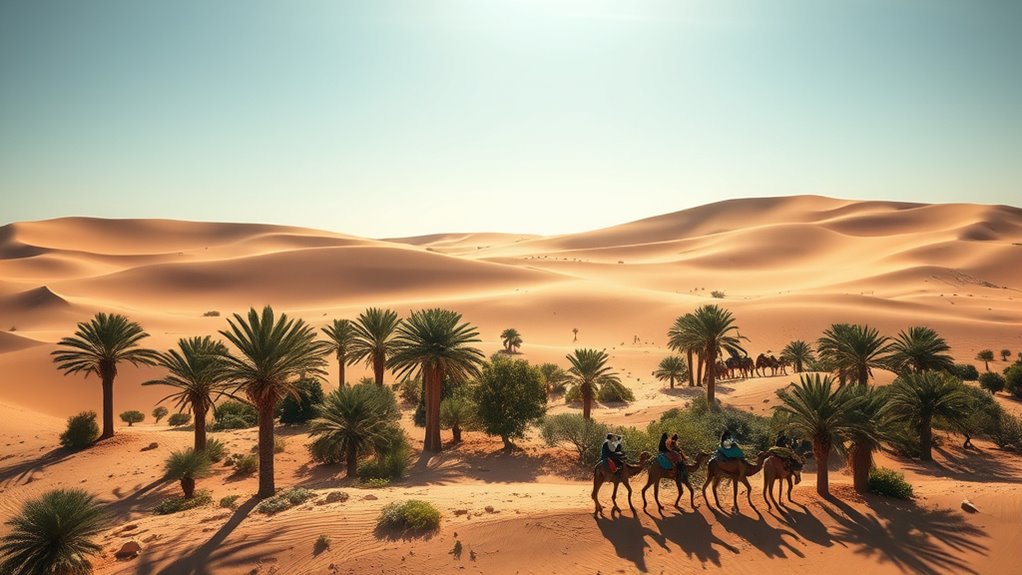
Economic history explores how societies have produced, exchanged, and consumed goods and services over time. When you explore the world of desert oases and halal trade routes, you uncover the intricate web of trade networks that shaped economies across arid landscapes. These trade networks functioned as lifelines, connecting distant regions and allowing for the exchange of not only goods but also culture and ideas. As you explore these routes, you’ll see how they were essential for the survival and prosperity of caravan economies.
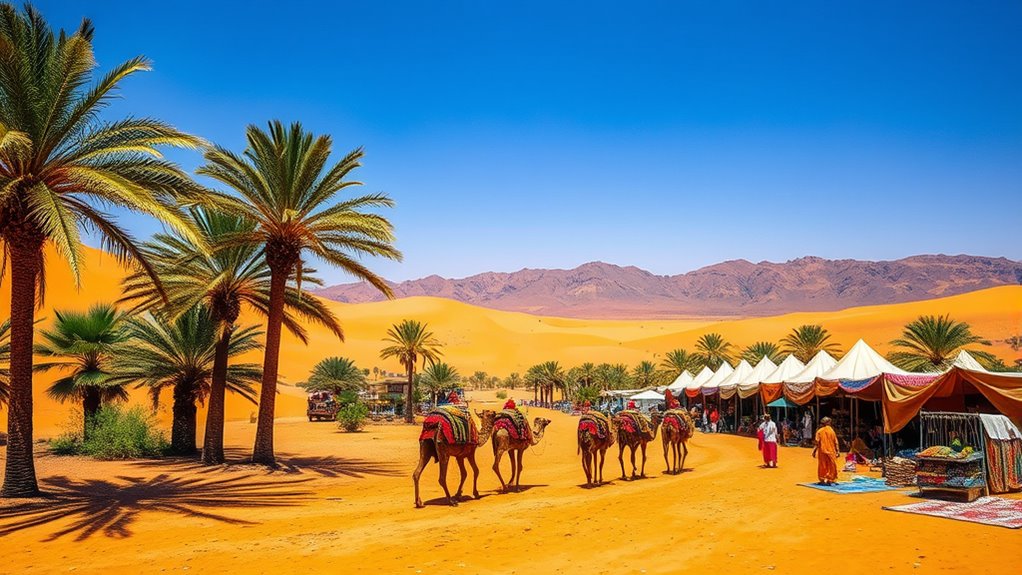
Caravan economies thrived on the movement of goods through harsh terrains, turning oases into bustling hubs of activity. As a traveler, you’d find these oases strategically located along trade routes, offering respite and resources for weary merchants. The water and shade provided by these oases made them indispensable in sustaining long caravans that transported spices, textiles, and precious metals. You might envision the sights and sounds as camels loaded with goods trudged along the paths, bringing life to otherwise desolate areas.
Caravan economies transformed arid landscapes into vibrant trade hubs, where oases provided vital resources for journeying merchants.
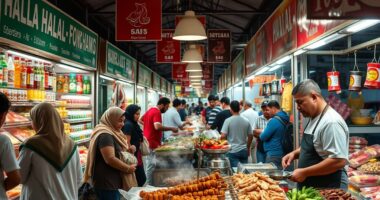
In these caravan economies, trade wasn’t just about the exchange of commodities; it was about building relationships. You’d meet merchants from various backgrounds, each bringing their unique products and stories. This exchange fostered a sense of community among diverse groups, all bound by their reliance on these trade networks. The importance of halal trade routes cannot be understated, as they facilitated the movement of goods in accordance with Islamic principles, ensuring that transactions were fair and ethical.
As you trace the routes, you’ll notice how these trade networks also led to the spread of innovations. Goods that once belonged to one culture would find their way into the hands of another, sparking new ideas about manufacturing and consumption. You’d see how the introduction of new products could shift local economies, creating demand for different goods and services. This dynamic interplay between supply and demand was vital in shaping the economic landscape of the time. Additionally, these trade routes contributed to the development of website performance metrics, allowing traders to optimize their operations based on customer interactions and sales data.
Ultimately, the history of desert oases and halal trade routes illustrates the resilience of human ingenuity in overcoming environmental challenges. The caravan economies that emerged in these regions laid the groundwork for modern trade practices, revealing how interconnected we all are, even across vast deserts. When you think about it, these ancient trade networks were the precursors to today’s global economy, highlighting the enduring legacy of commerce in human history.
Top picks for "desert halal trade"
Open Amazon search results for this keyword.
As an affiliate, we earn on qualifying purchases.
Frequently Asked Questions
What Are the Modern Implications of Historical Trade Routes?
The modern implications of historical trade routes are significant. You see trade route modernization enhancing global connectivity, enabling faster and more efficient exchanges. This evolution fosters cultural exchange, allowing diverse ideas, traditions, and goods to flow across borders. As you explore these routes today, you’ll notice how they influence economic relationships and promote mutual understanding among cultures. Ultimately, these historical pathways continue to shape our interconnected world and its ongoing development.
How Do Desert Oases Affect Local Biodiversity?
Imagine stepping into a hidden paradise amidst endless sand. Desert oases are essential for local biodiversity, acting as lifelines for numerous species. These lush spots support a variety of desert flora, providing shelter and nourishment for both plants and animals. You’ll find unique ecosystems thriving in these oases, where water sources create a stark contrast to the arid surroundings. By preserving these areas, you’re helping maintain the delicate balance of life in harsh environments.
Are There Any Archaeological Sites Related to These Trade Routes?
Yes, there are several archaeological sites related to caravan routes and oasis settlements. When you explore these sites, you’ll find remnants of ancient trading posts, water systems, and artifacts that showcase the rich history of commerce and cultural exchange. These locations often reveal how traders navigated harsh landscapes and relied on oases for sustenance. By studying them, you can gain insights into the interconnectedness of various civilizations throughout history.
What Role Did Women Play in Ancient Trade Networks?
Women played vital roles in ancient trade networks, often acting as both traders and facilitators. For instance, imagine a woman in a bustling market, negotiating prices for textiles she crafted. Her participation in trade networks wasn’t just about selling goods; she also managed finances and built relationships with other traders. This involvement allowed women to influence local economies, showcasing their importance in shaping trade dynamics and enhancing community prosperity through their economic roles.
How Did Climate Change Impact Historical Trade Routes?
Climate shifts considerably impacted historical trade routes by causing trade disruptions. When temperatures rose or rainfall patterns changed, certain routes became less viable. You’d see traders rerouting their paths to find more reliable sources of water and food. These disruptions often led to increased costs and decreased trade volume. Over time, such changes could reshape entire economies, forcing communities to adapt and innovate in response to the challenges posed by the environment.
Conclusion
In exploring desert oases and halal trade routes, you’ve uncovered a rich tapestry of economic history that weaves together culture, commerce, and community. These bustling hubs not only provided sustenance but also served as lifelines for trade, connecting distant lands. Just as an oasis breathes life into arid landscapes, these routes fostered prosperity and understanding among diverse peoples. Remember, every trade that crossed these paths was a step toward shaping the interconnected world we live in today.