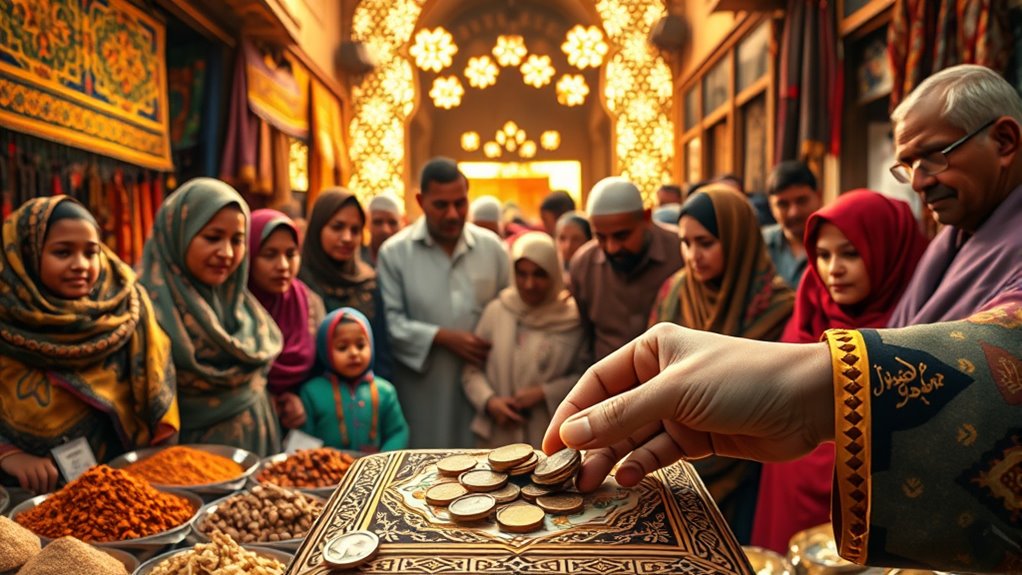

Islamic charity traditions like Zakat and Waqf have evolved considerably over the centuries. Zakat, an obligatory form of almsgiving, guarantees wealth circulates within your community, promoting social justice. Waqf, or charitable endowments, now supports modern initiatives like scholarships and healthcare. With technology improving accessibility, it’s easier for you to engage in these practices today. This rich history of giving continues to shape communities, and you’ll discover even more about their impact as you explore further.
Key Takeaways
- Zakat is an obligatory almsgiving in Islam, promoting wealth circulation and social justice within communities since the time of Prophet Muhammad.
- Waqf, or charitable endowment, historically funded public goods and is experiencing a revival for modern initiatives like education and healthcare.
- Technology now facilitates Zakat calculation and donations, enhancing accessibility and transparency for global donors.
- Interfaith collaborations around Islamic charity traditions foster social cohesion, reflecting broader humanitarian values beyond religious boundaries.
- The ongoing evolution of Zakat and Waqf practices ensures they remain relevant in addressing contemporary societal needs and challenges.

Have you ever wondered how deeply charity is woven into Islamic practices? If you take a closer look, you’ll find that concepts like Zakat and Waqf are integral to the faith, shaping not just individual lives but entire communities. The historical origins of these charitable practices date back to the time of the Prophet Muhammad, who emphasized the importance of supporting those in need. Zakat, an obligatory form of almsgiving, was established to ensure wealth circulates within the community, preventing the rich from hoarding resources. This act of giving is not just a recommendation; it’s a fundamental pillar of Islam, reflecting the core belief in social responsibility.
Charity, through Zakat and Waqf, is a fundamental pillar of Islam, shaping communities and promoting social responsibility.
As you explore the evolution of these practices, you’ll notice how they’ve adapted to modern applications. Today, Zakat is still seen as a duty, but it’s also embraced as a tool for social justice. Many Muslims calculate their Zakat online, using apps and websites that make the process easier and more transparent. This shift shows how technology can enhance the age-old tradition of giving, making it accessible to everyone, regardless of their location or financial literacy.
Waqf, on the other hand, has its roots in charitable endowments that date back centuries. Historically, wealthy individuals would dedicate a portion of their assets to fund public goods like schools and hospitals. This practice not only provided for the community but also created a legacy that would endure for generations. In today’s context, Waqf is experiencing a revival, with organizations reinterpreting it to support modern initiatives. You might find Waqf being used to fund educational scholarships, healthcare facilities, or even microfinance projects aimed at empowering local entrepreneurs.
You may also notice that these charitable traditions are not exclusive to Muslims; they resonate with broader humanitarian values. Interfaith collaborations often emerge around charity, uniting diverse communities in common goals. This spirit of giving enhances social cohesion, reminding us that compassion transcends religious boundaries. Moreover, the ongoing dialogue about ethical considerations surrounding charitable giving in the age of technology ensures that these practices evolve responsibly and inclusively.
Ultimately, as you engage with these Islamic charity traditions, you’ll see how deeply they’re embedded in the faith. They offer a rich history while adapting to contemporary needs, ensuring that the act of giving remains relevant and impactful. Whether you’re calculating your Zakat or participating in a Waqf initiative, you’re contributing to a timeless tradition that champions community welfare and social justice.

Easy Zakat Calculator: Fast & Accurate Calculations
Instant Zakat Calculation: Quickly determine your Zakat obligation based on your financial assets.
As an affiliate, we earn on qualifying purchases.
As an affiliate, we earn on qualifying purchases.
Frequently Asked Questions
How Can Non-Muslims Participate in Zakat or Waqf Initiatives?
You can participate in zakat or waqf initiatives by engaging in interfaith collaborations that focus on social causes. Many organizations welcome non-Muslim donations to support community projects, healthcare, education, and poverty alleviation. You can team up with local charities that promote inclusivity and understanding. By contributing, you’ll foster goodwill and strengthen relationships between communities, showing that compassion transcends religious boundaries. Your support can make a significant impact on those in need.
Are There Specific Types of Charities Preferred in Islamic Tradition?
In Islamic tradition, specific types of charitable donations are highly preferred. You’ll find that zakat, a mandatory almsgiving, and waqf, a charitable endowment, are among the most valued forms. Additionally, helping the poor, supporting education, and aiding orphans are emphasized. It’s encouraged for you to engage in these preferred charity forms, as they align with the core values of compassion and community support within Islam. Your contributions can make a significant impact!
How Does Technology Impact Modern Zakat and Waqf Practices?
Technology transforms modern zakat and waqf practices like sunshine breaking through clouds. You can now use digital platforms to effortlessly donate, reaching those in need faster than ever. Blockchain transparency guarantees your contributions are tracked, building trust and accountability. With just a few clicks, you’re part of a global movement, empowering communities while staying connected to your faith. Embracing these tools enhances the impact of your charitable actions in today’s world.
Can Zakat Be Distributed Internationally, and How?
Yes, you can distribute zakat internationally. To do this, you’ll want to partner with reputable organizations that facilitate cross-border donations. They often have established networks for international relief efforts, ensuring your contributions reach those in need effectively. Make sure to verify that the recipients are eligible under zakat guidelines, so your donations fulfill the religious obligations. By doing this, you’re helping communities facing crises around the world while fulfilling your zakat responsibilities.
What Are the Consequences of Not Fulfilling Zakat Obligations?
If you don’t fulfill your zakat obligations, you might face both spiritual consequences and social repercussions. Spiritually, neglecting zakat can hinder your connection with your faith and lead to feelings of guilt. Socially, it can create a divide within your community, as others may rely on that support. You’ll miss out on the collective upliftment that comes from shared responsibility, which can weaken both bonds and trust among fellow believers.
Islamic Waqf donation platform
As an affiliate, we earn on qualifying purchases.
As an affiliate, we earn on qualifying purchases.
Conclusion
In the rich tapestry of Islamic charity traditions, zakat and waqf weave threads of compassion and community. As these practices evolve, they continue to shine like stars in the night sky, guiding the faithful towards generosity and social responsibility. You’ve now glimpsed how these acts of giving not only uplift individuals but also strengthen the very fabric of society. Embrace this legacy, and let your heart be a vessel for kindness, fostering a brighter tomorrow for all.
Zakat and Waqf donation guidebook
As an affiliate, we earn on qualifying purchases.
As an affiliate, we earn on qualifying purchases.

Amcortn Prayer Request Box – Offering Boxes for Church, Cross Offering Box Collection Donation Charity Fundraising Box
Secure Lock: To ensure confidentiality, our church offering box is outfitted with secure lock. Two keys are included…
As an affiliate, we earn on qualifying purchases.
As an affiliate, we earn on qualifying purchases.