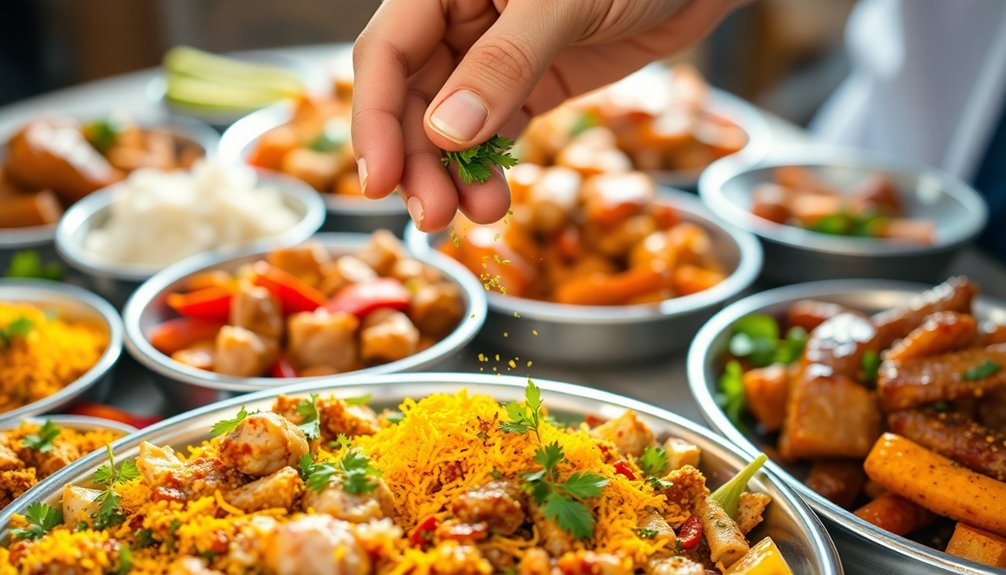
Islamic law has greatly shaped dietary practices across regions by establishing guidelines on what is halal and haram. You’ll find that these laws influence food choices, preparation methods, and social interactions. For example, pork and alcohol are forbidden, affecting communal dining experiences. Halal certification guarantees food meets Islamic standards, enhancing accessibility in restaurants and markets. This cultural diversity enriches your understanding of global dietary customs. If you explore further, you’ll uncover the nuances of these practices.
Key Takeaways
- Islamic law, through Sharia, establishes dietary guidelines, defining what is halal (permissible) and haram (forbidden) across different cultures.
- Regional interpretations of halal vary, influenced by local customs, slaughtering methods, and avoidance of cross-contamination.
- The prohibition of pork and alcohol shapes dietary choices, affecting communal dining and social interactions within Muslim communities.
- Halal certification organizations ensure food products meet Islamic standards, promoting informed choices and increasing accessibility in diverse regions.
- The growing awareness of halal practices enriches global culinary landscapes, fostering respect for Islamic traditions among both Muslim and non-Muslim populations.

Islamic law, known as Sharia, plays a essential role in shaping dietary practices for Muslims around the world. When you consider dietary choices, one of the most significant aspects is the concept of halal, which refers to what is permissible or lawful. These guidelines not only dictate what foods you can consume but also how they should be prepared and handled. Understanding these principles is necessary for adhering to Islamic practices and ensuring your meals align with your faith.
Sharia law profoundly influences Muslim dietary practices, emphasizing the importance of halal in food choices and preparation.
Halal certifications are critical for Muslims seeking to make informed choices about what they eat. These certifications are granted by various organizations after evaluating whether food products meet the standards set by Sharia. When you see a halal certification label, you can be confident that the product complies with Islamic dietary laws. This certification covers a wide range of food items, from meat to processed foods, ensuring that every ingredient meets the necessary criteria. For someone following these dietary restrictions, checking for halal certification becomes second nature, helping you navigate grocery aisles and restaurant menus with ease.
Dietary restrictions in Islam primarily revolve around what is haram, or forbidden. Pork and its by-products rank at the top of this list, as they are considered impure. Alcohol is also prohibited, as it can lead to intoxication and impair judgment. When you engage with these dietary laws, it’s essential to recognize how they influence not only your choices but also the social dynamics around meals. Sharing food with friends and family takes on new meaning when everyone adheres to the same dietary restrictions.
In various regions, cultural interpretations of halal can differ. For instance, in some communities, the method of slaughtering animals is critical, while in others, the focus might be on avoiding cross-contamination with haram substances. Embracing these differences can enrich your understanding of halal practices across cultures.
As you explore different cuisines and dining experiences, you’ll find that many restaurants cater to halal options, highlighting the growing awareness of dietary restrictions among non-Muslims. This trend not only benefits Muslims but also introduces others to the significance of halal food. By being mindful of these practices, you can appreciate the diverse culinary landscape shaped by Islamic law while ensuring your own dietary choices are in line with your beliefs.
Frequently Asked Questions
How Does Islamic Law Influence Vegetarian Dietary Choices?
Islamic law influences your vegetarian dietary choices by emphasizing Halal certification. If you’re vegetarian, you’ll often avoid meat, but you need to verify that any other food items meet Halal standards, which may restrict certain ingredients. For example, some additives or flavorings might not be permissible. You’ll also consider vegetarian restrictions that align with your beliefs, ensuring that your meals respect the principles of cleanliness and ethical sourcing outlined by Islamic teachings.
Are There Differences in Halal Practices Across Cultures?
Yes, there are definitely differences in halal practices across cultures. You’ll notice that cultural variations and regional customs play a significant role in how halal is interpreted and practiced. For instance, some communities may prioritize specific slaughter methods or certain types of food, while others might have unique rituals surrounding halal meals. These differences reflect local traditions and interpretations of Islamic teachings, showcasing the rich diversity within the global Muslim community.
What Role Do Mosques Play in Dietary Education?
Mosques serve as essential venues for dietary education, providing a platform for community connection and knowledge. Through mosque outreach programs, you’ll find engaging dietary seminars that explore halal principles, nutritional advice, and cooking tips. These events not only educate but also enrich your understanding of dietary practices within the faith. By attending, you gain insight into maintaining a healthy lifestyle while adhering to halal guidelines, enhancing both your spiritual and physical well-being.
How Do Modern Trends Affect Traditional Islamic Dietary Laws?
Modern trends markedly impact traditional Islamic dietary laws by encouraging cultural adaptations and embracing technological advancements. You might notice how social media influences food choices, promoting fusion cuisines that blend traditional recipes with contemporary tastes. Additionally, advances in food production and preservation lead to easier access to halal options. While some embrace these changes, others remain committed to preserving traditional practices, creating a dynamic tension between innovation and adherence to established dietary guidelines.
Can Non-Muslims Follow Islamic Dietary Guidelines?
Yes, non-Muslims can follow Islamic dietary guidelines. By embracing these practices, you promote dietary inclusivity and respect for diverse traditions. Engaging in interfaith dialogue can deepen your understanding of these guidelines, allowing for shared meals and experiences that honor different beliefs. Whether you’re motivated by health, ethics, or curiosity, adopting Islamic dietary rules can enrich your culinary journey while fostering connection and respect among various communities.
Conclusion
In summary, Islamic law has profoundly influenced dietary practices across diverse regions, uniting millions through shared beliefs. Did you know that over 1.8 billion Muslims worldwide adhere to halal dietary guidelines? This staggering number highlights the power of faith in shaping not only personal choices but also cultural identities. By understanding these practices, you’re not just learning about food; you’re connecting with a rich tapestry of traditions that bring people together across the globe.