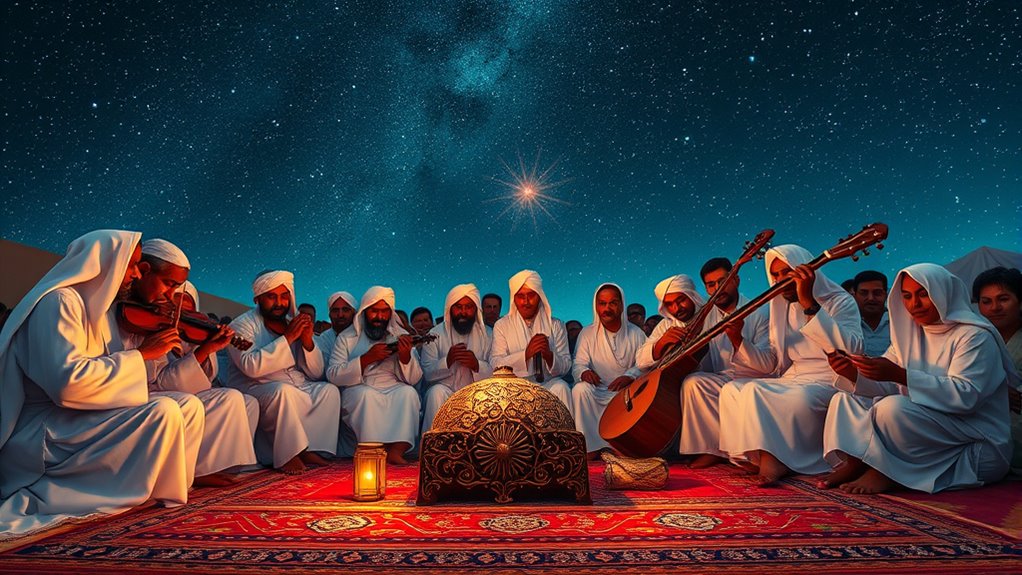

Islamic music, especially nasheeds, offers a vibrant glimpse into the cultural and spiritual identity of Islamic communities. These vocal songs focus on religious themes, conveying deep faith and cultural pride. You’ll notice that they often emphasize lyrical content over instrumental sounds, preserving the purity of the message. As you explore this musical tradition, you’ll discover how it has evolved and adapted to modern issues, connecting generations through shared narratives and experiences.
Key Takeaways
- Islamic music, particularly nasheeds, reflects cultural identity and expresses religious sentiments, celebrating faith and social values through vocal harmony.
- The historical evolution of Islamic music showcases diverse regional influences, creating a rich musical landscape from Spain to South Asia.
- Nasheeds often avoid musical instruments, focusing on lyrical content and vocal harmony to preserve the purity of their religious messages.
- Contemporary nasheeds address modern social issues, serving as a form of resistance and fostering community unity and cultural relevance.
- Engaging with Islamic music enhances understanding of the beliefs and history of Muslim communities, bridging cultural and spiritual connections.
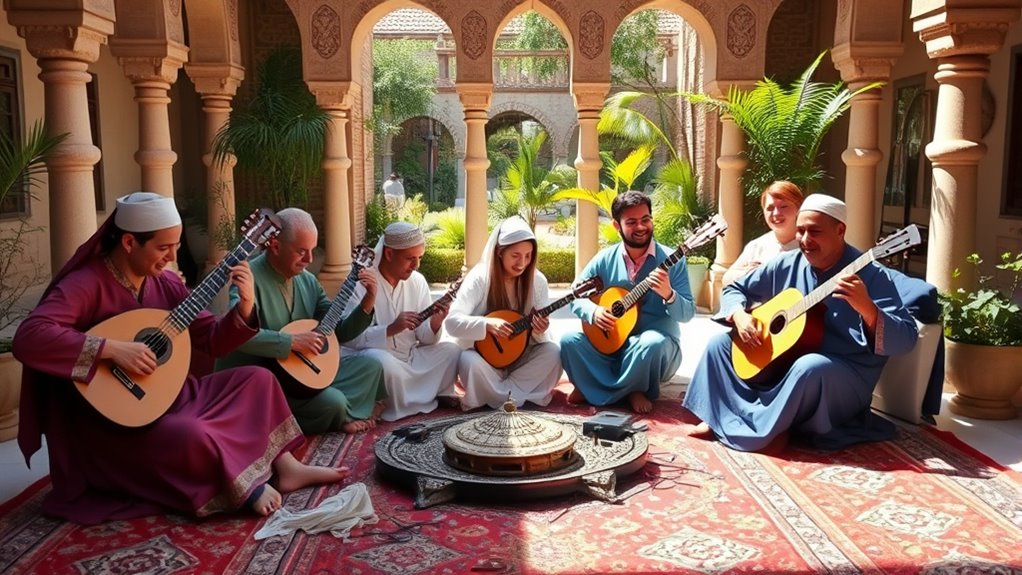
Have you ever wondered how music can reflect the rich tapestry of Islamic culture? The historical evolution of Islamic music is both fascinating and complex, showcasing a blend of influences, styles, and practices that vary from region to region. From the rhythmic beats of traditional instruments to the melodic chants of nasheeds, music has played a pivotal role in expressing religious sentiments, cultural identity, and social values.
As you immerse yourself in this world, you’ll notice that Islamic music isn’t just about entertainment; it holds deep cultural significance. Nasheeds, a form of vocal music often featuring religious themes, provide a perfect example. These songs often celebrate the Prophet Muhammad, convey messages of faith, or express longing for a spiritual connection. Unlike other genres, nasheeds focus on lyrics and vocal harmony, steering clear of musical instruments in many interpretations. This is rooted in Islamic teachings that emphasize the purity of the message over the medium.
Throughout history, Islamic music has evolved considerably. In its earliest form, the music was heavily influenced by the diverse cultures of the vast Islamic empire, which stretched from Spain to South Asia. The incorporation of regional styles led to a rich and varied musical landscape, where Persian, Arab, and African influences intertwined. You’ll find that classical forms like maqam, which define musical modes and scales, emerged as a result of this cultural fusion, shaping the sound and feel of Islamic music.
As you explore further, you might discover how the significance of music in Islamic culture has persisted through centuries, even in the face of challenges. During times of social upheaval, music often served as a form of resistance and expression, allowing individuals to convey their hopes, fears, and aspirations. This resilience is evident in the way nasheeds have adapted to contemporary issues, addressing themes like social justice, community, and unity. Additionally, the appreciation for high-quality home decor can enhance the ambiance where this music is enjoyed, creating a deeper connection to the cultural experience.
In essence, understanding Islamic music and nasheeds gives you insight into the heart of Islamic culture. It’s a reflection of its people, beliefs, and history. By appreciating the intricate layers of sound and meaning, you’re not just listening to music; you’re engaging with a rich cultural legacy that continues to thrive and inspire. So next time you hear a nasheed, take a moment to connect with the deeper narratives woven into each note.

Harmony Singing: Book & CD
Used Book in Good Condition
As an affiliate, we earn on qualifying purchases.
As an affiliate, we earn on qualifying purchases.
Frequently Asked Questions
What Instruments Are Commonly Used in Islamic Music?
In Islamic music, you’ll find a variety of instruments used across different musical traditions. Commonly, you might hear the oud, a stringed instrument, along with the qanun and ney, which add depth to the melodies. Percussion instruments like the darbuka and tabla also play a significant role, driving the rhythm. Each region may incorporate unique instruments, reflecting its cultural heritage and influences. These diverse sounds create a rich tapestry of musical expression in Islamic culture.
Are Nasheeds Only Performed in Arabic?
Nasheeds aren’t just performed in Arabic; they embrace language diversity. You’ll find them in various languages, reflecting cultural adaptations from around the world. This flexibility helps spread the messages of faith and unity across different communities. So, whether you’re listening to a nasheed in Urdu, English, or any other language, you’re tapping into a rich tapestry of spirituality that knows no bounds. In this case, the world truly is your oyster!
How Do Nasheeds Differ From Traditional Music?
Nasheeds differ from traditional music primarily through their focus on religious themes and vocal emphasis. While traditional music often blends various instruments and secular topics, nasheeds typically prioritize vocals, conveying spiritual messages without musical instruments. This distinction highlights the contrast between secular and religious expressions, as nasheeds aim to inspire devotion and reflection. You’ll find that the simplicity in their structure allows for a deeper connection to faith and community.
Can Women Participate in Nasheed Performances?
Yes, women can participate in nasheed performances, though it often depends on cultural and religious interpretations of gender roles. In many communities, women’s voices are celebrated, contributing to the art form’s richness. However, some may impose restrictions based on traditional views. It’s essential to recognize these varying perspectives and support inclusive environments where everyone can express themselves, regardless of gender, while respecting cultural boundaries and beliefs.
What Themes Are Prevalent in Islamic Music?
In Islamic music, you’ll find prevalent themes like spiritual connection and moral messages. The lyrics often emphasize love for God, the importance of community, and the pursuit of righteousness. You’ll notice reflections on faith, guidance, and the significance of prayer, which inspire listeners. These themes resonate deeply and encourage personal reflection, reminding you of the values central to the faith. Engaging with this music can enrich your understanding and appreciation of these ideals.

Catholic Songs for Children: Songs of the Relgious Music Guild Arranged for Piano, Voice and Guitar
As an affiliate, we earn on qualifying purchases.
As an affiliate, we earn on qualifying purchases.
Conclusion
In the vibrant tapestry of Islamic culture, music and nasheeds serve as threads that weave together spirituality and community. They resonate like the gentle hum of a distant call to prayer, inviting you to reflect and connect. Whether it’s the soothing melody of a nasheed or the rhythmic beats of traditional instruments, these forms of expression enrich your understanding of faith and identity. Embrace this cultural journey, and let the melodies guide your heart toward deeper connection and appreciation.

BoiCkyo Islamic Wall Art Decor Metal and Stainless steel- Handmade Arabic Calligraphy Quran Verses for Muslim Home, Living Room & Pray Room Wall Decor, Eid Ramadan Gift for Families,set of 3
✨PREMIUM ISLAMIC WALL ART – Hand-crafted with dual-tone stainless steel and metal (inner gold ring stainless steel, outer…
As an affiliate, we earn on qualifying purchases.
As an affiliate, we earn on qualifying purchases.

Recitation – Audio Quran Offline || Where you can download chapter and listen anytime anywehere
Recitation of the Holy Quran
As an affiliate, we earn on qualifying purchases.
As an affiliate, we earn on qualifying purchases.