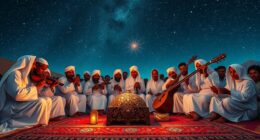
Storytelling and poetry are essential in Islamic tradition, enriching your spiritual journey and connecting diverse communities. Through vivid narratives and Sufi allegories, you discover profound truths and moral lessons that resonate deeply. Poets like Rumi and Hafez express devotion and longing, inspiring personal exploration and reflection. This rich tapestry of oral traditions fosters growth and understanding, leading you to appreciate life’s beauty. Explore further to uncover the timeless impact of these artistic expressions on faith and spirituality.
Key Takeaways
- Storytelling and poetry in Islamic tradition convey deep spiritual truths and moral lessons, enriching cultural connections and community bonds.
- Quranic parables utilize vivid narratives to inspire spiritual growth and reflect universal themes like justice, compassion, and faith.
- Oral traditions across diverse Islamic cultures maintain core messages while incorporating unique local flavors, enhancing moral and spiritual lessons.
- Renowned poets like Rumi and Hafez express devotion and longing for the divine, inspiring personal spiritual exploration through their poetic verses.
- Overall, Islamic storytelling and poetry serve as pathways to understanding, fostering emotional resonance and spiritual growth across centuries of faith and creativity.
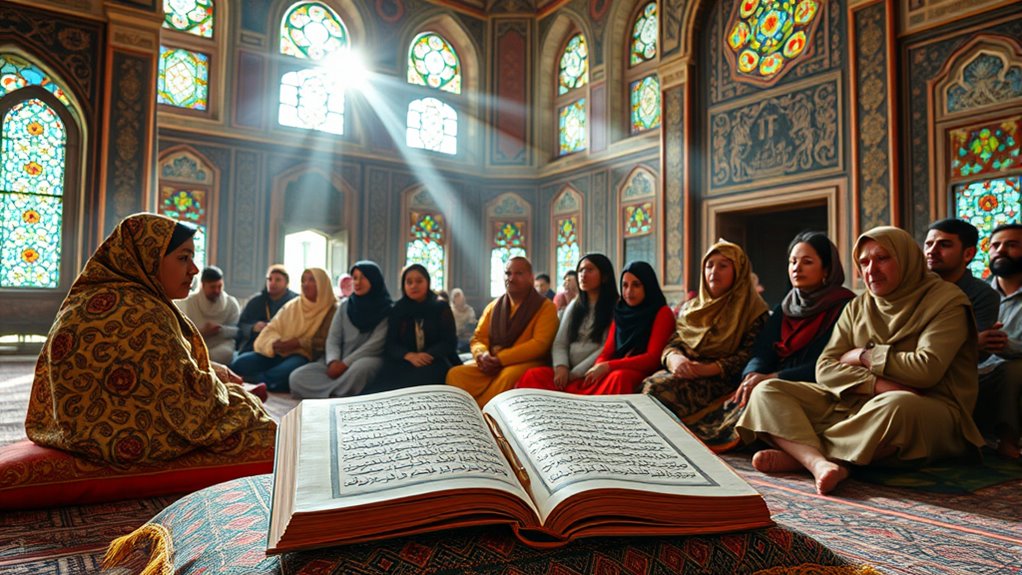
Storytelling and poetry have long been essential components of Islamic tradition, enriching cultures and connecting communities. You might find it fascinating how these forms of expression convey deep spiritual truths and moral lessons. Sufi allegories, for example, weave intricate tales that often illustrate the journey of the soul towards divine love and understanding. These stories captivate listeners, drawing them into a world where the mundane transforms into the mystical. You can see how the beauty of language in Sufi poetry transcends simple words, inviting you to ponder the profound meanings behind each metaphor.
In the sphere of Quranic parables, you’ll discover another layer of storytelling that serves to guide and inspire. The Quran often employs vivid narratives to convey ethical principles and spiritual wisdom. These parables act as mirrors, reflecting your own experiences and struggles while offering insights into the nature of existence. When you read these stories, you might notice how they resonate with universal themes like justice, compassion, and the importance of faith. They remind you that you’re part of a larger narrative, one that connects you to countless others who have sought understanding through these timeless lessons.
As you explore more deeply into Islamic storytelling, you’ll encounter the rich tapestry of oral traditions that have flourished across various cultures. Each community brings its unique flavor, yet the core messages often remain consistent. You’ll find that whether it’s a Sufi master sharing an allegory or a grandmother recounting a Quranic parable, the essence of these stories lies in their ability to touch the human heart. They invite you to reflect on your own life, encouraging growth and self-discovery.
Moreover, poetry serves as a powerful vehicle for expressing devotion and longing. You may feel a connection to the passionate verses of poets like Rumi or Hafez, who blend love for the divine with the beauty of the natural world. Their words inspire you to explore your own spirituality, revealing layers of meaning that might have gone unnoticed. With every stanza, you’re reminded of the sacred connection between the divine and the human experience.
In essence, storytelling and poetry in Islamic tradition are not just artistic expressions; they are pathways to deeper understanding and connection. As you engage with these rich narratives, you embrace a legacy that spans centuries, inviting you to participate in the timeless dance of faith and creativity. Engaging with these narratives can help you cultivate a calm mindset that enhances your appreciation for the intricate beauty of life.
Frequently Asked Questions
How Do Islamic Storytelling and Poetry Compare to Other Cultural Traditions?
Islamic storytelling and poetry often blend spiritual themes with rich cultural influences, setting them apart from other traditions. You’ll notice unique narrative techniques that emphasize oral transmission and communal experiences. While many cultures share common motifs, Islamic narratives often reflect values like faith and morality. This focus on community and spirituality can create a distinct emotional resonance, allowing you to connect with the stories on a deeper level compared to other cultural expressions.
What Are the Key Themes in Islamic Poetry?
In Islamic poetry, you’ll find key themes like mystical symbolism and moral lessons. Mystical symbolism often invites you to explore deeper spiritual truths, encouraging a connection with the divine. Meanwhile, moral lessons guide your understanding of ethics and human behavior, reflecting on virtues such as compassion and humility. These themes intertwine to create a rich tapestry, urging you to contemplate life’s mysteries while adhering to moral values in your everyday actions.
Are There Famous Contemporary Islamic Poets Today?
Yes, there are several famous contemporary Islamic poets today. You’ll find modern expressions of faith and identity in the works of poets like Warsan Shire, whose powerful verses explore themes of migration and womanhood, and Amir Sulaiman, known for his dynamic performances that reflect social issues. Their poetry resonates globally, showcasing the rich tapestry of contemporary Islamic thought and experience, making it relevant and engaging for audiences everywhere.
How Has Islamic Storytelling Evolved Over the Centuries?
Islamic storytelling’s evolved beautifully, weaving Sufi narratives and mystical allegories through the ages. Picture a vibrant tapestry, each thread representing a different era’s voice, from ancient tales to contemporary reflections. You’ll find the wisdom of Rumi dancing with modern poets, as they explore love, spirituality, and the human experience. These stories, rich with emotion and depth, invite you to immerse yourself in a world where the sacred and ordinary merge, revealing profound truths.
What Role Does Oral Tradition Play in Islamic Storytelling?
Oral tradition plays a vital role in Islamic storytelling by ensuring the authenticity and continuity of narratives through oral transmission. You’ll find that storytellers often use preservation techniques, such as memorization and repetition, to keep stories alive across generations. This method not only enriches the storytelling experience but also fosters a deep connection to cultural heritage. By engaging with these stories, you actively participate in a rich legacy that transcends time.
Conclusion
In the end, you might find it ironic that while Islamic tradition often emphasizes the sacred over the secular, storytelling and poetry thrive in the spaces between. These art forms, celebrated for their beauty and depth, reveal profound truths about life, love, and faith. So, as you explore into these narratives, remember: the very tales meant to guide you are often the ones that lead you to question—and perhaps even redefine—what you hold sacred.