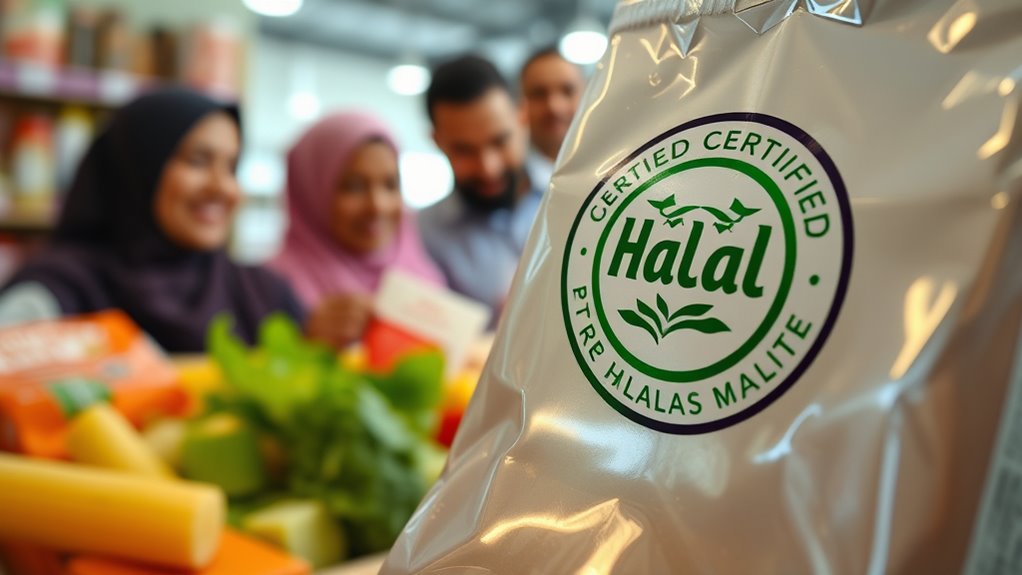

Halal certification boosts your confidence as a consumer by ensuring that food meets strict safety, hygiene, and ethical standards. It guarantees that products have been sourced and processed responsibly, reducing the risk of contamination and supporting animal welfare. This certification also fosters transparency, making it easier for you to make informed choices. By choosing halal-certified products, you’re not just adhering to dietary laws, but also supporting ethical practices. There’s more to discover about how this impacts your food choices.

Get kitchen staples and gadgets delivered free with Prime
- Fast, free delivery on millions of items
- Prime Video, Amazon Music and more included
- Member-only deals all year
Key Takeaways
- Halal certification ensures rigorous safety checks, reducing the risk of contamination and enhancing consumer confidence in food safety.
- It promotes ethical sourcing and animal welfare, aligning with consumer values and reinforcing trust in product integrity.
- Transparency in ingredient sourcing and processing fosters informed purchasing decisions, allowing consumers to choose responsibly.
- The certification appeals to broader ethical standards, emphasizing quality and responsible production beyond religious adherence.
- By guiding consumers towards safer, ethically sourced foods, Halal certification encourages a healthier food system and responsible consumption.

As consumers increasingly seek transparency in food production, the importance of halal certification has grown considerably. You might be wondering what this means for you as a shopper. Halal certification not only assures that food meets specific dietary laws but also emphasizes ethical sourcing and food safety. When you choose halal-certified products, you’re not just following religious guidelines; you’re also supporting a more responsible food system.
Halal certification ensures transparency, ethical sourcing, and food safety, supporting a responsible food system for all consumers.
Halal certification offers you peace of mind when it comes to food safety. You can trust that the food you’re consuming has undergone rigorous checks, from the sourcing of ingredients to the handling and processing stages. This certification process ensures that all products meet high hygiene standards, reducing the risk of contamination. By opting for halal-certified items, you’re actively contributing to a safer food environment, which is increasingly important in today’s world where foodborne illnesses are a significant concern.
You also play a role in ethical sourcing when you choose halal-certified products. Many halal certifications require that animals are treated humanely and that their welfare is prioritized throughout the supply chain. This means you’re not just buying food; you’re supporting practices that respect animal rights and promote sustainable farming. In an age where consumers are more conscious of the origins of their food, halal certification provides a transparent route to ethical consumption. You can feel good about the choices you make at the grocery store, knowing they align with your values.
Moreover, halal certification bridges the gap between different dietary preferences and ethical considerations. It’s not just a label for those following Islamic dietary laws; it’s a commitment to quality and ethical considerations that can appeal to a broad audience. Whether you’re a practicing Muslim or simply someone who values transparency and responsibility in food production, halal certification speaks to your desire for ethical consumption.
As you navigate the aisles of your local grocery store or explore online options, remember that halal certification is more than just a marker. It’s a confirmation of food safety, ethical sourcing, and a commitment to quality. By choosing halal-certified products, you’re making informed decisions that contribute to a healthier and more ethical food system. Additionally, understanding the importance of consumer awareness in food certification can further enhance your shopping experience. So next time you shop, keep an eye out for that certification—it’s a small step towards a more responsible and trustworthy food landscape.
As an affiliate, we earn on qualifying purchases.
Frequently Asked Questions
What Organizations Are Responsible for Halal Certification?
You’ll find that various organizations are responsible for halal certification, including regulatory agencies and independent certifying bodies. These organizations establish certification standards to guarantee products meet halal requirements. They evaluate and verify the processes, ingredients, and practices involved in production. Some well-known certifying bodies include the Islamic Food and Nutrition Council of America and the Halal Certification Authority. By relying on these organizations, you can trust the authenticity of halal products.
How Long Does the Halal Certification Process Take?
The halal certification process typically takes anywhere from a few weeks to several months, depending on various factors. Think of it like preparing for an epic journey; the certification timeline can vary based on the organization’s requirements and the complexity of your operation. You’ll need to account for the processing duration, which often includes inspections and documentation. So, stay patient and prepared, as thoroughness guarantees your product meets halal standards!
Are There Different Types of Halal Certifications?
Yes, there are different types of halal certifications. You’ll find various certification standards depending on the organization, which may focus on specific aspects like processing methods or ingredients. The certification scope can also vary—some certifications cover only certain products, while others might apply to entire facilities. It’s essential to verify the details to ensure the certification aligns with your dietary needs and beliefs. Always look for recognized certifying bodies to ensure authenticity.
Can Non-Muslims Benefit From Halal-Certified Products?
Sure, why not! Non-Muslims can totally benefit from halal-certified products. It’s like a VIP pass to dietary inclusivity, and who doesn’t love that? These products often meet higher safety standards and promote interfaith understanding by bridging cultural gaps. So, go ahead, indulge in that tasty, certified snack. You might just find yourself in a culinary adventure that’s not only delicious but also fosters harmony among diverse foodies. Enjoy!
How Often Do Companies Need to Renew Their Halal Certification?
Companies typically need to renew their halal certification annually, although some certifying bodies may offer longer validity periods, like two or three years. You should check with your certifying authority to confirm their specific renewal frequency and requirements. Staying up-to-date with certification validity is vital, as it ensures your products continue to meet halal standards and maintain consumer trust, especially in a diverse market where many customers value halal options.
Conclusion
Just as a lighthouse guides ships safely to shore, halal certification illuminates the path for consumers steering their choices. When you see that trusted seal, it’s like a reassuring hand on your shoulder, letting you know your values align with what’s on your plate. This certification isn’t just a label; it’s a promise—a bridge of trust between you and the food you enjoy. Embracing halal means embracing confidence in every bite you take.
Columbus Day / Indigenous Peoples' Day Picks
long weekend sales
As an affiliate, we earn on qualifying purchases.