
As a new Muslim, living halal means making mindful choices in all areas of life—diet, behavior, personal care, and daily routines—guided by Islamic principles. Focus on eating halal-certified foods, avoiding haram ingredients, and practicing good character. Incorporate regular prayers, read Quran, and seek support from your community. Remember, living halal is a journey of small steps. Keep exploring to learn more about integrating faith into your everyday life with confidence.

Get kitchen staples and gadgets delivered free — and shop member deals
- Fast, free delivery on millions of items
- Access to Prime Big Deal Days deals on October 6–7
- Prime Video, Amazon Music and more included
Key Takeaways
- Understand that halal living encompasses ethical behavior, lifestyle choices, and food, reflecting devotion and responsibility in accordance with Islamic principles.
- Verify food sources and labels to ensure products are halal-certified, avoiding haram ingredients like alcohol and pork.
- Incorporate daily acts of worship, such as prayer and Quran reading, to strengthen your connection with Allah and integrate faith into routine.
- Practice modest dress and use halal-certified personal care products, aligning appearance and hygiene with Islamic guidelines.
- Cultivate good character traits like honesty, kindness, and patience, fostering respectful relationships and community engagement.
Are you curious about how to live in a way that aligns with your faith and values? Starting your journey into halal living might feel overwhelming at first, but with a clear understanding and small steps, it becomes manageable and fulfilling. The key is to integrate Islamic principles into your daily routines, making conscious choices that reflect your beliefs. Begin by learning what halal really means—it’s not just about food but about actions, intentions, and lifestyle. Halal encompasses everything that is permitted according to Islamic law, guiding you to live ethically and responsibly.
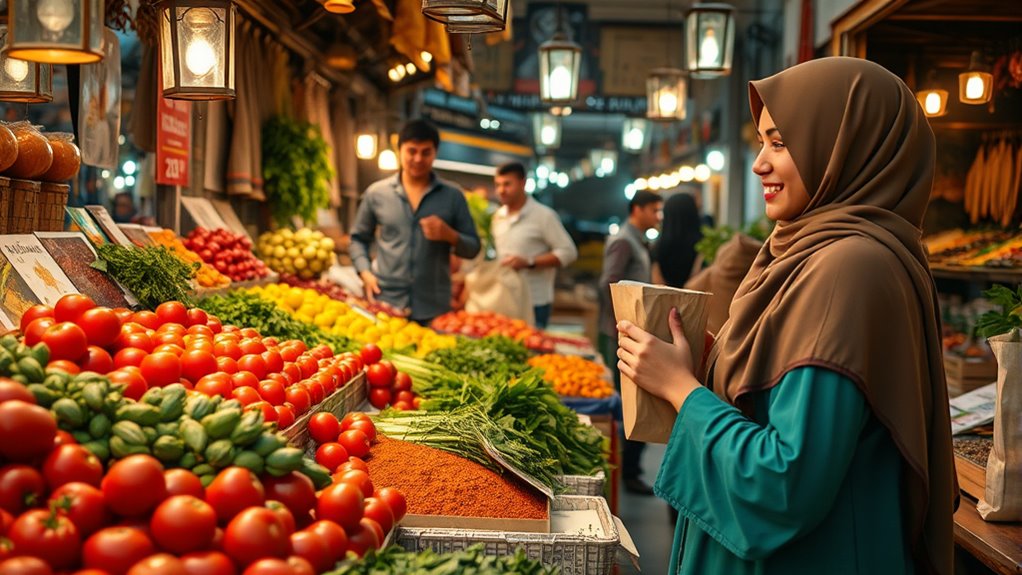
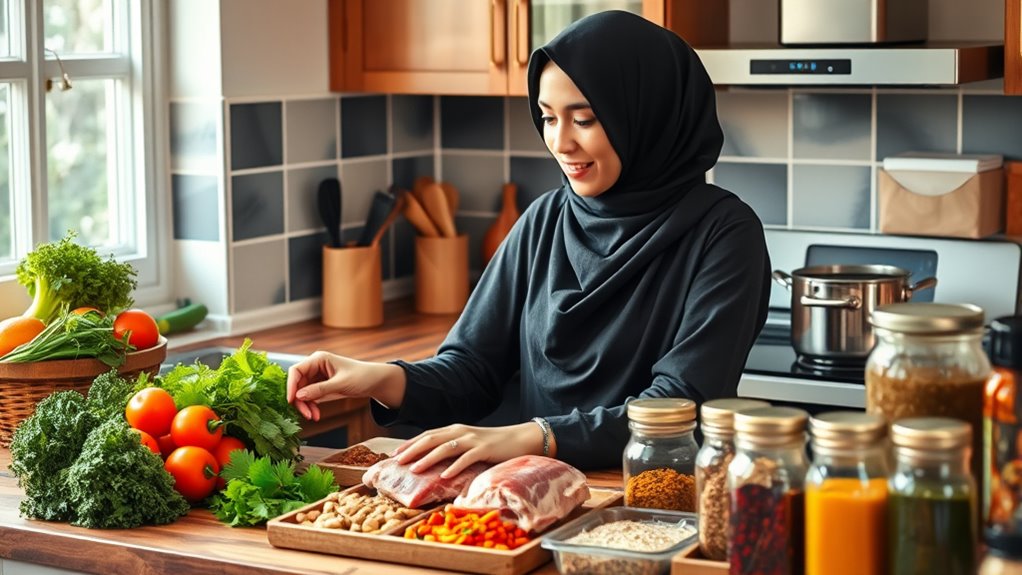
When it comes to food, you’ll want to ensure that what you consume is halal-certified. This means checking labels carefully and purchasing from trusted sources that adhere to Islamic dietary guidelines. Be mindful of ingredients and avoid anything containing haram (forbidden) components like alcohol or pork. Over time, you might find it helpful to prepare your own meals, giving you control over what goes into your food. This practice not only ensures compliance but also becomes a mindful act of worship and gratitude. As you navigate grocery shopping, seek out halal butchers and stores, and don’t hesitate to ask questions about the sourcing of products. Additionally, verifying the halal status of processed foods like sauces, snacks, and beverages is essential to maintain dietary compliance.
Beyond food, halal living extends to your interactions and behaviors. Strive to uphold honesty, kindness, and patience in your relationships, reflecting core Islamic values. Avoid behaviors that are discouraged in Islam, such as gossip, lying, or any form of dishonesty. Developing good character and practicing self-control become part of your spiritual growth. When engaging with others, remember to treat everyone with respect, regardless of their background. This mindset fosters a community rooted in compassion and understanding.
Your wardrobe and personal care choices also matter. Opt for modest clothing that aligns with Islamic principles, which emphasize humility and respect. This doesn’t mean sacrificing style but choosing attire that maintains dignity and comfort. Use halal-certified products for your personal grooming when possible, and be mindful of avoiding substances or ingredients that conflict with your faith.
Finally, incorporate your faith into your daily routines through prayer, reflection, and seeking knowledge. Establishing a regular prayer schedule helps you stay connected to Allah and reinforces your commitment. Reading Quran and Islamic literature can deepen your understanding and strengthen your resolve to live halal. Remember that halal certification is a crucial aspect of ensuring food compliance and peace of mind. As you progress, remember that living in accordance with your faith is a journey, not a destination. Celebrate small victories along the way and seek support from your community and knowledgeable sources whenever needed. With patience and consistency, halal living becomes a natural and enriching part of your everyday life.
halal-certified personal care products
As an affiliate, we earn on qualifying purchases.
As an affiliate, we earn on qualifying purchases.
Frequently Asked Questions
How Do I Find Halal-Certified Restaurants in My Area?
You can find halal-certified restaurants in your area by using apps like Zabihah or HalalTrip, which show nearby options with reviews and certification details. Check online directories, Google Maps, or social media groups dedicated to Muslim communities. Don’t hesitate to ask locals or staff at mosques for recommendations. Always verify certification labels or ask restaurant staff to guarantee the food meets halal standards before dining.
What Are the Basic Do’s and Don’ts of Halal Shopping?
Did you know that over 60% of Muslim shoppers prioritize halal certification when choosing products? When halal shopping, always check for reliable certification labels and avoid products with questionable ingredients like alcohol or pork. Don’t buy meat that isn’t clearly labeled halal, and avoid cross-contamination by separating halal items from non-halal. Do ask store staff if you’re unsure about any product, ensuring your purchases align with your faith.
How Can I Ensure My Skincare Products Are Halal?
You can verify your skincare products are halal by checking the ingredient list for any haram substances like alcohol or animal-derived ingredients. Look for products labeled “halal” or “certified halal” by reputable organizations. Research brands that prioritize halal-certified ingredients and avoid products with ambiguous labels. When in doubt, contact the manufacturer to confirm the ingredients and certification status. This way, you maintain your faith while caring for your skin.
Are There Specific Halal Travel Tips for New Muslims?
When traveling, you can find halal food options or prepare your own meals to stay true to your faith. Carry a prayer mat and know the Qibla direction to keep up with daily prayers easily. Use travel apps designed for Muslims to locate mosques and halal restaurants. Pack modest clothing, and be respectful of local customs. Planning ahead helps you enjoy your trip without compromising your beliefs.
How Do I Approach Non-Muslim Friends About Halal Concerns?
When approaching non-Muslim friends about halal concerns, be honest and respectful. Explain why certain foods or practices matter to you and share your needs clearly. You can say, “I appreciate your understanding, but I need to avoid pork or alcohol for religious reasons.” Most friends will be willing to accommodate once they understand. Keep the conversation friendly and open, fostering mutual respect and awareness.
Conclusion
Embracing halal living is like planting a seed that grows into a beautiful, thriving garden. Each mindful choice you make nourishes your soul and brightens your path. Remember, this journey isn’t just about rules—it’s about creating a life rooted in faith, purity, and peace. So, keep tending to your spiritual garden with love and patience. Before you know it, you’ll watch your new way of life blossom into a vibrant, fulfilling horizon.
NFL season / tailgating Picks
team gear
As an affiliate, we earn on qualifying purchases.