

When engaging in business and social settings with Muslims, you should adhere to a few key etiquettes. Dress modestly, avoiding casual or revealing clothing. Be mindful of greetings; handshake protocols vary, especially with women. Respect dietary restrictions by offering halal options. Communication should be direct yet polite, fostering trust through active listening. Finally, keep Islamic holidays like Ramadan in mind to show your awareness and respect for their traditions. Discover more insights to enhance your interactions.
Key Takeaways
- Dress modestly and professionally, adhering to local cultural norms to make a positive impression in business and social settings.
- Be sensitive with greetings; wait for women to initiate handshakes and maintain respectful personal space.
- Respect dietary restrictions by offering halal options and inquiring about preferences before hosting meals.
- Communicate directly but politely, balancing honesty with respect to avoid confrontation and build trust.
- Recognize Islamic holidays and practices, such as Ramadan, when scheduling meetings to show cultural awareness and respect.
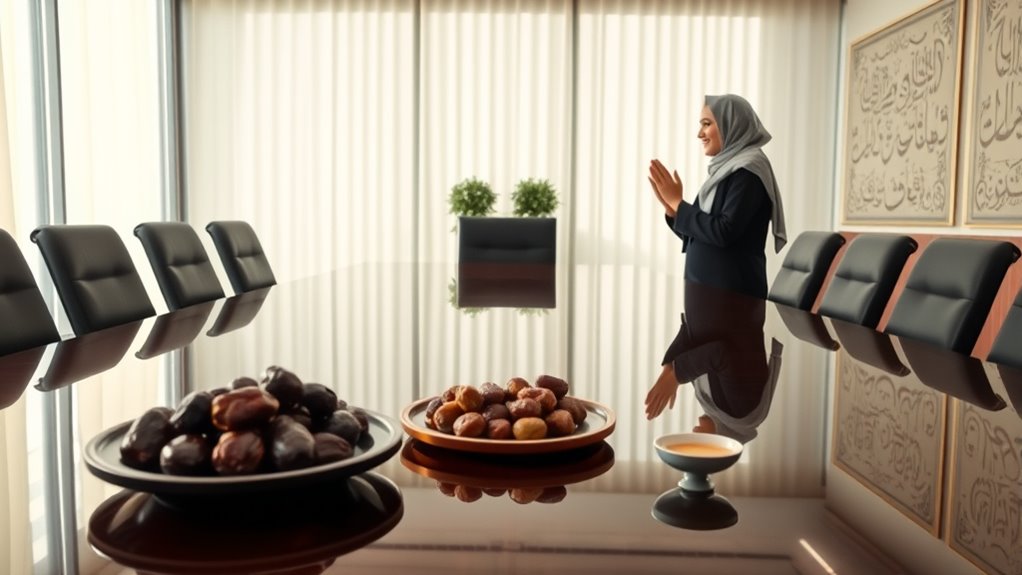
When you’re steering business and social settings, understanding Islamic etiquette can considerably enhance your interactions. This knowledge is especially fundamental in diverse environments where cultural sensitivity is paramount. Whether you’re meeting a client, participating in a conference, or attending a social gathering, being aware of Islamic customs can help you navigate these situations more effectively.
One key aspect of Islamic etiquette is dress code compliance. In many Muslim-majority countries, modesty in clothing is highly valued. For men, this often means wearing long trousers and shirts with sleeves, while women may be expected to wear long skirts or dresses and cover their arms. In professional settings, it’s best to opt for business attire that respects these cultural norms. Avoiding overly casual or revealing clothing can make a positive impression and show that you respect local customs.
Modesty in dress is crucial in Islamic culture; choose professional attire that aligns with local customs to foster respect and positive interactions.
In addition to dress, greetings play a significant role in establishing rapport. A simple handshake can suffice, but it’s imperative to be mindful of personal space, especially with women. Some may prefer not to shake hands with the opposite sex, so it’s often best to wait for them to initiate contact. A polite smile and a warm greeting can go a long way, demonstrating your cultural awareness and making others feel comfortable.
Respecting dietary restrictions is another important element of Islamic etiquette. Most Muslims adhere to halal dietary laws, which means avoiding pork and alcohol. If you’re hosting a meal, it’s a good idea to inquire about dietary preferences in advance. Offering halal options shows your commitment to inclusivity, further enhancing your relationships.
Communication styles can also differ in Islamic cultures. Directness is often appreciated, but it’s indispensable to balance honesty with politeness. Avoid confrontational language and aim for constructive dialogue. Being attentive and listening actively can help you build trust and show that you value others’ perspectives.
Finally, understanding the significance of Islamic holidays and practices can deepen your cultural sensitivity. For instance, during Ramadan, many Muslims fast from dawn until sunset. Being mindful of this can help you schedule meetings and social events at appropriate times, showing respect for their traditions. Additionally, recognizing cultural sensitivities can foster stronger connections and mutual respect in business dealings.
Top picks for "islamic etiquette busines"
Open Amazon search results for this keyword.
As an affiliate, we earn on qualifying purchases.
Frequently Asked Questions
How Should I Address Someone in a Business Meeting?
In a business meeting, you should address someone with their title and last name until they invite you to use their first name. This shows cultural nuances and demonstrates respectful communication. Pay attention to how others interact, as it can provide clues on what’s appropriate. Always maintain eye contact and a polite tone, as these small gestures can enhance your professional relationships and convey your respect for the individual and their position.
Is It Appropriate to Discuss Religion in Business?
It isn’t generally appropriate to discuss religion in business, as it can lead to misunderstandings and conflict. However, if you’re in a diverse setting, interfaith dialogue can foster understanding and respect. Just be mindful of religious sensitivities; not everyone will be comfortable sharing their beliefs. Stick to neutral topics to maintain professionalism and keep the focus on business objectives. If religion comes up naturally, approach it with care and respect.
What Are Common Islamic Greetings?
Common Islamic greetings include “As-Salaam-Alaikum,” meaning “Peace be upon you,” and its response, “Wa-Alaikum-Salaam,” or “And upon you be peace.” These cultural customs show respect and goodwill. You might also hear “Ramadan Mubarak” during the holy month, which translates to “Blessed Ramadan.” Using these polite expressions can strengthen your interactions and create a sense of community, making your conversations more meaningful and culturally aware. Embracing these greetings can enhance your relationships.
How Do I Handle Business Meals With Muslim Colleagues?
When handling business meals with Muslim colleagues, focus on Halal dining options. Always ask if they have any dietary restrictions beforehand. During the meal, practice good table manners: wait for everyone to be served before starting, and use your right hand for eating. If you’re unsure about anything, don’t hesitate to ask questions. Respect their customs, and you’ll create a comfortable atmosphere that fosters collaboration and strengthens your professional relationships.
Are There Specific Dress Codes for Business Meetings?
When it comes to business meetings, think of dress codes as the silent handshake that sets the tone. You’ll want to adhere to Islamic dress guidelines, which emphasize modest attire in business. For men, this typically means wearing long trousers and long-sleeved shirts, while women should opt for long dresses or skirts and long-sleeved tops. Remember, dressing appropriately not only reflects professionalism but also shows respect for cultural values in the workplace.
Conclusion
In the tapestry of life, weaving Islamic etiquette into your business and social interactions creates a vibrant and respectful fabric that enhances connections. By embracing these principles, you not only honor your faith but also foster trust and goodwill in your relationships. Remember, just as a garden flourishes with care, your professional and social endeavors will thrive when you practice kindness, honesty, and respect. Let these values guide you, and watch your network flourish.