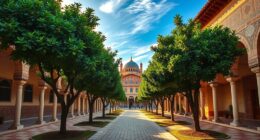
Modern mosques beautifully combine tradition and technology, creating inviting spaces for worship and community. These structures honor ancient practices while incorporating advanced features like energy efficiency and digital enhancements. You’ll find multipurpose areas designed to foster social interaction and cultural events, promoting inclusivity. This blend of heritage and innovation not only respects historical roots but also embraces modern life. Stick around to explore more about how mosques are evolving to meet today’s needs.
Key Takeaways
- Modern mosques integrate traditional architectural styles with contemporary designs, preserving cultural heritage while embracing innovation.
- Advanced technology, such as sound systems and live streaming, enhances worship experiences and ensures accessibility for all congregants.
- Sustainable design practices, like solar panels and energy-efficient materials, reflect Islamic teachings on environmental responsibility.
- Multipurpose spaces within mosques foster community engagement by hosting educational programs, cultural events, and interfaith dialogues.
- The blend of tradition and technology in modern mosques creates inviting environments that encourage social interaction and a sense of belonging.
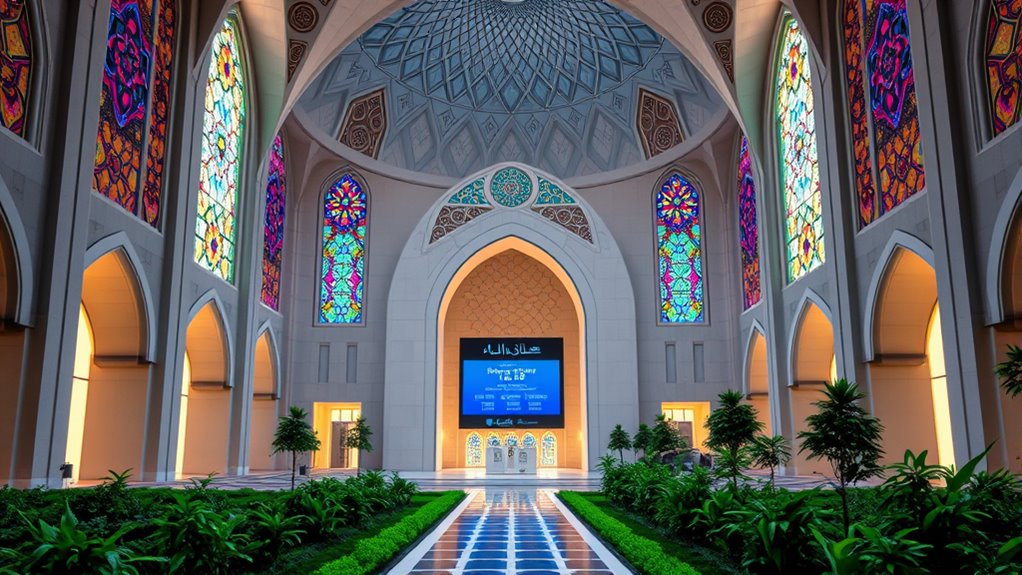
Have you ever wondered how modern mosques blend ancient traditions with cutting-edge technology? It’s fascinating to see how these sacred spaces evolve while still honoring their rich heritage. Architects and designers are now embracing architectural innovation, creating structures that not only serve as places of worship but also as community hubs that foster engagement and connection among diverse populations.
Modern mosques beautifully merge ancient traditions with innovative design, serving as vibrant community hubs for diverse populations.
You might be surprised to learn that many modern mosques incorporate features that enhance their functionality and accessibility. For instance, energy-efficient materials and sustainable designs are becoming standard practice. This commitment to environmental responsibility reflects a deeper understanding of stewardship, aligning with Islamic teachings. You’ll find solar panels integrated into the roofs, which not only reduce energy costs but also demonstrate a commitment to preserving the Earth for future generations. This innovative approach to building reflects a harmony between faith and modernity, much like the use of eco-friendly options in gardening, which promotes sustainable practices.
When you step into a modern mosque, you can often feel a palpable sense of community. The architects aim to create open, inviting spaces that encourage social interaction. You might notice that many mosques now include multipurpose areas designed for various activities. These zones host educational programs, cultural events, and interfaith dialogues, fostering community engagement that goes beyond the traditional scope of worship. It’s a beautiful way to bring people together, breaking down barriers and creating a sense of belonging.
Additionally, technology plays a significant role in enhancing the spiritual experience in modern mosques. Many now feature advanced sound systems that ensure everyone can hear the imam’s sermon clearly, regardless of where they sit. Some mosques even offer live streaming of prayers, allowing those who can’t physically attend to participate from afar. This use of technology guarantees that the mosque’s reach extends beyond its walls, creating a broader community of worshippers.
As you explore these modern spaces, you’ll see that they honor their historical roots while embracing the conveniences and necessities of contemporary life. The marriage of tradition and technology isn’t merely an aesthetic choice; it’s a conscious effort to engage the community and enhance the worship experience. So, the next time you visit a mosque, take a moment to appreciate how it represents both the past and the future, seamlessly integrating architectural innovation with the timeless principles of faith and community.
Frequently Asked Questions
How Are Mosques Funded for Technological Enhancements?
Mosques are often funded for technological enhancements through a mix of donor funding and government grants. You’ll find that generous community members contribute substantially to support these initiatives. Local governments may also provide grants aimed at cultural and technological improvements. By tapping into these resources, mosques can modernize their facilities and better serve their communities, ensuring they maintain relevance while preserving their core values.
What Role Do Community Members Play in Mosque Design?
Community members play a vital role in mosque design through active participation. You’ll find that their input shapes both the architectural style and functionality, reflecting cultural influences that resonate with everyone. By engaging in discussions and providing feedback, you help guarantee the mosque meets the community’s needs. This collaborative approach fosters a sense of ownership and belonging, making the space not just a place of worship, but a true reflection of your shared identity.
Are There Specific Building Codes for Modern Mosques?
Yes, there are specific building codes for modern mosques. Think of these codes as a bridge, connecting architectural aesthetics with historical preservation. They guarantee that while you embrace contemporary designs, you also honor the rich tapestry of tradition. You’ll find requirements regarding structural integrity, safety, and accessibility, all tailored to create spaces that resonate with the community. So, when designing, you’re not just building a mosque; you’re weaving together history and modernity.
How Do Modern Mosques Address Environmental Sustainability?
Modern mosques address environmental sustainability by using eco-friendly materials and integrating renewable energy sources. You’ll find structures made from sustainable resources, like bamboo and recycled steel, which reduce their carbon footprint. Solar panels often power lighting and heating, while rainwater harvesting systems help manage water usage. These practices not only minimize environmental impact but also create a harmonious space that reflects both contemporary values and spiritual commitment to caring for the Earth.
What Challenges Do Architects Face When Blending Tradition and Technology?
Architects face significant challenges when blending tradition and technology, especially since 60% of people prioritize cultural preservation in modern designs. You’ve gotta balance innovative materials with historical aesthetics, ensuring that new structures respect local heritage while incorporating cutting-edge features. This often requires steering community expectations and regulatory constraints, making it tough to achieve a harmonious fusion. Ultimately, you’re tasked with creating spaces that honor the past while embracing the future.
Conclusion
In blending tradition with technology, modern mosques create spaces that resonate with both history and contemporary life. You can see how smart lighting and digital displays enhance the spiritual experience while preserving architectural heritage. Just as ancient architects used their skills to build awe-inspiring structures, today’s designers harness cutting-edge tech to engage worshippers in new ways. So, whether you’re attending a service or exploring the space, you’ll find that innovation and tradition truly can coexist harmoniously.