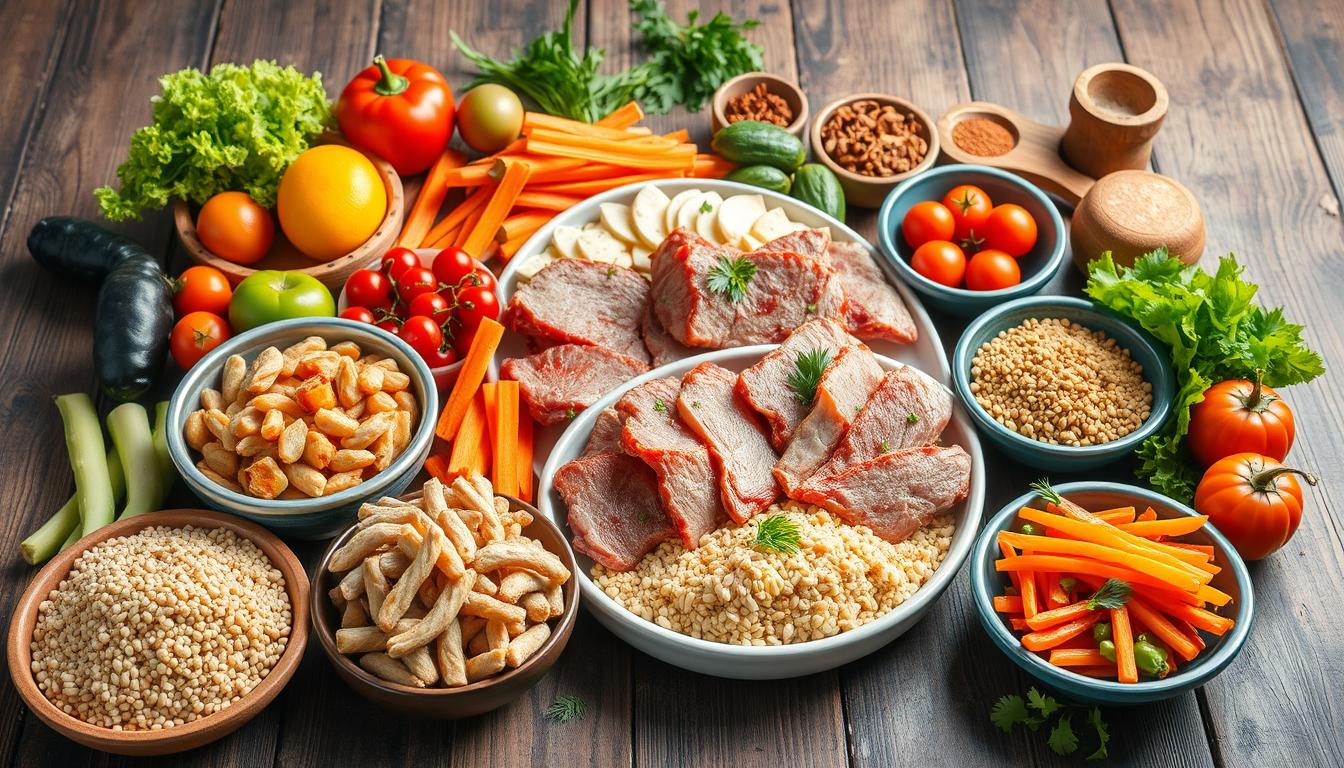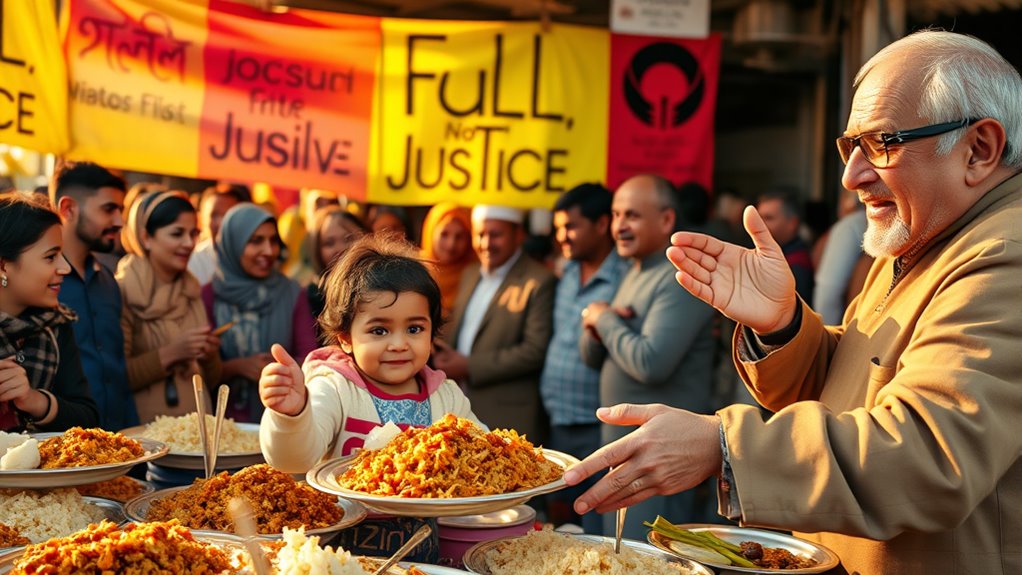

Halal food goes beyond dietary rules; it embodies ethical sourcing, animal rights, and social justice. Choosing halal supports humane treatment of animals and ethical business practices, while promoting inclusivity and cultural understanding. It challenges stereotypes about Muslims and encourages conversations about justice and sustainability. By opting for halal, you contribute to a movement that values compassion and responsibility in the food industry. Want to discover more about how your food choices can create positive change?
Key Takeaways
- Halal food choices advocate for ethical sourcing and humane treatment of animals, aligning with social justice principles.
- The halal food movement encourages transparency and accountability in food production, promoting fair labor practices and environmental sustainability.
- By choosing halal, consumers support businesses that prioritize ethical standards over exploitation and unethical practices.
- Halal dining experiences foster cultural exchange, challenge stereotypes, and promote inclusivity among diverse communities.
- The commitment to halal food reflects a broader stance for justice, compassion, and social change within the food industry.
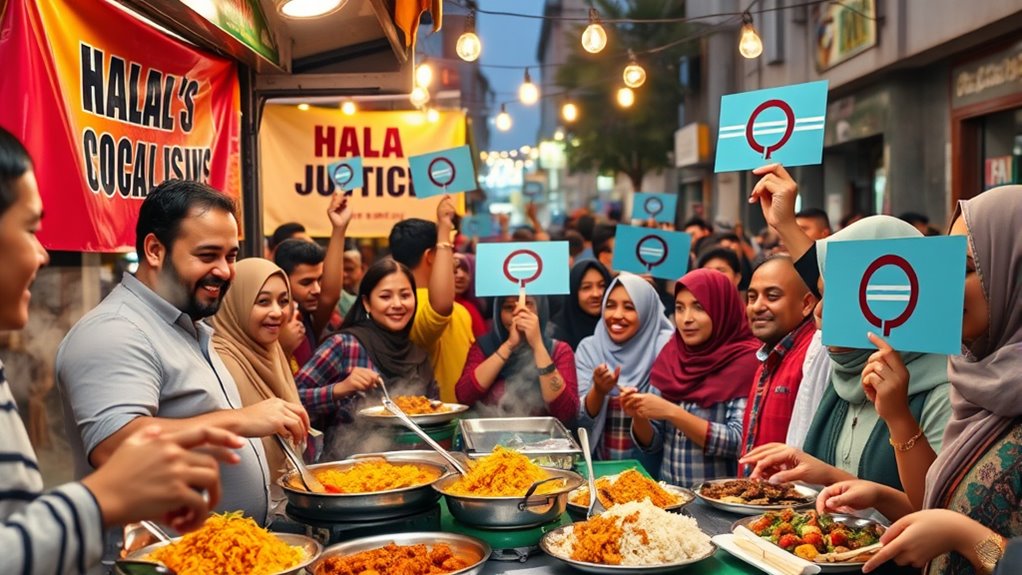
How does halal food intersect with social justice movements in today’s world? You might not initially think of food as a vehicle for social change, but halal food plays a significant role in advocating for justice, particularly regarding Muslim identity and ethical sourcing. As awareness grows around the importance of food choices, halal food becomes a vital topic within social justice discussions.
For many, halal food isn’t just about dietary restrictions; it’s deeply tied to Muslim identity. When you choose halal options, you’re often embracing a way of life that honors religious guidelines and moral principles. This choice reflects your values, including compassion for animals and a commitment to ethical sourcing. The halal food movement emphasizes not just what you eat, but how it’s produced. It’s about demanding transparency from food providers and ensuring that the animals are treated humanely, which aligns with broader social justice issues concerning animal rights and environmental sustainability.
In recent years, social justice movements have highlighted the importance of ethical sourcing across various sectors. As you explore halal food, you may notice that many producers are beginning to prioritize sustainable practices. This aligns with a growing demand for accountability and integrity in food production. You’re not just a consumer; you’re part of a larger movement advocating for fair treatment of workers and environmentally responsible farming methods. By choosing halal, you’re supporting businesses that adhere to ethical sourcing standards and rejecting those that exploit labor or disregard environmental concerns.
Additionally, the halal food movement challenges stereotypes and misconceptions about Muslims. When you share your experiences with halal dining, you promote understanding and acceptance, breaking down barriers that often lead to discrimination. This dialogue fosters a sense of community and solidarity, encouraging people from various backgrounds to engage in conversations about food, culture, and justice.
As halal food gains traction in mainstream culture, it’s essential to recognize its role in social justice movements. By choosing halal options, you’re not only honoring your identity but also standing up for ethical practices in the food industry. You’re supporting a vision of food that encompasses compassion, sustainability, and justice for all. In this way, halal food transcends the plate, becoming a powerful statement of your commitment to a more equitable world. So, the next time you enjoy a halal meal, remember that your choice contributes to a larger movement for social justice, making your dining experience meaningful and impactful.
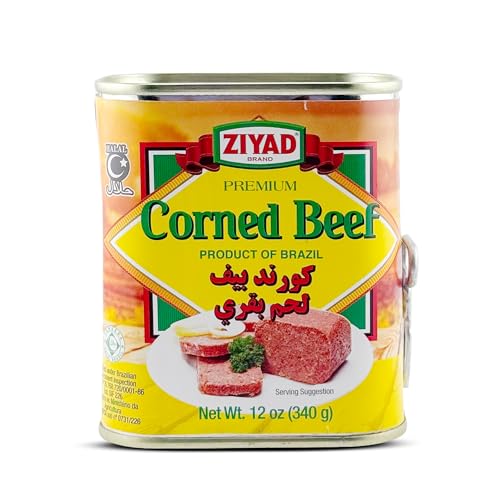
Ziyad Halal Meat, Corned Beef, 12 Ounce
Net weight: 12oz
As an affiliate, we earn on qualifying purchases.
As an affiliate, we earn on qualifying purchases.
Frequently Asked Questions
What Is the Definition of Halal Food?
Halal food refers to items that are permissible for Muslims to eat under Islamic law. It emphasizes ethical consumption, ensuring that animals are treated humanely and processed according to specific guidelines. The cultural significance of halal food extends beyond dietary restrictions; it fosters community bonds and reflects values of compassion. When you choose halal, you’re not just making a dietary choice; you’re embracing a lifestyle that aligns with ethical and cultural principles.
How Is Halal Certification Obtained?
You’d think getting halal certification is a walk in the park, right? Well, it involves some serious certification procedures. First, you need to make certain your food meets specific regulatory standards. Then, you’ll have to apply to a certifying body that inspects your operation, verifying compliance with halal practices. After meeting all their requirements, you’ll finally receive your certification—if you’ve played by the rules, of course. So, buckle up—it’s a process!
Are There Vegetarian Halal Options Available?
Yes, there are vegetarian halal options available. Many restaurants and grocery stores offer dishes that meet halal standards without containing meat. When you choose vegetarian options, you’re also supporting ethical considerations, as these foods often align with sustainable practices. Be sure to look for halal certification labels and ask about ingredients, as some processed items may contain animal-derived products. Enjoy exploring the variety of flavorful vegetarian halal dishes out there!
Can Non-Muslims Consume Halal Food?
Yes, non-Muslims can definitely consume halal food. It’s a great option for interfaith dining, allowing everyone to enjoy meals together while respecting dietary choices. Halal food certifications guarantee that the food adheres to specific standards, making it safe and suitable for all. So, whether you’re dining with friends or exploring new cuisines, feel free to indulge in halal dishes. You might discover some delicious flavors that you really enjoy!
What Are the Health Benefits of Halal Food?
Halal food offers several health benefits that you might appreciate. It often emphasizes nutritional advantages, focusing on fresh, high-quality ingredients. When you choose halal, you’re likely opting for meat sourced from animals treated ethically, which can impact the overall quality of the food. Additionally, the halal preparation methods can reduce harmful bacteria, making your meals safer. By choosing halal, you not only prioritize your health but also consider the ethical implications of your food choices.

Saffron Road Tikka Masala Simmer Sauce | Globally Inspired Simmer Sauce | Gluten-free, Vegetarian, Non-GMO, and Certified Halal and Kosher | 7.0oz Pouch | Pack of 4
Quick & Flavorful Meals: Saffron Road’s Tikka Masala Simmer Sauce brings rich, international flavor in just 15 minutes….
As an affiliate, we earn on qualifying purchases.
As an affiliate, we earn on qualifying purchases.
Conclusion
In the tapestry of social justice movements, halal food weaves a vibrant thread that connects communities, cultures, and causes. By embracing halal practices, you’re not just nourishing bodies; you’re also nurturing values of equality and respect. Each meal shared becomes a powerful act of solidarity, breaking down barriers and fostering understanding. So, as you savor that delicious dish, remember: you’re part of a larger movement, helping to create a feast of justice that everyone can enjoy.
halal animal humane treatment products
As an affiliate, we earn on qualifying purchases.
As an affiliate, we earn on qualifying purchases.

Vegetable Glycerin – 1 Quart – VG from RSPO Sustainable Palm – Non GMO – Kosher – USP – Food Grade – Kosher – Halal Acceptable – Pharmaceutical Grade – Safety Sealed Resealable HDPE Container
Glycerin Vegetable — 99.78% – 99.82% Pure — Water Content: 0.07% – 0.14% — 100% RSPO Palm Based…
As an affiliate, we earn on qualifying purchases.
As an affiliate, we earn on qualifying purchases.