The Halal industry plays a vital role in global economic development by driving demand across multiple sectors like food, cosmetics, and pharmaceuticals. As millions of Muslims seek Halal-certified products, businesses are diversifying their offerings to attract both Muslim and non-Muslim consumers. E-commerce platforms enhance global access, boosting international trade and creating new market opportunities. This expanding sector fosters innovation, technological advancements, and job creation, making significant contributions to the economy. Discover more about its impact ahead.
Key Takeaways
- The Halal industry drives economic growth by catering to millions of Muslim consumers and increasingly appealing to non-Muslim markets.
- Innovations in supply chain technologies enhance operational efficiency and traceability, fostering consumer trust and boosting industry credibility.
- E-commerce platforms expand global access to Halal products, facilitating international trade and economic collaboration among exporting countries.
- Market diversification creates new opportunities and employment, contributing to broader economic development across multiple sectors.
- The industry’s expansion encourages technological adoption and innovation, reinforcing its significant role in shaping the global economy.

Have you ever considered the sheer scale of the Halal industry and its impact on the global economy? It’s not just a niche market; it’s a rapidly expanding sector that influences various facets of commerce worldwide. With millions of Muslims adhering to Halal dietary laws, the demand for Halal products is enormous, prompting businesses to innovate and adapt. This growth leads to significant changes in consumer behavior, as people increasingly seek out Halal-certified goods, not just for religious reasons but also due to health and ethical considerations.
As the Halal market expands, supply chain innovations play a vital role in meeting this increasing demand. You’ll notice that companies are investing in advanced technologies to streamline their processes, ensuring that Halal products are traceable from farm to table. This transparency not only builds trust with consumers but also enhances operational efficiency. For instance, blockchain technology is being utilized to track Halal certification, enabling consumers to verify the authenticity of the products they purchase. This level of accountability fosters a competitive edge for businesses in the Halal sector, contributing to overall economic growth.
Consumer behavior in the Halal market is shifting as well. It’s clear that more and more non-Muslim consumers are recognizing the value of Halal products. They appreciate the stringent standards associated with Halal certification, which often translate to higher quality and better sourcing practices. This growing interest is encouraging businesses to diversify their offerings, creating a wider array of Halal products that appeal to both Muslim and non-Muslim consumers alike. As a result, the market is becoming increasingly inclusive, driving economic development across various industries, from food and beverage to cosmetics and pharmaceuticals.
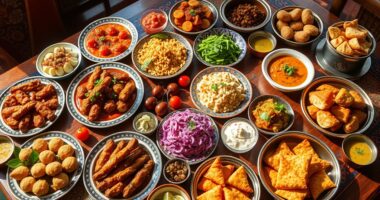
Moreover, the rise of e-commerce platforms has further accelerated the growth of the Halal industry. You can now access Halal products from anywhere in the world with just a few clicks. This accessibility has opened up new markets and consumer bases, fostering international trade and collaboration. Countries with significant Muslim populations are seizing this opportunity to export Halal goods, contributing positively to their economies. Additionally, the demand for tableware in Halal dining settings illustrates the broader impact of this industry on related sectors, showcasing how interconnected global commerce has become.
Top picks for "role halal industry"
Open Amazon search results for this keyword.
As an affiliate, we earn on qualifying purchases.
Frequently Asked Questions
How Does Halal Certification Impact Consumer Choices Globally?
Halal certification markedly impacts your consumer choices globally by enhancing consumer trust in food products. When you see a halal certification, you feel more confident that the product meets ethical and dietary standards. This trust opens up market accessibility, allowing you to explore a wider range of food options. As more products become certified, you’re more likely to choose those that align with your values, influencing overall market trends.
What Are the Key Regions Driving the Halal Market Growth?
You won’t believe the booming regions driving halal market growth! Southeast Asia, the Middle East, and Europe are leading the charge, with market expansion skyrocketing like never before. Consumers are flocking to products they trust, with halal certification becoming a badge of honor. In these areas, the demand’s not just rising; it’s soaring! You’re witnessing a transformation that’s reshaping economies and elevating consumer confidence to dizzying heights. It’s truly an exhilarating time!
How Does the Halal Industry Support Small Businesses?
The halal industry supports small businesses by fostering community empowerment and encouraging supply chain innovation. You’ll see local entrepreneurs gain access to larger markets, as halal certification opens doors for them. This creates a network of suppliers and consumers who prioritize ethical practices. By collaborating with small businesses, the industry encourages sustainable growth, allowing you to witness firsthand how these enterprises thrive, ultimately benefiting the community and enhancing economic resilience.
What Challenges Does the Halal Industry Face in Non-Muslim Countries?
The halal industry faces significant challenges in non-Muslim countries, including cultural acceptance and regulatory hurdles. You might find that many consumers lack understanding of halal practices, which creates barriers to market expansion. Additionally, differing regulations on food production and labeling complicate compliance for businesses. It’s essential to navigate these issues effectively to foster growth and increase awareness, ensuring that halal offerings gain traction in diverse markets.
Are There Environmental Benefits Associated With the Halal Industry?
Yes, there are environmental benefits associated with the halal industry. You’ll find that many halal practices emphasize sustainable practices and resource conservation. For instance, halal farming often prioritizes ethical treatment of animals and reduced waste. Picture a farm where animals are raised naturally, using minimal chemicals and fostering biodiversity. By supporting the halal industry, you’re not just enjoying quality food; you’re also contributing to a more sustainable and eco-friendly future.
Conclusion
In the grand tapestry of the global economy, the halal industry isn’t just a thread—it’s the shimmering gold that holds everything together! With its exponential growth and cultural significance, it’s like a magic carpet, soaring across borders and bringing prosperity to millions. By embracing halal, you’re not just tapping into a market; you’re joining a movement that’s transforming lives faster than a shooting star! So, buckle up and get ready for a wild ride into a halal-driven future!