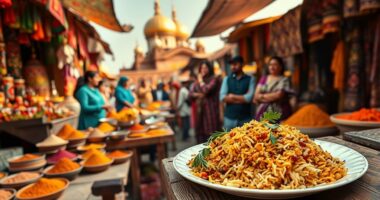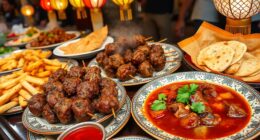
From samosas to sushi, halal adaptations of global snacks let you enjoy a wide array of flavors while adhering to dietary practices. Try crispy samosas filled with spiced halal meats, or indulge in creative halal sushi rolls with fresh ingredients. These snacks not only showcase cultural heritage but also reflect innovation in the food industry. You’ll discover how deliciously diverse the world of halal snacks can be, with many more delightful options waiting for you.
Key Takeaways
- Samosas, with spiced fillings and crispy exteriors, represent a popular halal snack enjoyed globally, transcending regional culinary boundaries.
- Halal sushi incorporates certified fish and creative fillings, allowing for flavorful adaptations of traditional Japanese cuisine.
- Middle Eastern falafel and Argentine empanadas showcase diverse cultural snacks while adhering to halal guidelines, enriching global culinary experiences.
- The growing demand for halal snacks has led to innovative products, including halal potato chips, candies, and desserts.
- Cultural adaptations in halal foods highlight culinary fusion, maintaining traditional identities while catering to dietary laws and preferences.
When you think of snacks, you might not immediately consider the diverse array of halal options available worldwide. However, the world of halal snacks is rich and varied, showcasing how culinary traditions adapt and evolve. From spicy samosas to savory sushi, halal adaptations reflect a beautiful cultural fusion that caters to different dietary considerations while satisfying your taste buds.
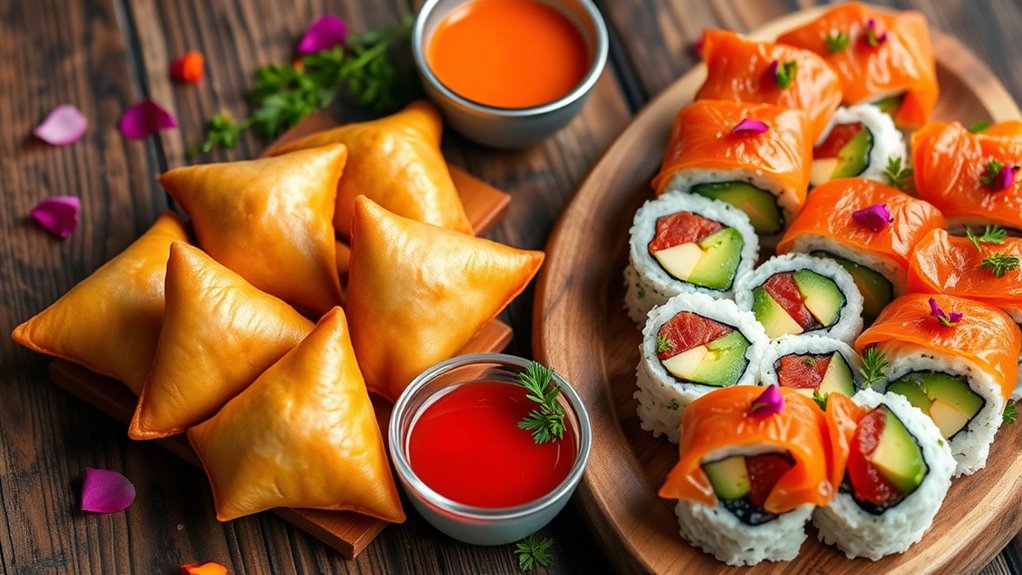
Take samosas, for example. These popular snacks, originating from the Indian subcontinent, have made their way across the globe. You’ll find them filled with a variety of ingredients, such as spiced potatoes, peas, or even halal chicken and beef. Their crispy exterior and flavorful fillings make them a beloved choice for many. You can enjoy them at street stalls or upscale restaurants, proving that halal snacking isn’t limited to just one region.
Samosas, with their crispy shells and savory fillings, showcase the global appeal of halal snacking, enjoyed everywhere from street stalls to fine dining.
Then there’s sushi, a Japanese delicacy that has also embraced halal adaptations. Many sushi restaurants now offer halal-certified fish and seafood, allowing you to indulge in this traditional dish without compromising your dietary beliefs. You might find creative rolls filled with avocado, cucumber, or even tempura vegetables, all wrapped in halal-certified nori. The fusion of flavors creates a unique experience that blends Japanese cuisine with your dietary needs.
Halal snacks aren’t just limited to these two examples. You can find a diverse selection of treats from various cultures, including Middle Eastern falafel, which is made from ground chickpeas and spices, or Argentine empanadas, filled with halal meats and vegetables. Each snack offers a glimpse into the culinary heritage of its origin while adhering to halal guidelines, allowing you to explore and enjoy new flavors without worry.
As global awareness of dietary considerations increases, so does the demand for halal snacks. Restaurants and food brands are stepping up to meet this need, creating innovative products that cater to halal diets. You can now find halal potato chips, candies, and even desserts, extending the variety of snacks available to you.

Samosas Wrap Indian Food Lover Vegetable Gluten Free Samosas Throw Pillow
Samosa supplies and samosa accessories for every samosa lover and indian food lover. Vegetable samosas and vegan samosas…
As an affiliate, we earn on qualifying purchases.
As an affiliate, we earn on qualifying purchases.
Frequently Asked Questions
What Is Halal Certification and Why Is It Important?
Halal certification is a process that verifies food meets Islamic dietary laws. It’s important because it confirms that products are permissible for Muslims, providing peace of mind when they make food choices. By obtaining halal certification, companies show their commitment to the significance of religious approval, fostering trust among consumers. You’ll find that this certification opens up markets and creates inclusivity, allowing everyone to enjoy diverse culinary options while respecting their beliefs.
Are All Snacks From Different Cultures Halal-Friendly?
Not all snacks from different cultures are halal-friendly. Imagine a world buffet where each dish tells a story; some tales align with halal guidelines, while others stray. Cultural snack variations often include global snack ingredients that might not meet halal standards, like certain additives or flavorings. To enjoy a diverse culinary experience, you’ll need to research and choose snacks that respect halal principles, ensuring your taste adventure is both delicious and compliant.
How Can I Determine if a Snack Is Halal?
To determine if a snack is halal, start by checking the packaging for halal certification. You can also look for halal ingredient verification, ensuring all components meet halal standards. Research cross-cultural snack differences to understand how various cultures interpret halal. If you’re unsure, contact the manufacturer directly or consult halal databases. Being proactive helps you make informed choices about what you eat, ensuring your snacks align with your dietary beliefs.
What Are Common Ingredients in Halal Snacks?
Common ingredients in halal snacks often include chickpeas, lentils, and various meats that are sourced from halal-certified suppliers. You’ll find spices like cumin, coriander, and turmeric enhancing the flavors. Olive oil, garlic, and lemon juice are also popular, adding freshness to your dishes. Always check for halal certification on packaged snacks to verify they meet dietary guidelines. With these ingredients, you can create delicious and compliant treats that everyone can enjoy!
Can I Find Halal Snacks at Regular Grocery Stores?
You can absolutely find halal snacks at regular grocery stores! As the saying goes, “Don’t judge a book by its cover,” so look closely at the labels. Many products feature halal labeling, ensuring they meet dietary requirements. Ingredient transparency is essential, so check the ingredients list to confirm they’re halal. With a little effort, you’ll discover a variety of tasty options that fit your needs right in your local store. Enjoy snacking!

Genji Sushi, California Roll, 8.22 Ounce
As an affiliate, we earn on qualifying purchases.
As an affiliate, we earn on qualifying purchases.
Conclusion
In a world where flavors dance together, halal adaptations of global snacks create a delicious bridge between cultures. You’ve discovered how samosas, sushi, and other treats embrace inclusivity, inviting everyone to savor their unique twists. Just like a well-spiced dish that warms your soul, these snacks unite diverse palates, proving that food can be a universal language. So, whether you’re munching on a halal taco or enjoying curry-flavored popcorn, you’re part of a vibrant culinary tapestry!

Sarah's Candy Factory Assorted 0.5 Lb Premium Baklava Pastry Gift Box Halal Snacks, 250 Gr in a Metal Box, Turkish Dessert Ideal Gift for all Special Days for Everyone
The Premium Baklava Pastry Gift Box is a delightful selection of traditional Turkish desserts, beautifully packaged in a…
As an affiliate, we earn on qualifying purchases.
As an affiliate, we earn on qualifying purchases.

Moon Lodge 12 Pack Buffalo Wings Potato Chips – Kosher & Halal Snacks for All Ages, Perfect for Parties & Movie Nights (1.5 Oz Bag)
Variety Pack for Every Craving (Pack of 18) : Satisfy your snack cravings with this 21-pack of Moon…
As an affiliate, we earn on qualifying purchases.
As an affiliate, we earn on qualifying purchases.