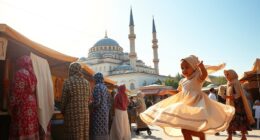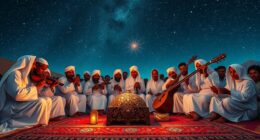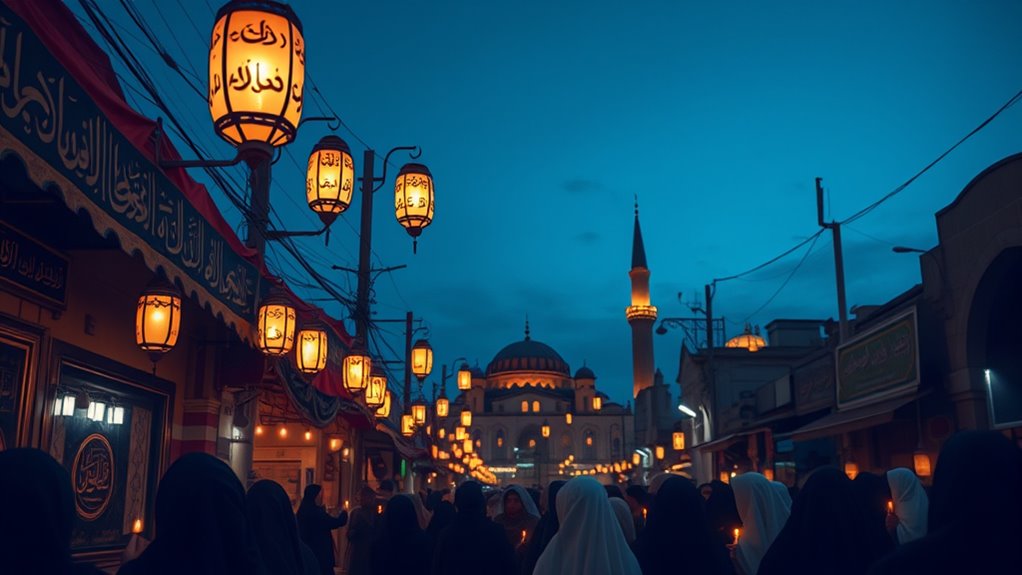

Islamic festivals beyond Ramadan and Eid, like Ashura and Laylat al-Qadr, are rich in meaning and practice. Ashura commemorates the martyrdom of Imam Hussain and encourages reflection on sacrifice and justice through mourning rituals. Laylat al-Qadr, known as the Night of Decree, marks the Quran’s revelation and is celebrated with special prayers and acts of worship. These events foster community bonds and connect you to your spiritual heritage, inviting you to explore their deeper significance.
Key Takeaways
- Ashura commemorates the martyrdom of Imam Hussain, emphasizing sacrifice, justice, and resistance against oppression through mourning and community rituals.
- Laylat al-Qadr, the Night of Decree, celebrates the Quran’s revelation with prayers and acts of worship, believed to be spiritually significant.
- Mawlid al-Nabi marks the birth of Prophet Muhammad, fostering community unity through prayers, storytelling, and shared meals.
- Eid al-Ghadir recognizes Imam Ali’s appointment as Prophet Muhammad’s successor, highlighting loyalty and leadership within the Muslim community.
- These festivals serve to strengthen communal bonds, reflect on historical struggles, and promote shared values among Muslims.

Have you ever wondered what other vibrant celebrations exist in the Islamic calendar beyond Ramadan and Eid? While these two occasions often steal the spotlight, numerous other significant festivals hold deep meaning and rich traditions. One such event is Ashura, observed on the 10th day of Muharram. For many Muslims, particularly Shia communities, Ashura carries profound historical significance as it commemorates the martyrdom of Imam Hussain, the grandson of the Prophet Muhammad. You might find that this day serves as a reminder of sacrifice, justice, and standing up against oppression.
During Ashura, you’ll witness various ritual observances that can vary widely between communities. Some choose to engage in mourning rituals, including recitations of elegies and reenactments of the battle of Karbala, while others might focus on fasting as a means of reflection and solidarity. The spirit of Ashura encourages you to connect with your history, understand the struggles faced by past generations, and reflect on your own values.
Ashura invites reflection on sacrifice and solidarity, with diverse rituals that connect communities to their history and values.
Another remarkable celebration is Laylat al-Qadr, often referred to as the Night of Decree, which falls within the last ten days of Ramadan. This night is believed to be when the Quran was first revealed, making it incredibly significant for Muslims. The historical significance of Laylat al-Qadr is immense; it’s considered better than a thousand months. You may choose to spend this night in prayer, seeking forgiveness, and performing acts of worship, as many believe that the blessings and mercy of Allah are abundant during this time.
In addition to these, the Islamic calendar includes other festivals like Mawlid al-Nabi, which celebrates the birth of the Prophet Muhammad. This event is marked by various ritual observances, including gatherings for prayers, storytelling, and sharing food with the community. You’ll find that the celebration creates a sense of unity and belonging among Muslims, as everyone comes together to honor their beloved Prophet.
Finally, consider the significance of Eid al-Ghadir, celebrated by Shia Muslims to commemorate the event at Ghadir Khumm, where Prophet Muhammad appointed Imam Ali as his successor. This day emphasizes loyalty and leadership within the Muslim community, allowing you to reflect on the importance of guidance in your faith. Additionally, many festivals can serve as opportunities for connecting with cultural traditions, enriching the experience of faith and community.
As you explore these vibrant celebrations, you’ll discover a tapestry of historical significance and ritual observances that enrich the Islamic calendar, making each festival an opportunity for spiritual growth and community bonding.

Al Khumra Muslim Prayer Mat for The Face and Hands Only, Comfortable for Mosque, Outdoors, Travel, Easy to Fold and Carry with Included Carrying Bag (Grey Velvet on Black)
The Khumra prayer mat is designed for the face and hands only to reduce the risk of illness…
As an affiliate, we earn on qualifying purchases.
As an affiliate, we earn on qualifying purchases.
Frequently Asked Questions
What Are the Significance and Rituals of Ashura in Different Cultures?
Ashura holds deep significance across cultures, marking various historical events. In some regions, you participate in mourning rituals, reflecting on the martyrdom of Hussein. You’ll find diverse cultural practices, like processions and recitations. In others, it’s a day of fasting and prayer, emphasizing reflection and devotion. Regional customs shape how communities observe Ashura, blending local traditions with religious significance, creating a unique tapestry of remembrance and celebration that resonates throughout the Islamic world.
How Is Laylat Al Qadr Observed in Various Muslim Communities?
You’ll find that Laylat Al Qadr is observed with prayers, Quran recitation, and reflection in various Muslim communities. Many engage in interfaith dialogues and community outreach, emphasizing its significance of mercy and forgiveness. During this night, you might join in communal prayers at mosques or participate in charitable acts, fostering a spirit of unity. The atmosphere is often filled with devotion, as everyone seeks to deepen their faith and strengthen community bonds.
Are There Specific Prayers for Ashura and Laylat Al Qadr?
Yes, there are specific prayers for Ashura and Laylat Al Qadr. On Laylat Al Qadr, many Muslims perform extra prayers, with about 87% participating in special night prayers. For Ashura, you might observe fasting and reciting specific supplications. These spiritual practices deepen your connection to faith, providing opportunities for reflection and seeking forgiveness. Engaging in these prayers enriches your spiritual journey and reinforces community bonds during these significant occasions.
How Do Islamic Festivals Vary Between Sunni and Shia Traditions?
Islamic festivals can vary considerably between Sunni and Shia traditions. You’ll notice Sunni customs often focus on communal prayers and celebrations, while Shia practices may involve mourning rituals, especially during Ashura. For example, Shia communities often commemorate the martyrdom of Imam Hussein with processions and recitations. Meanwhile, Sunnis might emphasize fasting and reflection. Understanding these differences helps you appreciate the rich diversity within Islamic festival customs.
What Is the Historical Background of Ashura and Its Observance Today?
Ashura’s historical context traces back to the day of mourning for Imam Hussein, the grandson of Prophet Muhammad, who was martyred at Karbala. Today, you’ll find cultural variations in its observance. Sunni Muslims often fast, while Shia communities engage in passionate rituals, reflecting grief and solidarity. By participating, you connect with a rich tapestry of history and faith, honoring those who sacrificed everything for justice and truth, resonating through generations.

Commemorating the Mourning Rights of Imam al-Husayn
As an affiliate, we earn on qualifying purchases.
As an affiliate, we earn on qualifying purchases.
Conclusion
In exploring Islamic festivals beyond Ramadan and Eid, you’ve uncovered a rich tapestry of traditions like Ashura and Laylat al-Qadr. Did you know that over 1.9 billion Muslims worldwide celebrate these occasions, each adding their unique customs and meanings? This diversity not only highlights the global nature of Islam but also invites you to appreciate the shared values and vibrant practices that connect believers. So, take a moment to reflect on these beautiful celebrations throughout the year!

Mason Life Islamic Gifts Quran Fridge Magnet, Preloaded Surah Audio Player with Islamic Recitations, Dome of The Rock, USB-C Rechargeable, Ramadan & Eid Gifts
2-in-1 Ramadan Decor &Quran Speaker: A standout ramadan decoration and music fridge magnet with iconic Islamic architecture designs….
As an affiliate, we earn on qualifying purchases.
As an affiliate, we earn on qualifying purchases.
25PCS Eid Mubarak Photo Booth Props Party Decoration, Muslim Islamic Ramadan Kareem Party Supplies for Family Gatherings, Community Events, Ramadan Iftar Dinners, Eid Al-Fitr Celebrations
25 Props for Diverse Photo: This set includes 25 carefully crafted pieces, from "Eid Mubarak" and "Ramadan Kareem"…
As an affiliate, we earn on qualifying purchases.
As an affiliate, we earn on qualifying purchases.